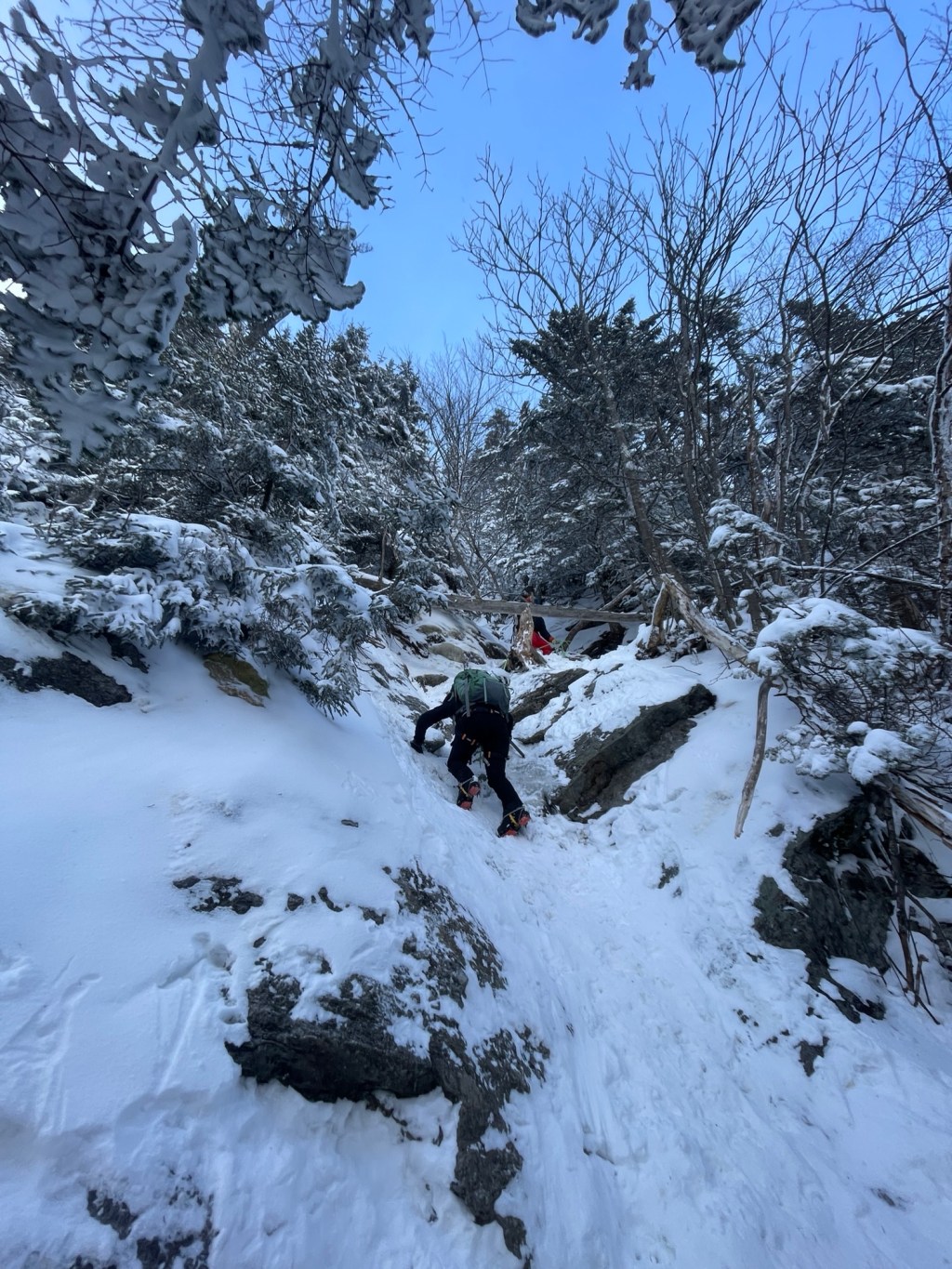
“That looks really fun and kind of sketchy.”
Mt. Washington (NH) is not breaking any height records. In the contiguous 48, it barely cracks the top 20, and once you add Canada and Alaska…it’s ostensibly nearly a blip on the North American topographical map. The mountain’s (comparably) low elevation and proximity to both civilization and navigable roadways cause entirely too many people to underestimate it. Do so at your own peril.
You may recall my first foray to the summit, on the summer solstice of 2022. If not, enjoy. That quote remains the best descriptor of what locals affectionately call ‘the Rock Pile’: “There may be worse weather, from time to time, at some forbidding place on Planet Earth, but it has yet to be reliably recorded.”
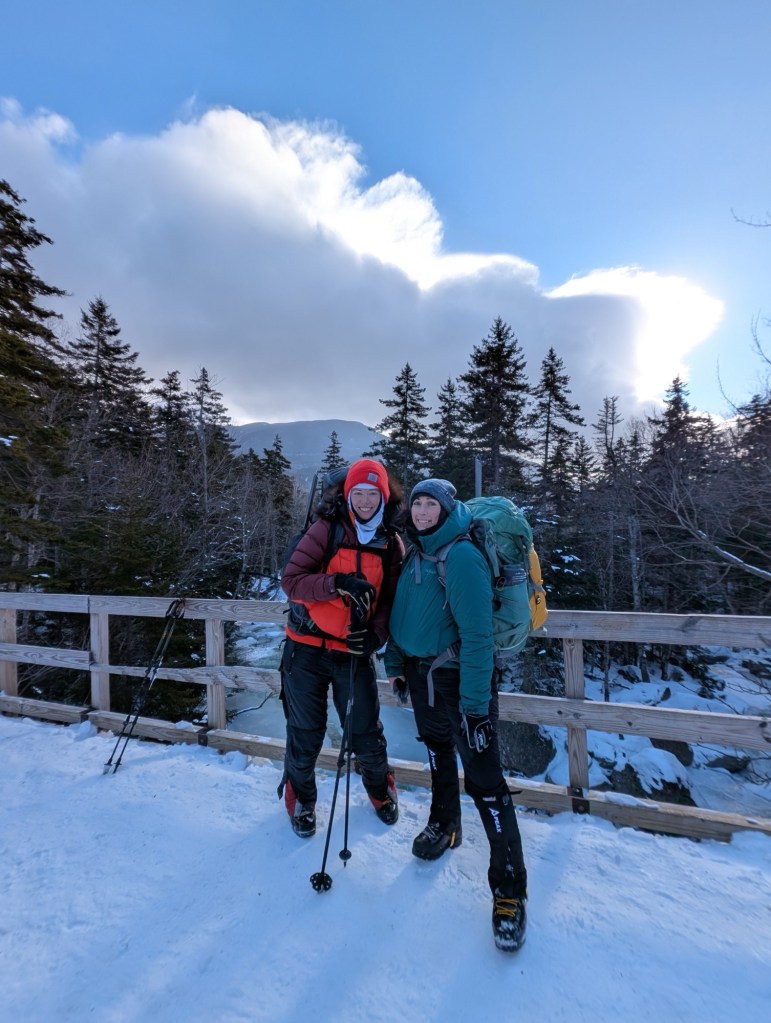
The first weekend in January, my friend Drea and I did a two day “Intro to Mountaineering” course with a guide on the west slope of Mt. Washington. Drea is an accomplished hiker, who recently completed solo ascents of all 48 of New Hampshire summits over 4k ft (our version of a fourteener), and is now working on the New England 67 (same metric, but adding in Vermont and Maine). Before this course, Drea has winter camped exactly two times, and both with me.
My friend Drea has learned to underestimate my weekend adventure planning at her own risk. The first time I convinced her to go winter camping, we ended up somewhat haplessly perched on the side of Mt. Mansfield in a wicked blizzard with temps plummeting to low single digits. As a reward for surviving, we floated down the mountain through 17” of fresh powder under bluebird morning skies—a surreal experience that made the chilly night with little sleep seem totally worth it. Real type two fun.
Luckily, this time, the temps were forecast to be cold as shit. Thanks, White Mountains. At least we were gonna get our moneys worth. The guide called me as I was driving up to collect Drea the night before our trek, and I was half worried they were calling to cancel. But no, the inquiry was simply to make sure we weren’t total idiots and had actually read the gear list. Check.
The course takes place on the west slope of Washington, utilizing some combination of one of two legal campsites and three different summit routes (Lions Head winter route trail, Huntington Ravine trail, and Tuckerman Ravine trail). Day one was practice and skills, and day two was, if weather and interest allowed, a summit attempt via the Lions Head Winter Route and/or more practice. In between, we tent camped at either Harvard cabin site or hermit lake shelter. Clean map on left, route we did on right.
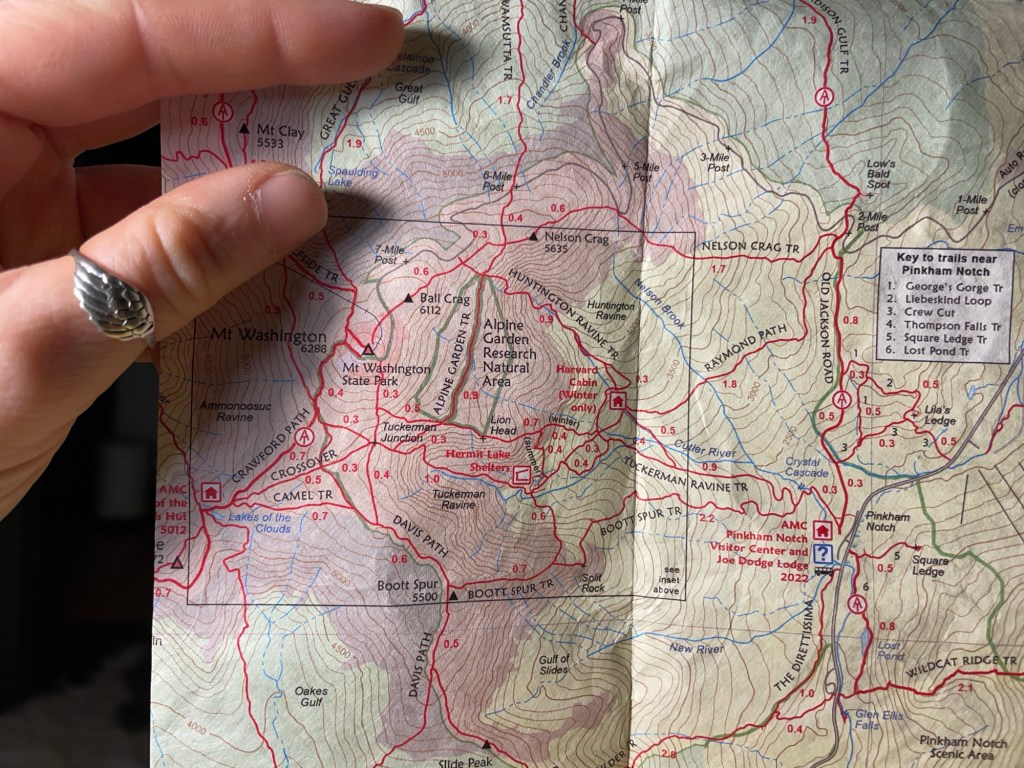
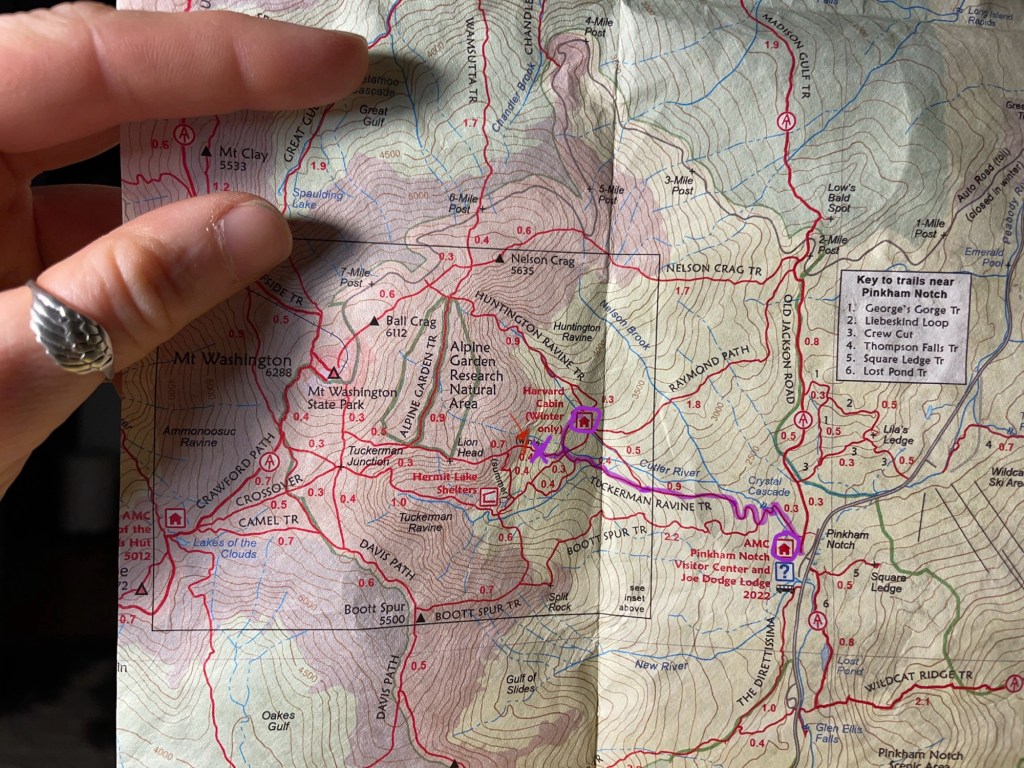
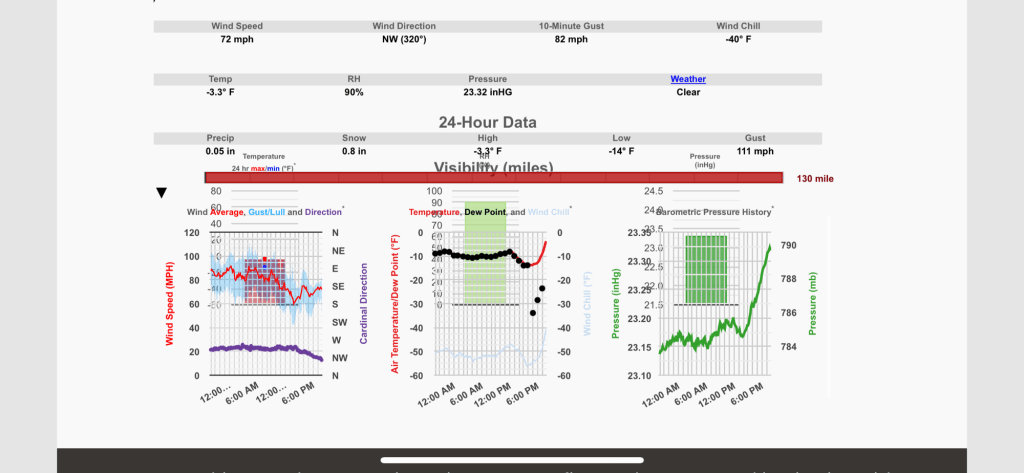
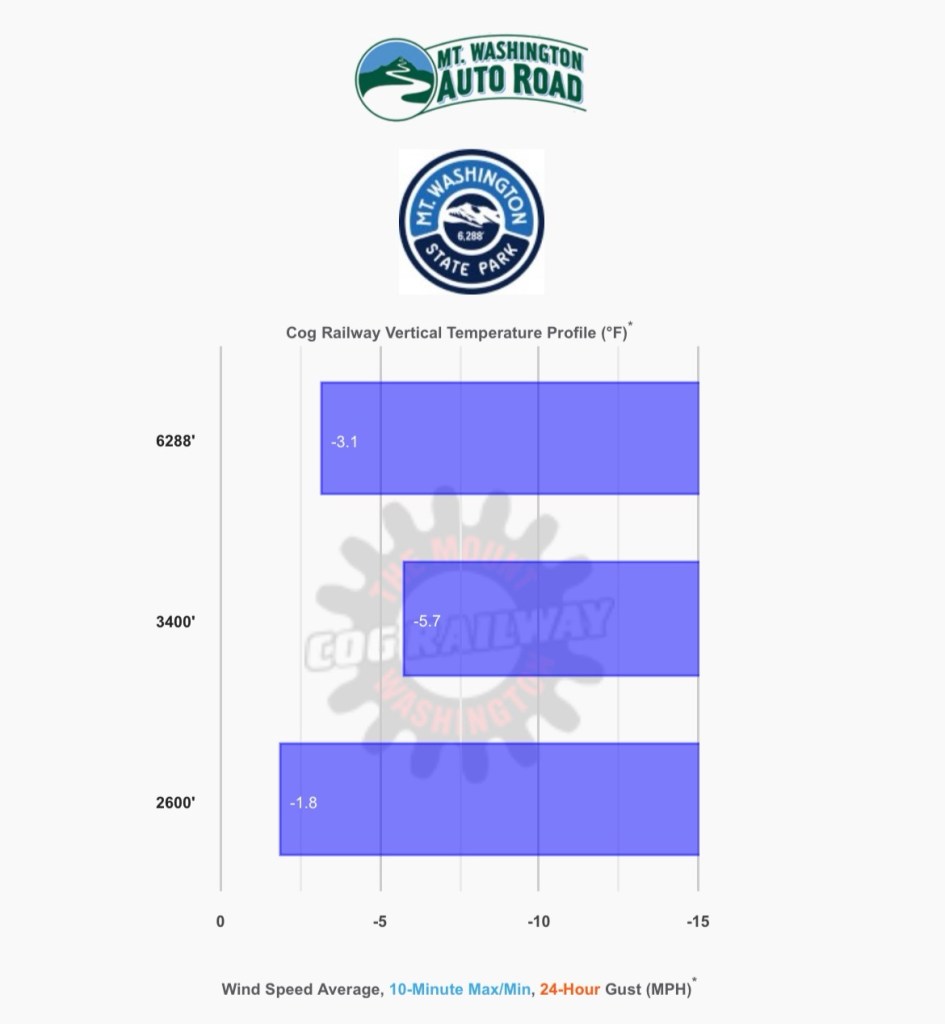
As we struck out from Pinkam Notch Visitor Center, the summit windchill hadn’t gone ABOVE -30f in two days. Yes, that’s minus 30. As in negative 30. It wasn’t forecast to the entire time we were on the mountain, more often hovering around -40 to -50f. We knew a summit push wasn’t in the cards—we’re brand new to this gear and style of ascent, and had zero interest in that level of pain. Our goal was simple: learn the skills, gear, and techniques, ask a shit ton of questions, and have a somewhat pleasant experience.
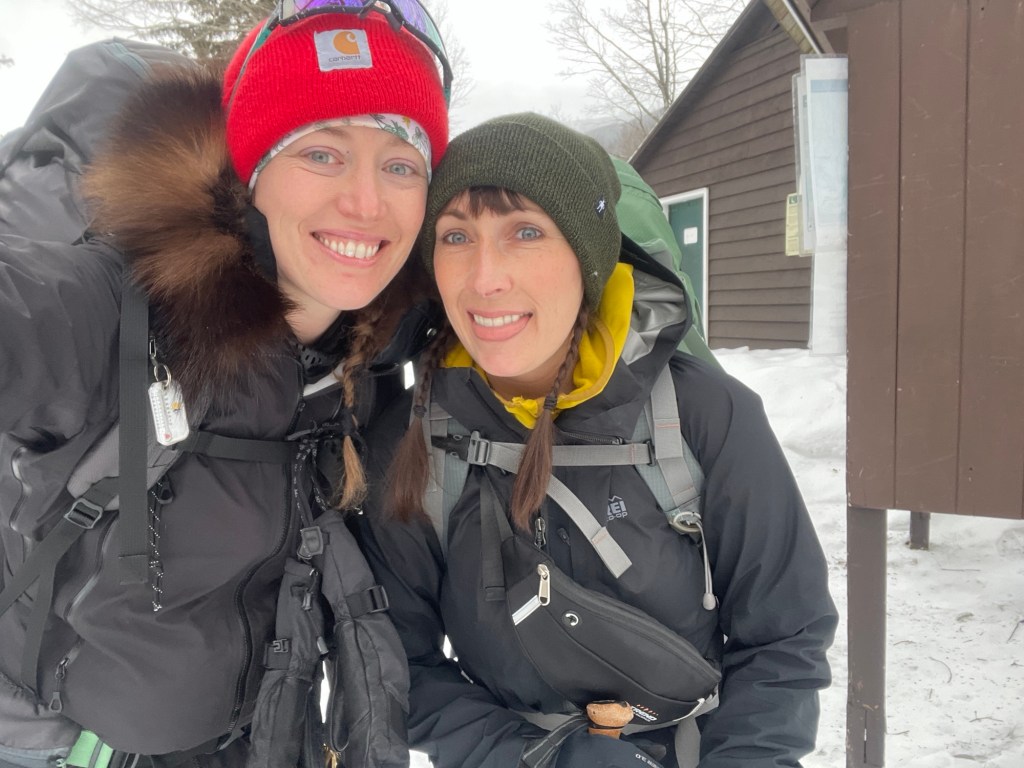
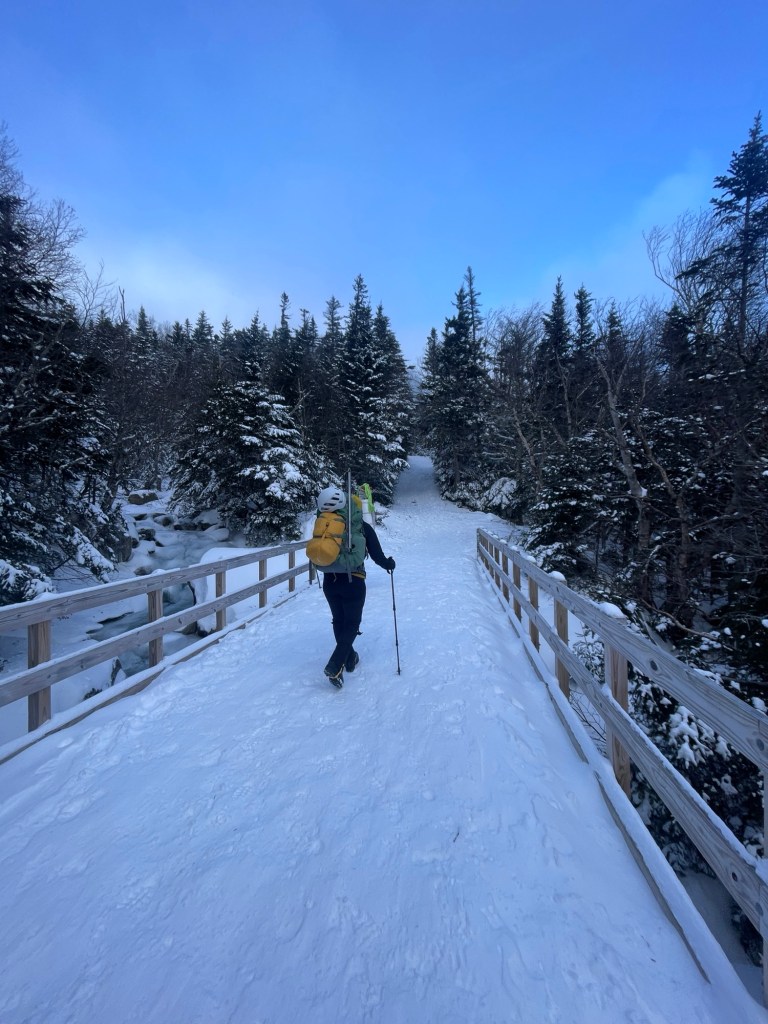


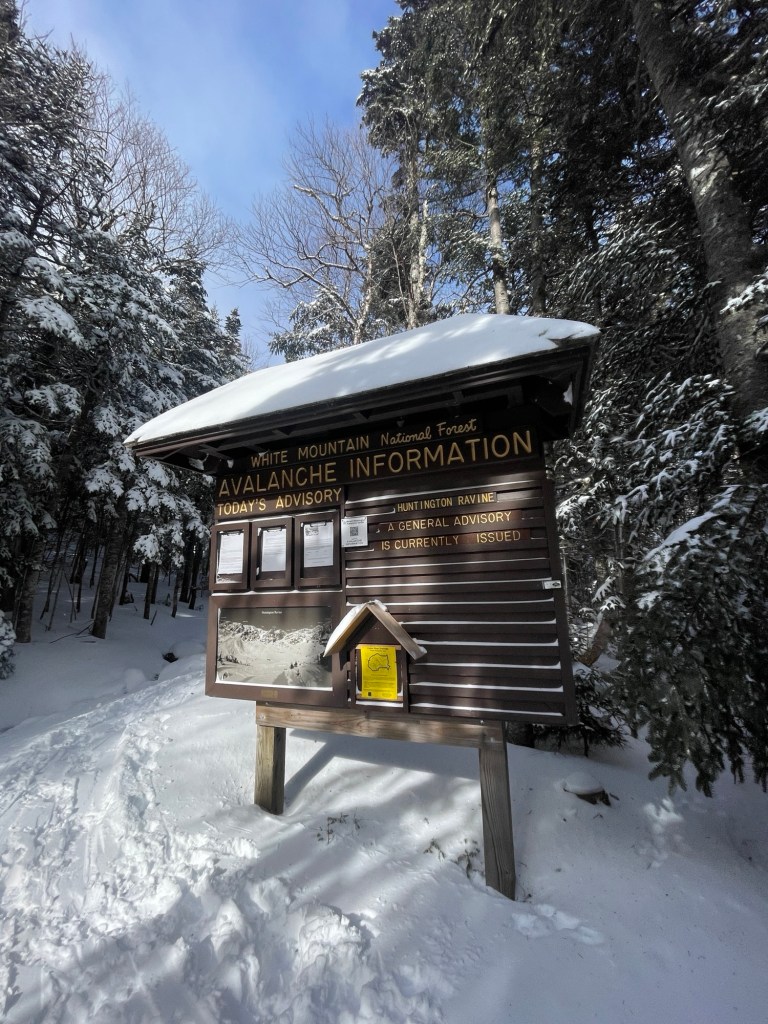
Day one started at Synnott Mountain Guides shop, just north of North Conway. Joe checked our gear and got us our hardshell crampon-compatible boots (they use the hard shell double boot type for rentals), crampons, harnesses, and helmets, and we shipped up to Pinkham Notch. A pretty mild 2-ish mile hike up Tuckerman Ravine trail got us within a stones throw of Harvard Cabin.
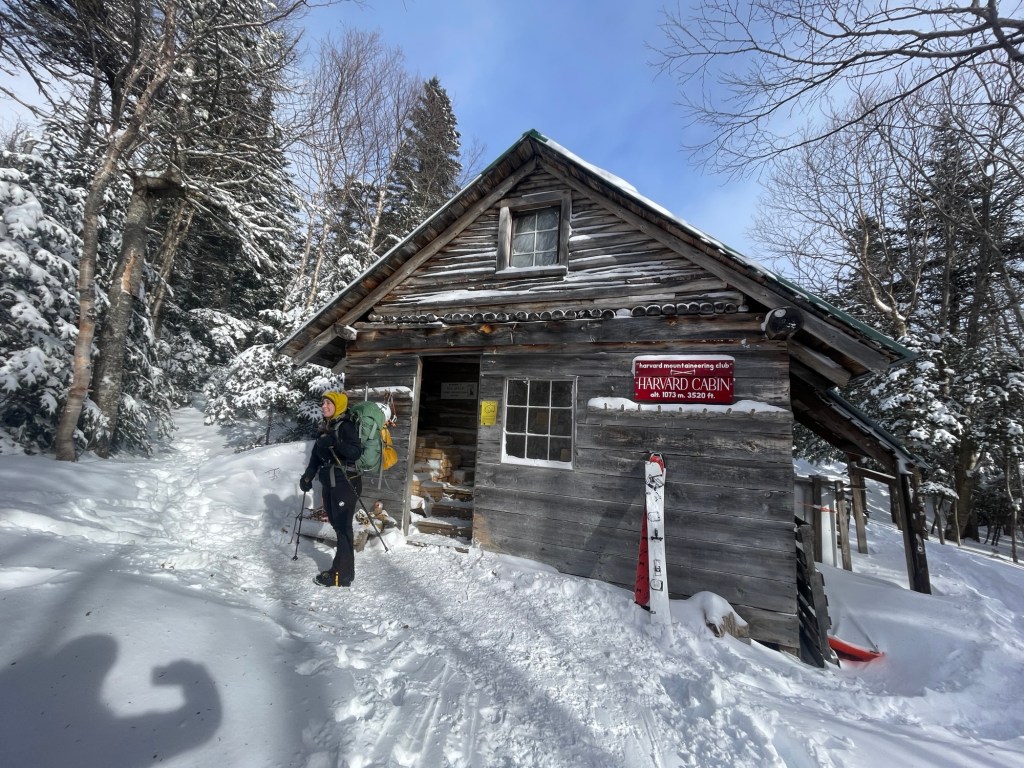
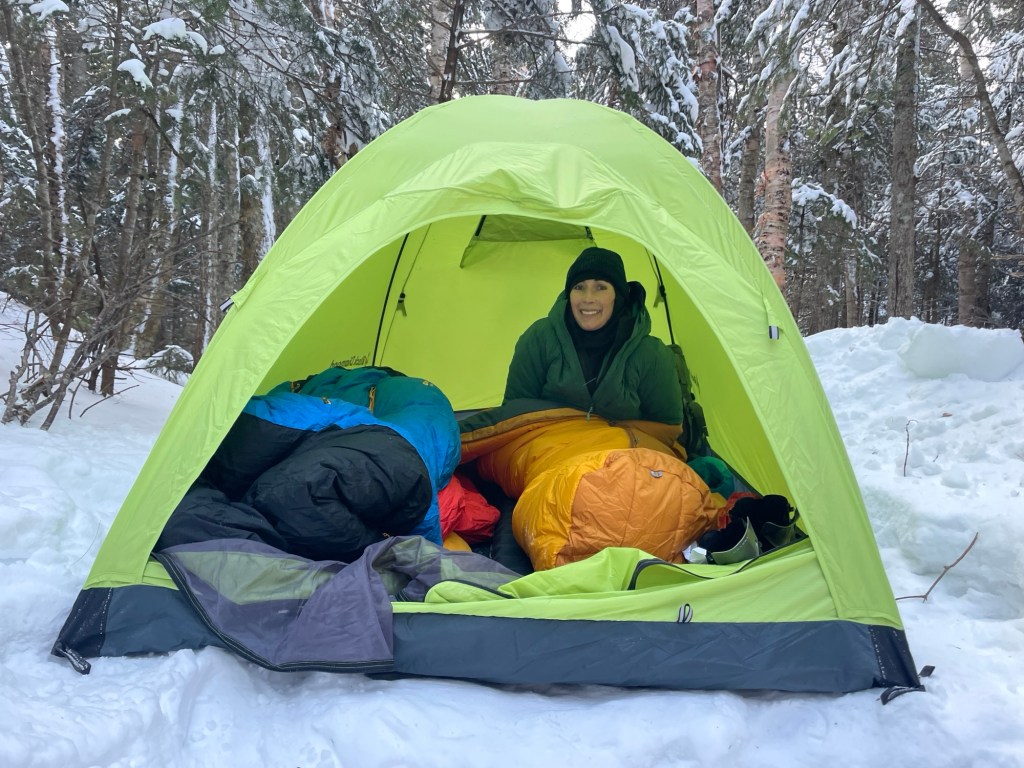
We got camp dug out (no one had tent camped since the area got at least a foot of fresh snow), tents set up, and main gear unpacked. SMGuides provided the tent and we used our own gear inside it. The tent was a BD Firstlite 3p, and it was a dream. I have a 2P hilite which is similar construction, but the door loading in from the short end is much more convenient for use in snow, and the extra “person”s worth of indoor space was quite luxe.

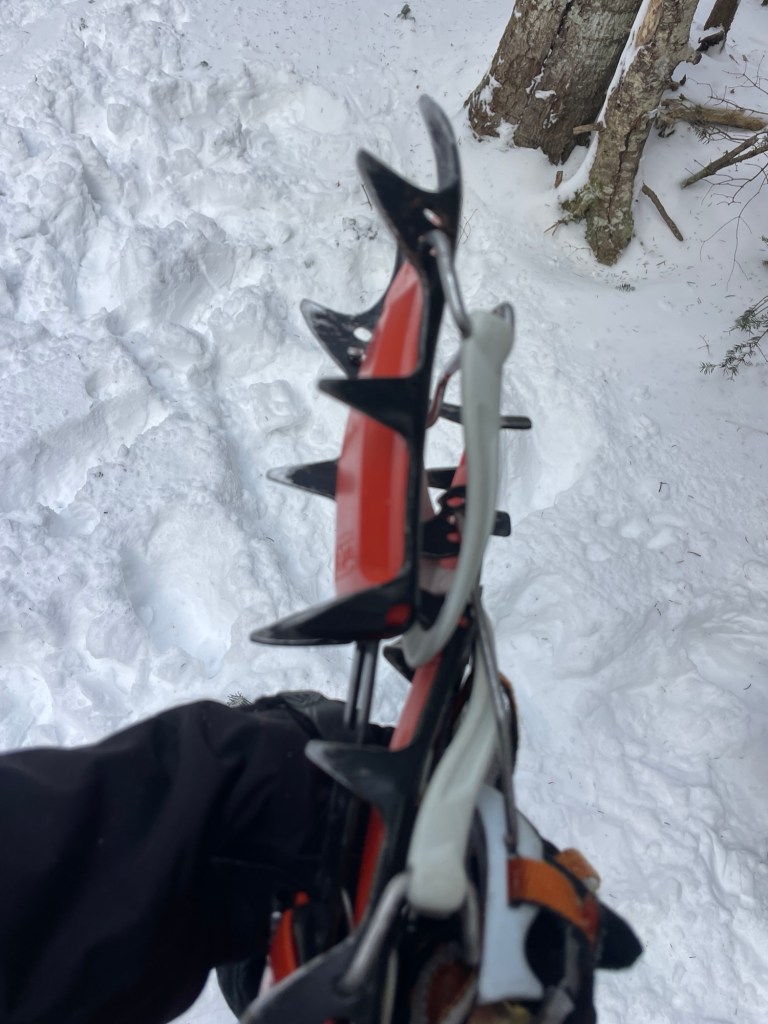
We geared up at the base of Lions Head trail winter route, so we had a couple of minutes to practice crampon walking techniques on gentle incline. We learned the special stance and way to move to reduce likelihood of injury or tearing gear, and practiced sideways stepping and overstepping. Above names are my own—I didn’t focus on the technique names, just tried to master the footwork! Part of this is also where to have your ice axe and how to hold it st all times, in case you slip and need to stop your fall.
The ascent started to steepen up for a bit as we approached the scramble. This trail is the winter route because it’s impassable as a hiking trail without snowpack cover—it’s steep and smooth stone. (Relatedly, the summer route which parallels it is passable in summer but presents extreme avalanche risk in the same snowpack that makes the winter route possible. Typically, only one or the other is ever open, and rarely are both closed!) photo evidence of Drea being a badass, below.
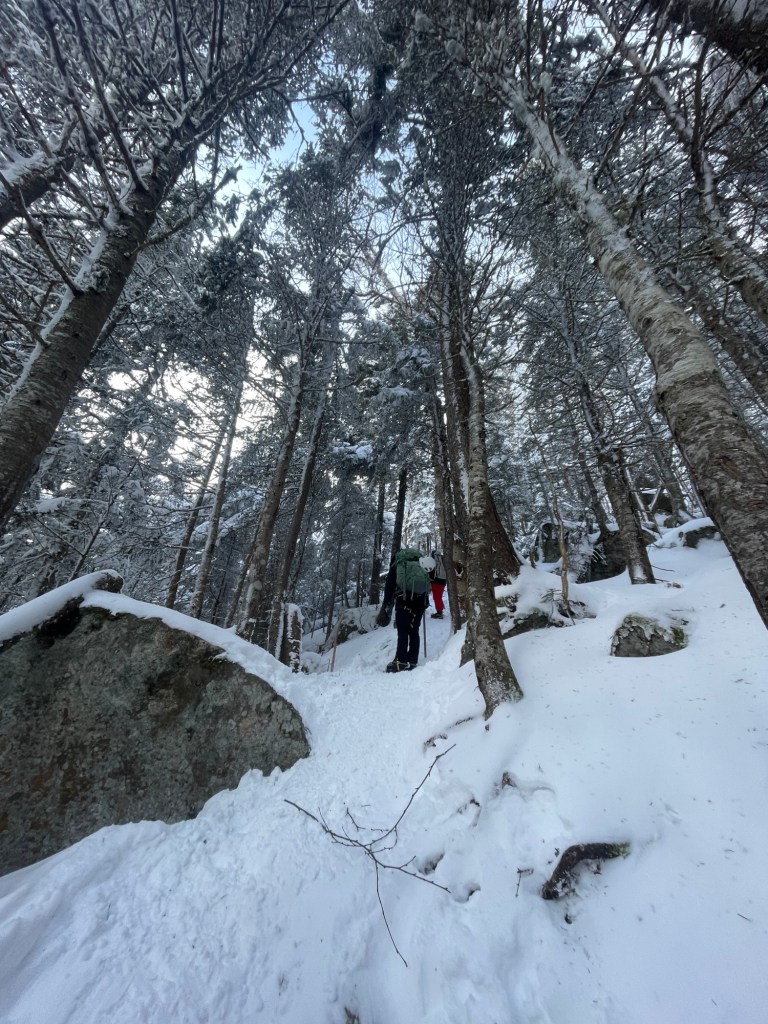
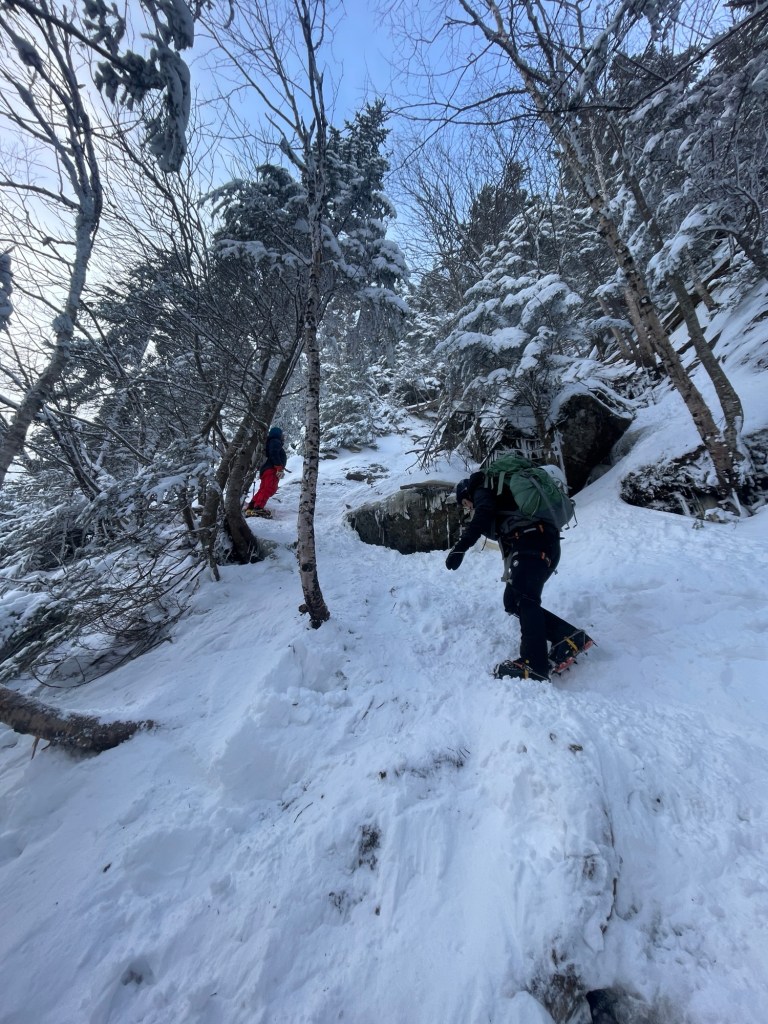
When we got to the scramble we got to learn the techniques and practice ascending using our ice axe tool as a climbing aid. It’s kind of what you imagine—drive the axe into the vertical ice rock wall, then use it to help pull yourself up, then kick your spikey toes into new footholds (trying to locate a spot that isn’t solid rock and you can get some tooth in), then doing it all again. Because it was a very steep, near vertical ascent and the bottom was a Wylie-Coyote-style ‘ya hoo hoo hoo” cliff, Joe saw fit to tie us in via our harnesses and belay us, as if we were rockclimbing. That way if we slipped we’d only fall about a foot or 4 and he could hold us from above.
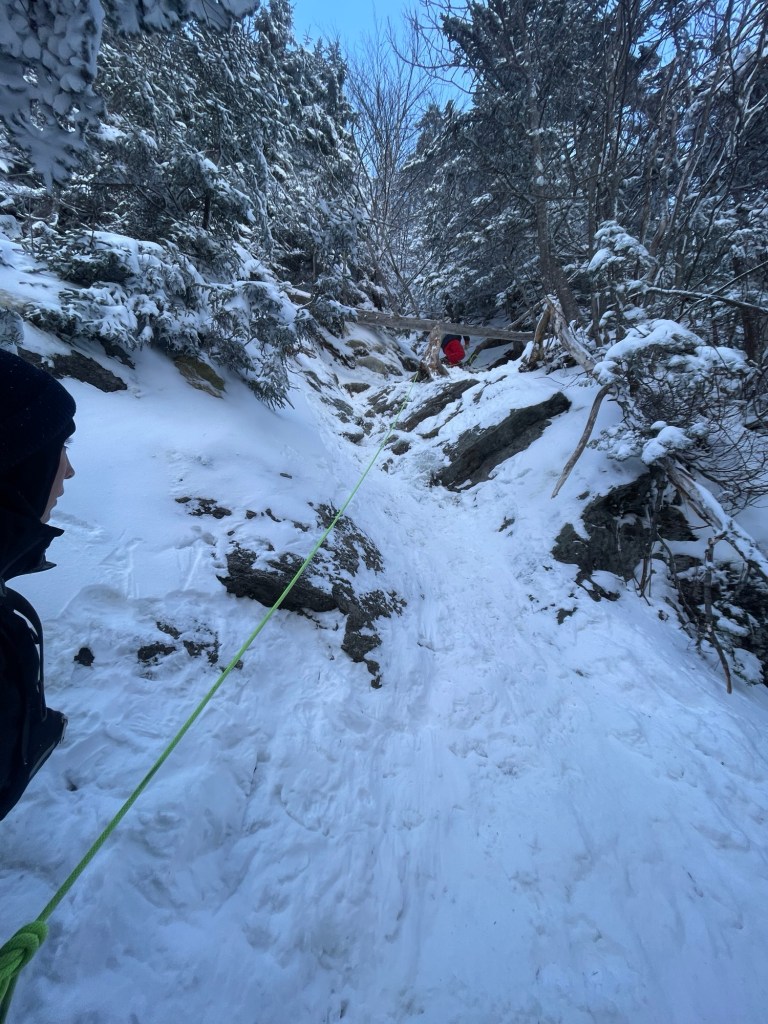
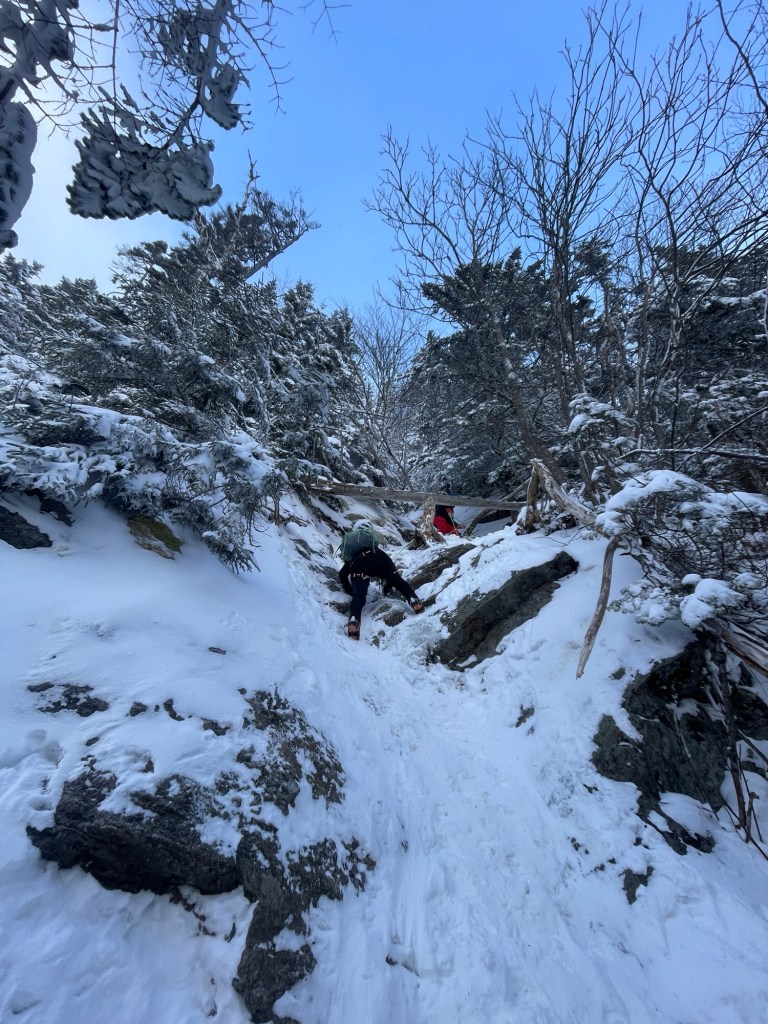
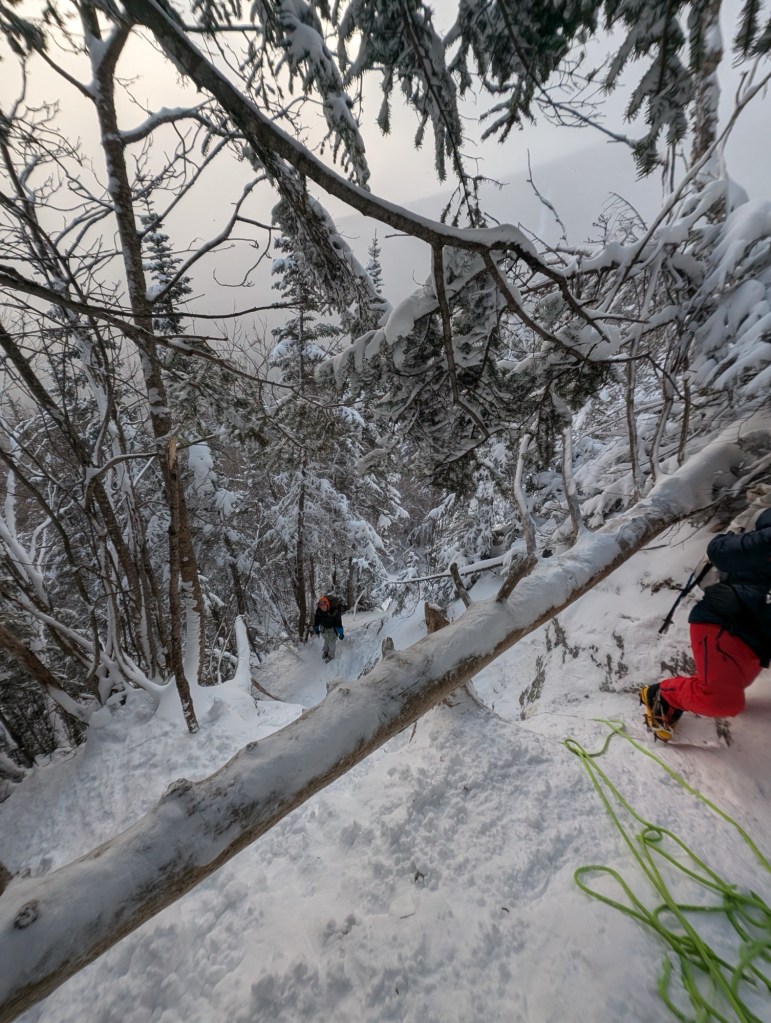
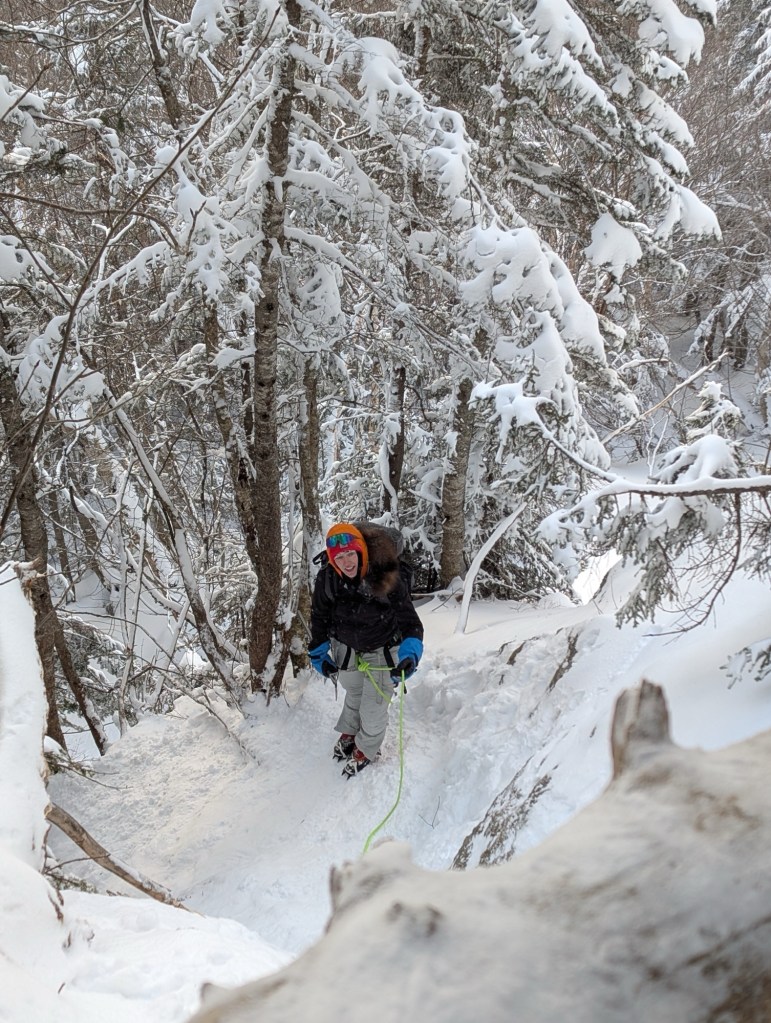
Me as a scrawny human at the bottom of the scramble, with ‘Ya Hoo Hoo Hoo” cliff right behind me.
It took a minute to get my footing, but cleverly I made Drea go first so I could watch her. We both successfully did the roped ascent and descent, in the process learning how to use our tools (ice axe, crampons, loose hand) to best advantage. Our guide Joe was super helpful in identifying hand and footholds and being patient with us.
The rental gear boots were doing a number on Drea’s shins, so we opted to cut the day a little bit short and leave the self-arrest skill session until the morning. We hoofed it back down to the shoulder of the mountains and then walked the level trail back to our base camp. Using my winter stove, we cooked up a hot meal to refuel and tucked in early as the sun was setting and then temps were dropping into negative digits again.
Exclusive interview and glamor shots from our big fancy winter tent.
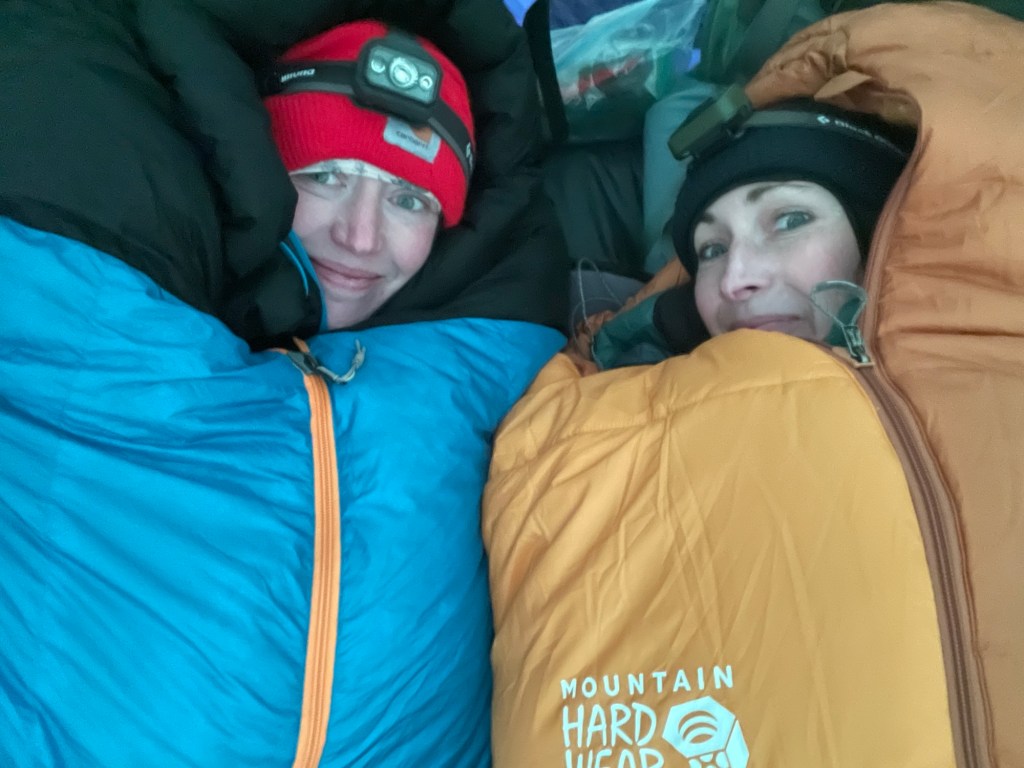
The wind picked up as the skies darkened, howling and whistling through the dense tree cover. Separately (and confirmed in the morning), we were both thinking about the odds that a tree would blow over on our tent. Thankfully no such nonsense occurred.
Winter camping is a funny mix of long, quiet times in the tent and short bursts of activity. After hustling around to cook and eat dinner and pack up without getting cold, suddenly you’re just…still. For a loooong time. For like…14 hours. And at first your body is confused. You get a warm flush from getting in your cozy sleeping bag, then as your muscles settle and digestion sets in, you start to be chilled. Wait…I’m already chilled, and it’s barely dark and the temps are still dropping and I have hours and hours until morning?! PANIC.
Don’t panic. At this point I’ve spent enough hours out at minus double digits to understand, and trust, the process of my body re-regulating from activity into rest and recovery in the cold. It was fun to talk someone else through it a bit though. We had permission, if things got unbearable, to come into the shelter cabin. For the first 20 minutes, I was cold but heating up, as my sleeping bag trapped my body heat from recent exertion. Then, as my body settled, I started to cool off. This is when people freak out because they think they’re already getting cold, with hours and hours to go, so it’s not going to work out. But if you trust the process and ride through this period, then your body settles and goes into recovery mode, producing heat again but at a lower rate. This re-regulation can take anywhere from 30-90 minutes, and your body performs it more efficiently when hydrated and with sufficient calories. I was snug as a bug and snoozing soon…though I did wake up a little chilly about 1 am and eat a bar to add some fuel to the “fire”.
More importantly, Drea was cozy warm as well! She was nervous but trusted the process and ended up comfy. We were incredibly slow to get up in the morning, though—those warm sleeping bags can be tough to abandon.
We opted the next morning to skip the ascent up to treeline. We had gotten good skills training the day before, the boots weren’t really working for Drea’s shins (she already had big bruises from them), and it was even windier than the day before. Instead, we broke camp and partially descended to learn ice axe skills and what is called “self-arrest”.
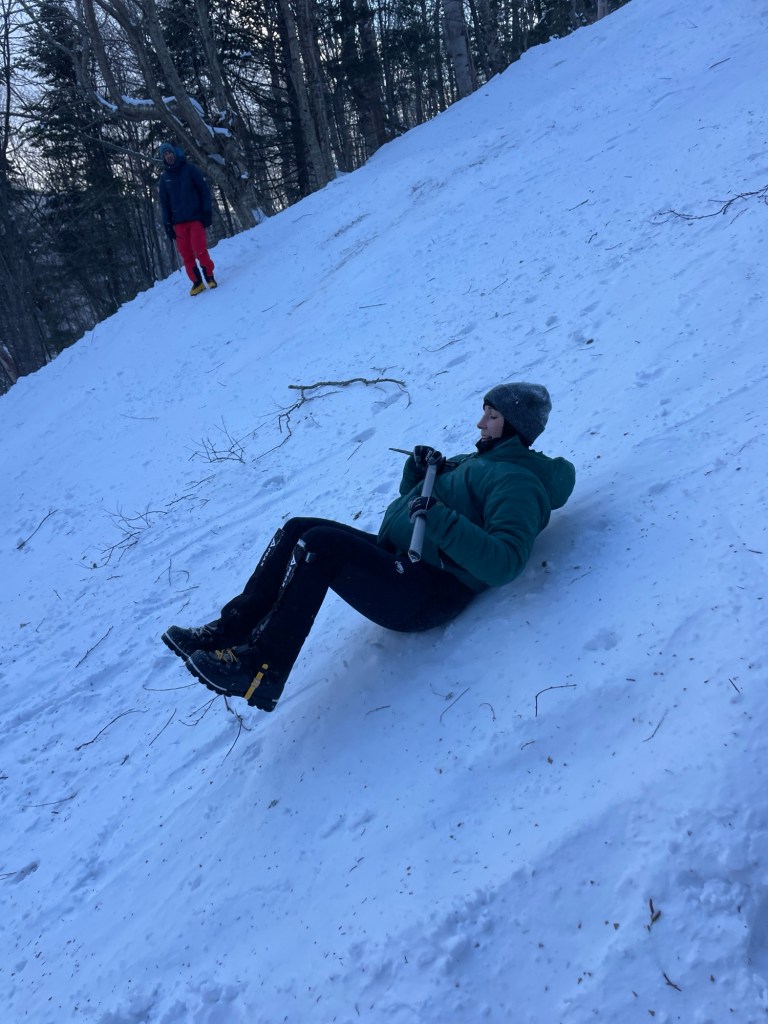
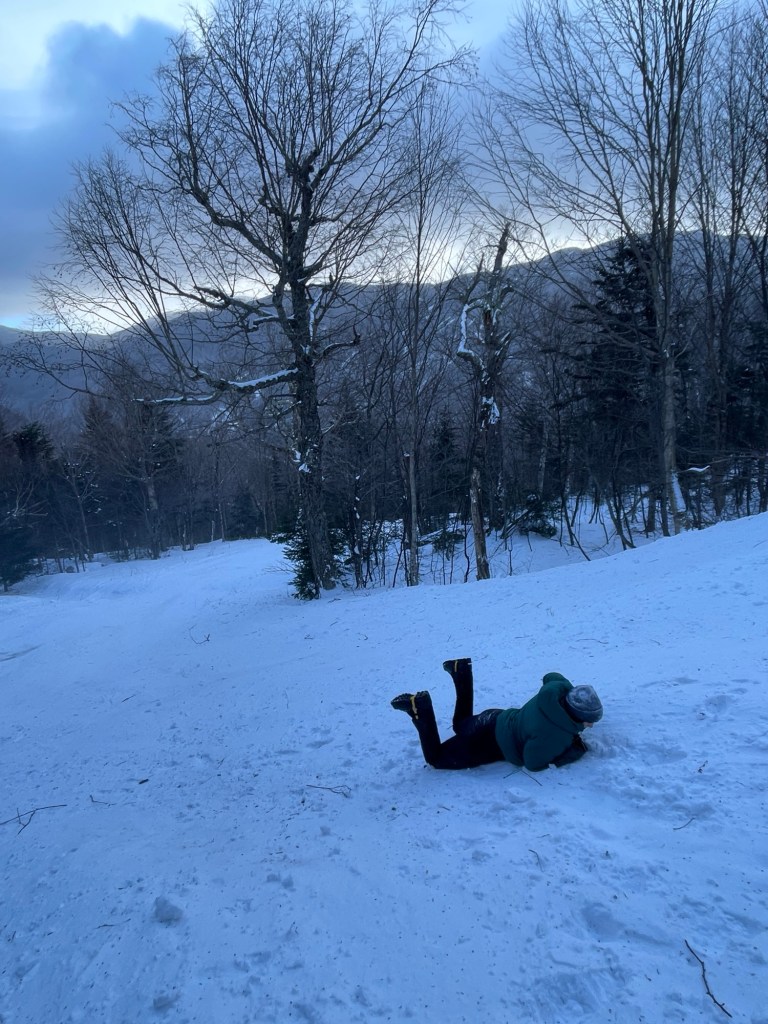
Partway down the mountain, we cut over to the ski route affectionately known as “the Sherb” and learned how to use our axe to stop ourselves if we slip on steep terrain—self arrest. The movements are fairly similar in all cases, but we practiced foot first and head first, on our front and on our back. It doesn’t look very exciting in photos, but it can save your life! We also learned about differences between ice axes for different uses, as Drea looks to add one to her kit for her specific interests and activities.
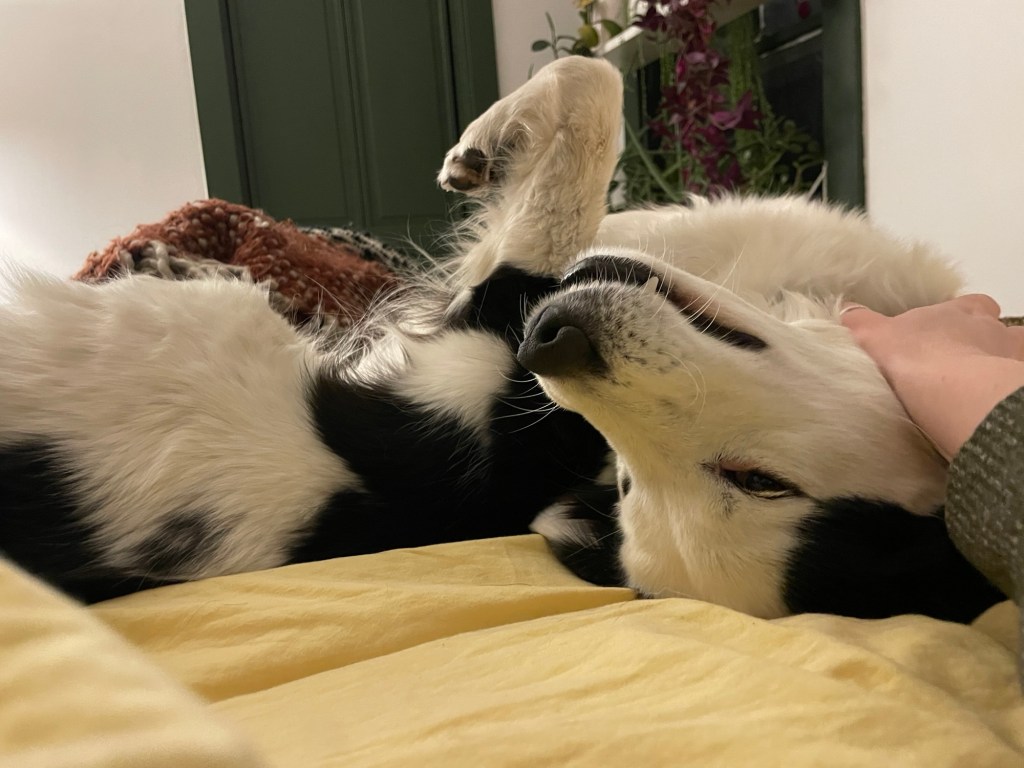
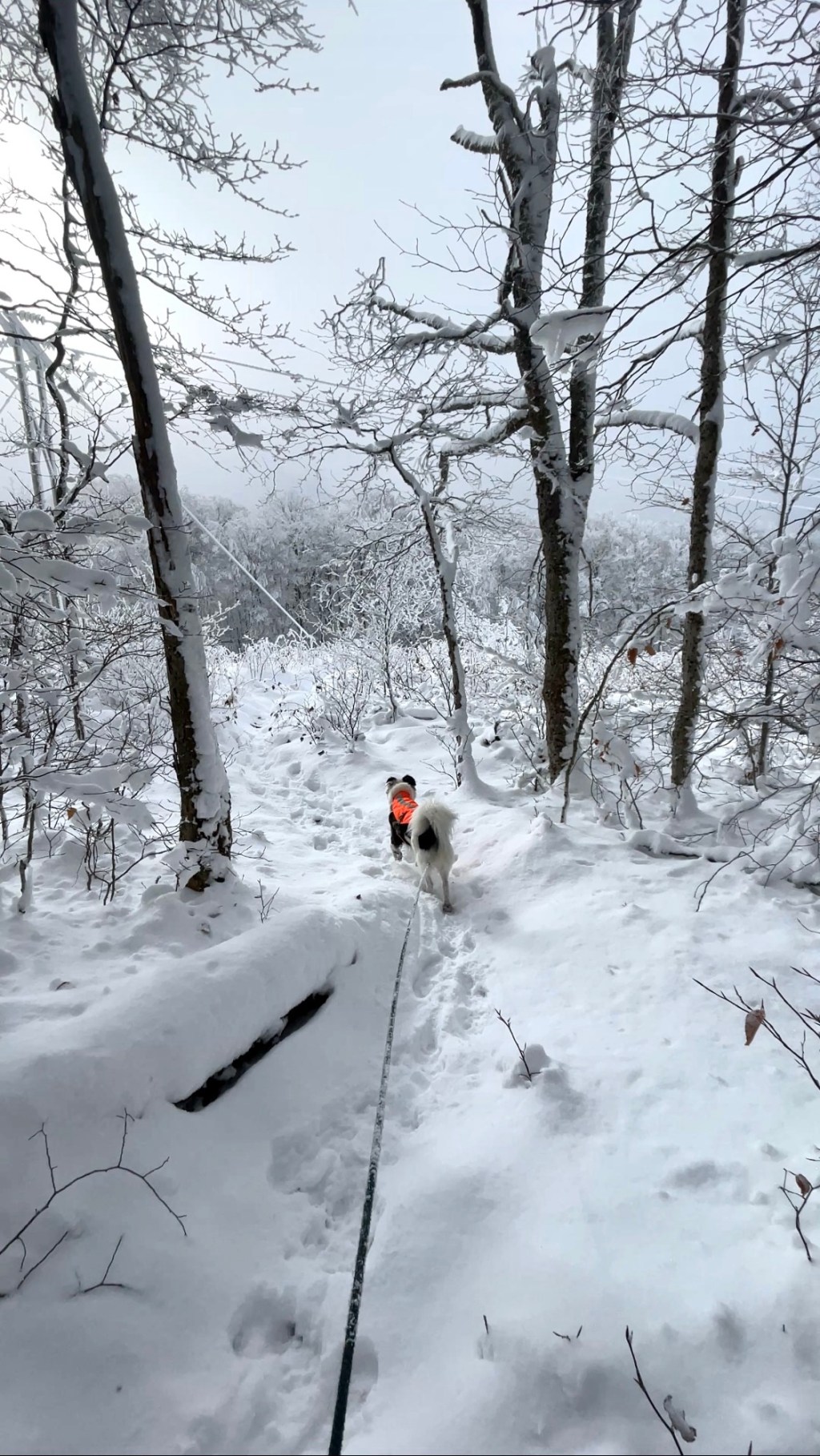
The hike out was very pretty and 100% downhill. Wolfy would have been thrilled 😂.
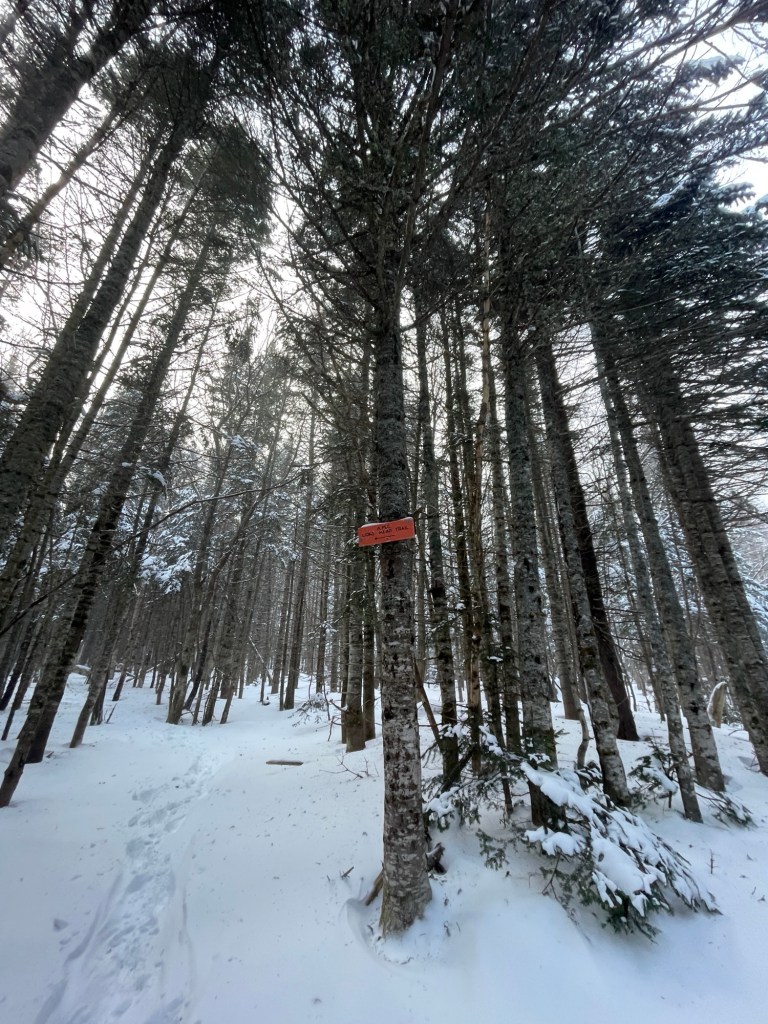
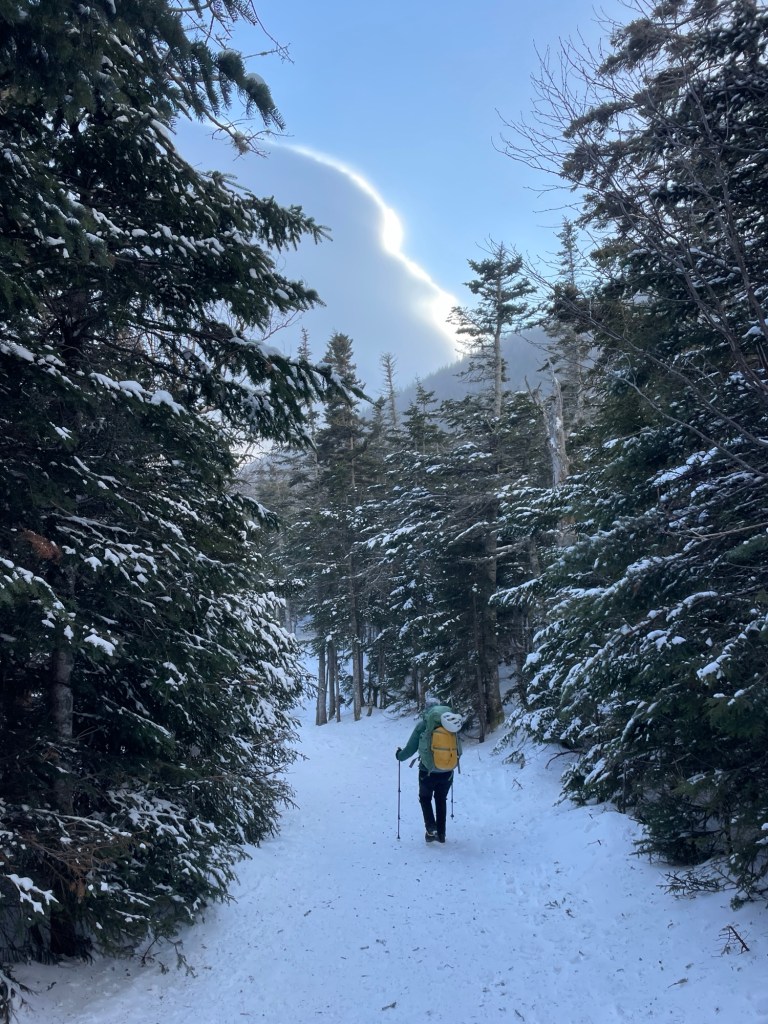
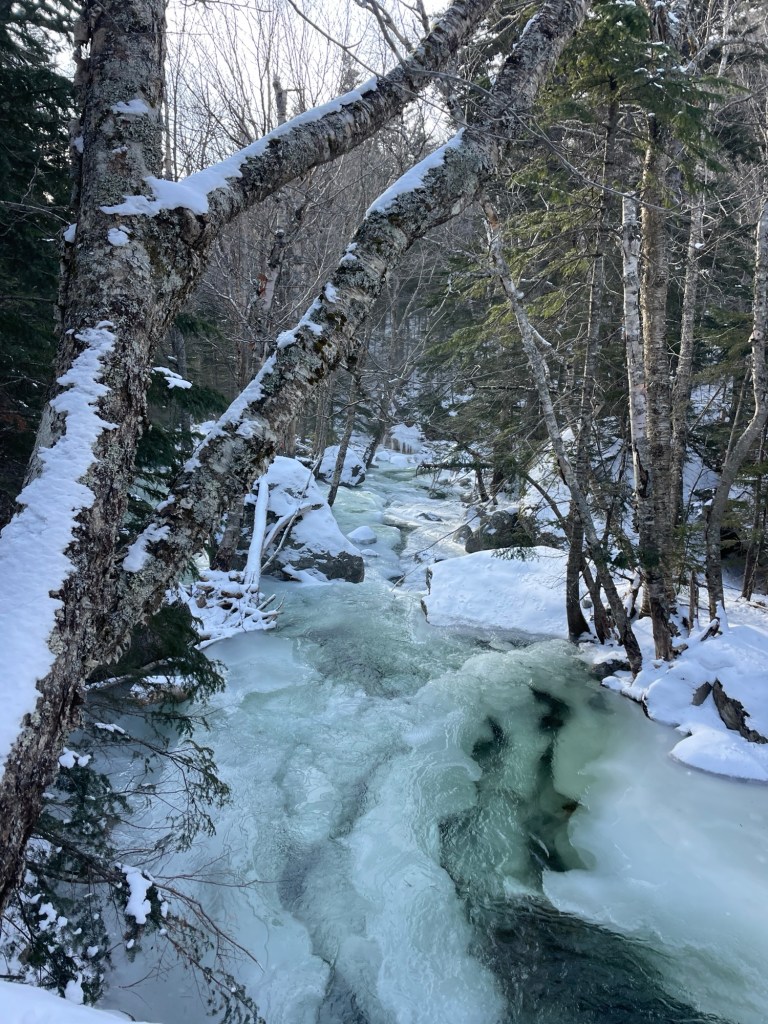
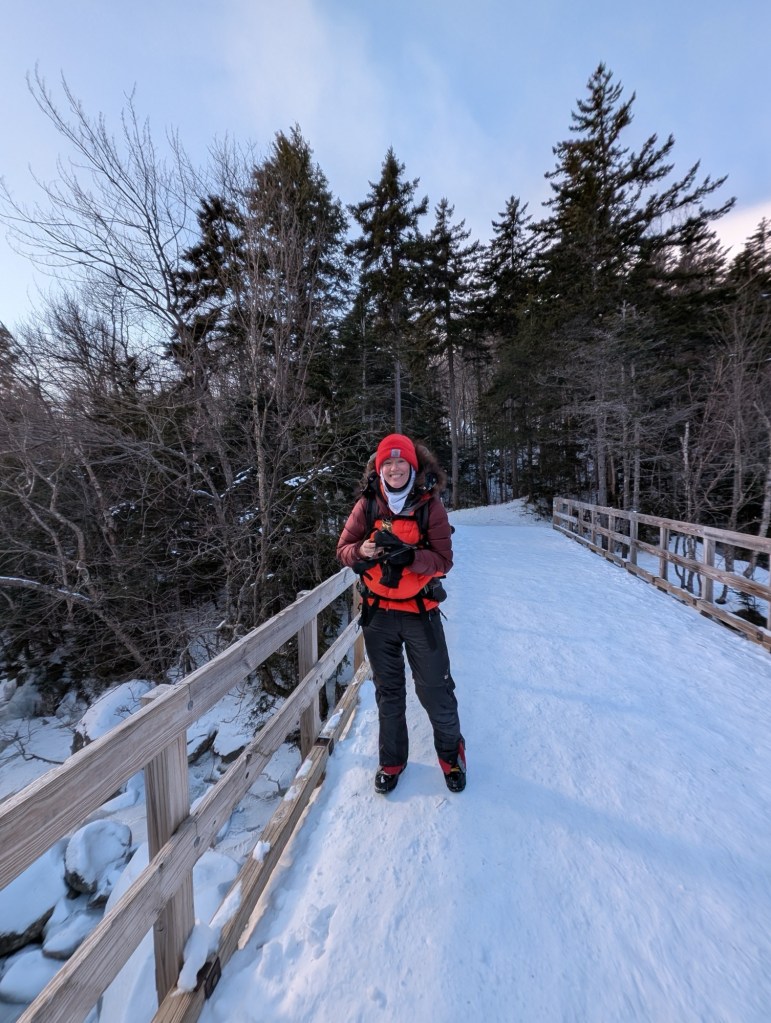
A successful adventure! We learned everything we’d hoped to learn. We also survived the night in the tent at nearly -15f (before windchill), which was the coldest Drea had ever slept out. We earned the Dunkin’ we picked up on the way back to the outfitters! Once there, since we’d finished early, we chatted gear and winter routes to Katahdin with Joe for a bit until we hit the road home. He was very helpful.
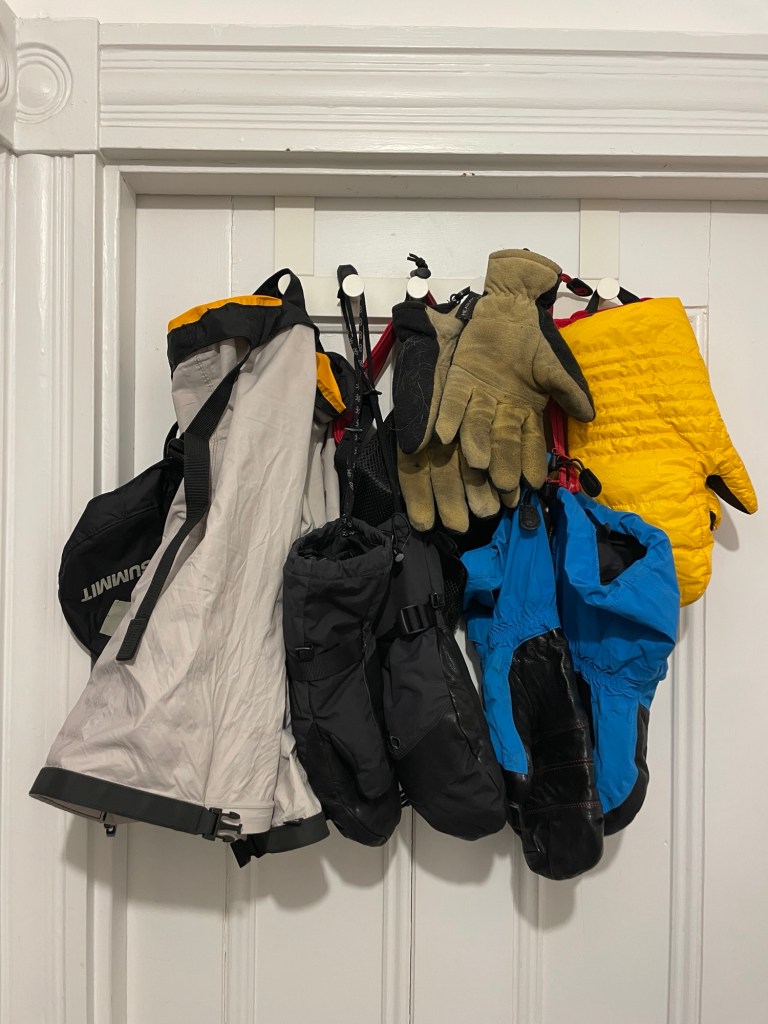
Once home, it was time to dry out the gear and turn things around for the next weekend‘s adventure. I love doing my solo stuff, but it is nice to have a friend who is equally deranged that we can sync up for some hairbrained, type-2 fun on occasion.
Thanks Drea!

 The TypeTwoFun Club
Leave a comment