“I forget this is a race because I am wrapped up in the adventure of it.”
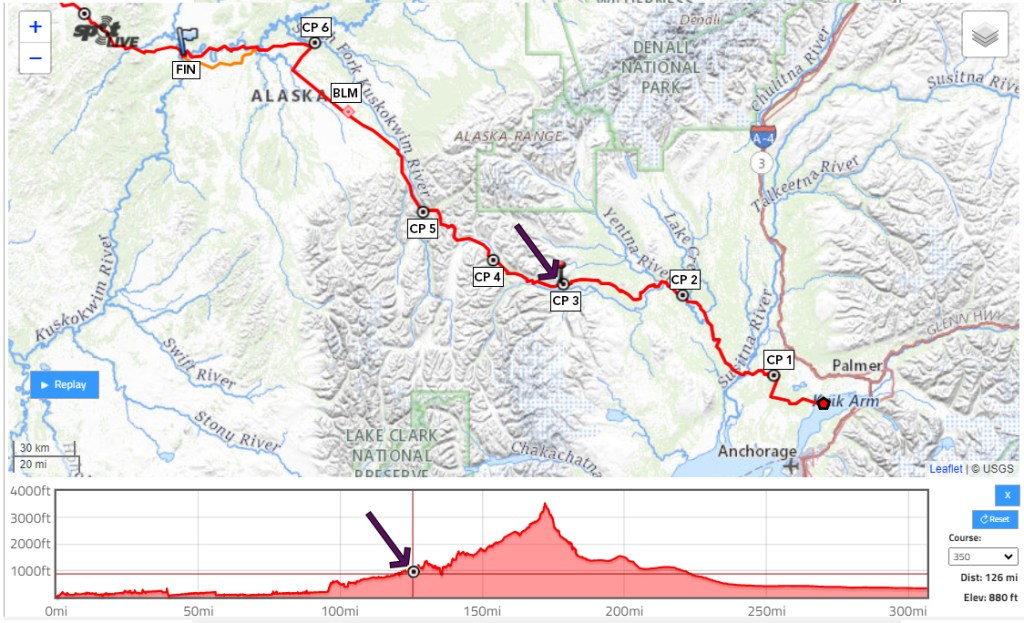
DAY 1
- Start 2:00pm (Knik Lake)
- End: 12:27am (Bivy)
- Miles 29.1
Day 2
- Start: 7:20am (Bivy)
- End: 6:25pm (Yentna)
- Miles: 26.9
DAY 3
- Start: 6:25am (Yentna)
- End: 6:24pm (Skwentna)
- Miles: 30.6
DAY 4
- Start: 5:20am (Skwenta)
- End: 10:04pm (Finger Lake)
- Miles: 37.3
Pre-Race Events
The official events preceeding the race start were an athlete meeting and athlete check-in. I chose the remote athlete meeting option, being up in Big Lake 90 minutes outside the city and having no reason or plans to be down the day before race start. The Race Director, Kyle, went over the logistics for start day and some of the rules and information in the athlete guide, along with playing some previous years video footage cut into an epic-looking movie theater trailer, complete with dramatic music, to hype everybody up.
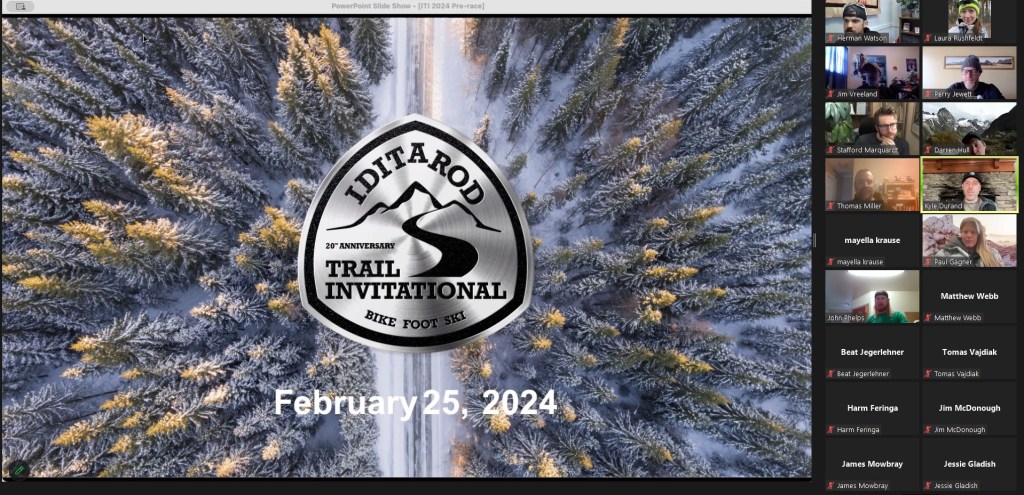
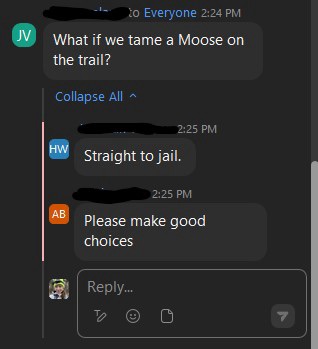
As with all zoom meetings, the real action was in the comments section.
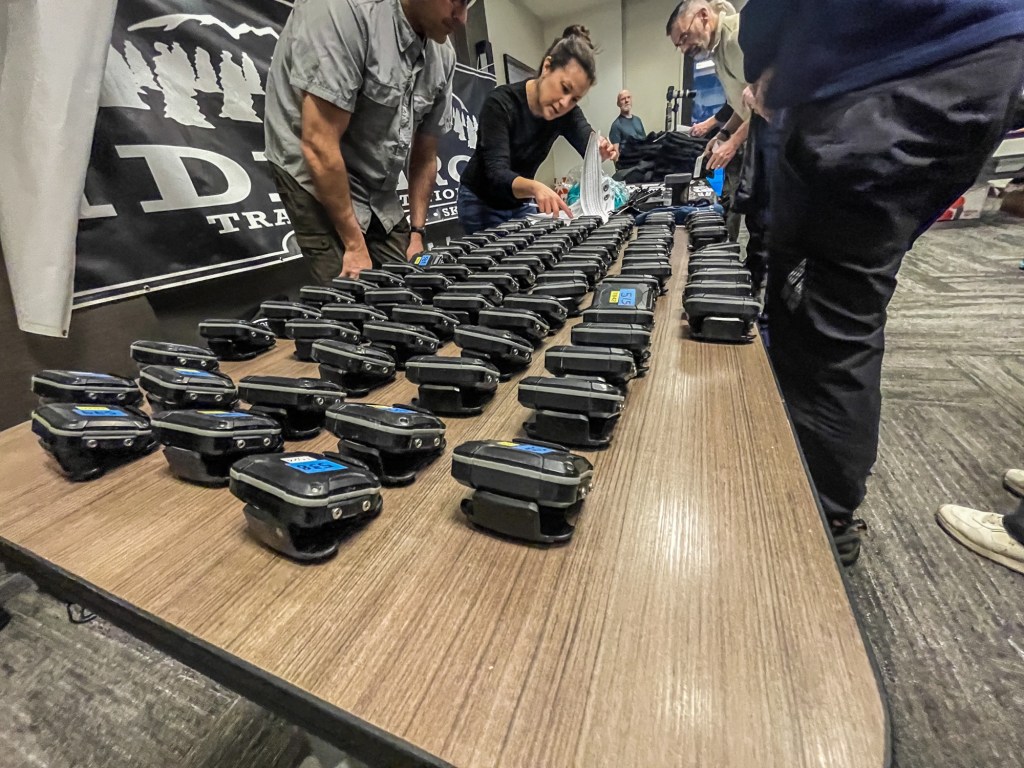
The official race check-in was Friday morning (also offered Saturday morning) and included signing the waiver–just typical legal jargon that we wont sue when we inevitably die on the course**, etc, etc. We then got our official tracker, the only piece of mandatory gear, along with a swag bag of some ITI goodies like a thermos, sweatshirt, sticker, and tote. I then proceeded to purchase a billion additional pieces of merch, so fam, y’all know what you’re getting for Christmas now. Who knew if I’d ever be here again with the option to get an ITI-branded water bottle? Better get every model they have! I was very embarrassing, but have no ragrets. There was also a welcome party Friday night, but I missed it due to timing.
**no one has ever died as part of the ITI.
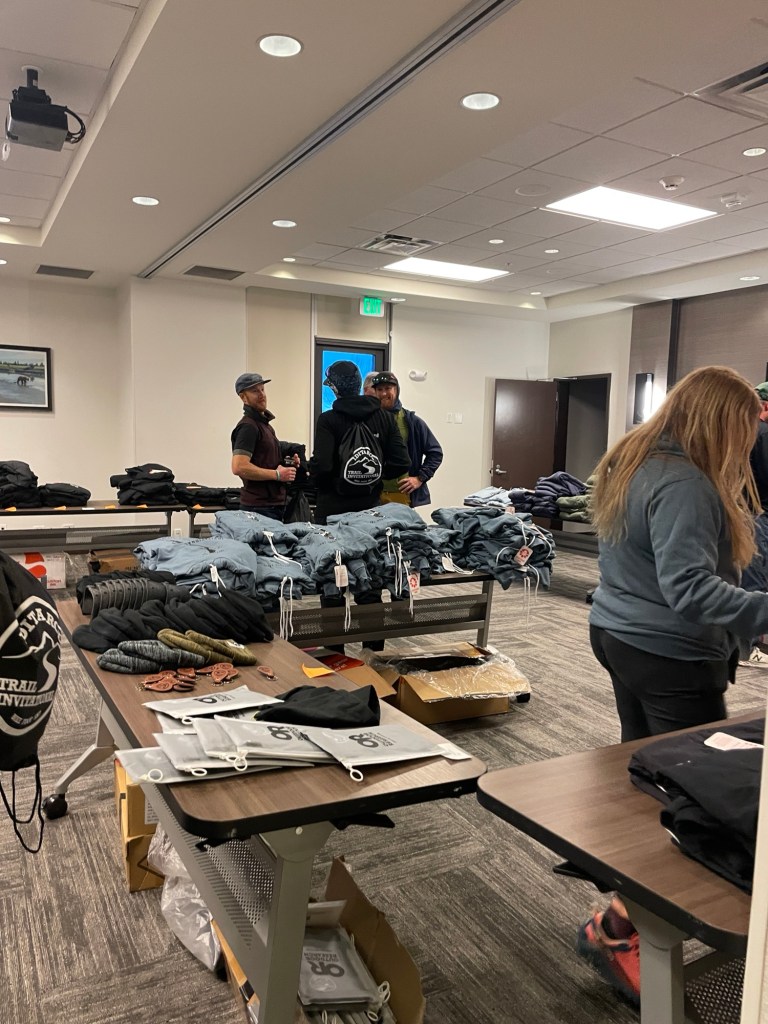
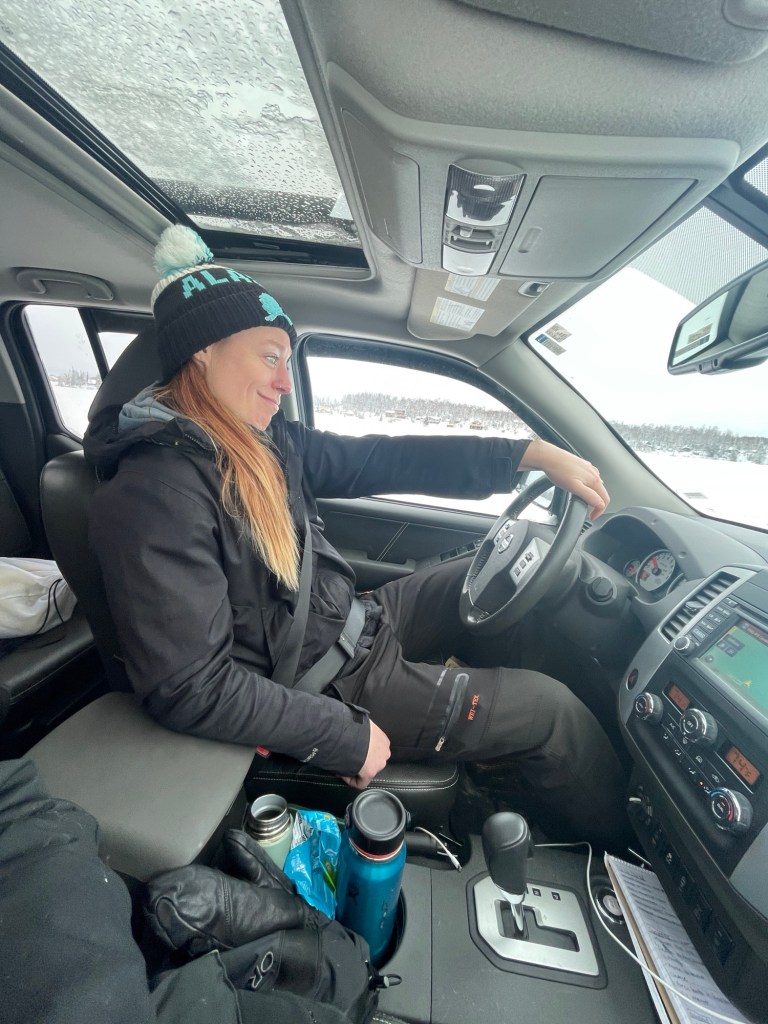
It was very warm and even rainy a few days prior to start, so many were nervous about the condition of the lakes in the first ten miles of the course. Since I was staying right up near them, we went on a scouting mission to share the conditions with the rest of the racers. We also went ‘scouting’ some of the trails on the north end of big lake, using some Alaskan alternative mode of transportation. Thanks, Alaska Mushing School and Happy Trails Kennel! Forced Rest day, complete.

And we’re off!
“I feel so excited and oddly calm”
I texted this to my friend Abby, who along with Erin and Enya had all traveled up to Alaska from the mid-west to see me off (y’all rock). And it wasn’t even a lie! I felt as though I’d done everything I possibly could to get myself ready, both physically and mentally. I was starting with my best possible shot of having a great race. I was as ready as I’d ever be!
I wrote on that day: “I am approaching the trip with a VERY healthy dose of respect for the trail (especially terrain and weather!), but my emotions are 100% joy and excitement. What an opportunity. What an adventure.” No lie.
I also made the decision to be completely off-grid for the duration of my race, including social media and text. My family knew I had my garmin and could contact them (and SAR) if needed, so no news was good news. Everyone could follow my progress on the race tracking page at trackleaders.com, which was the first time ‘dot watching’ for a lot of people I know. My fellow armchair mushers knew the drill from watching dogsled races, and proceeded to generate hilarious group threads discussing my progress and hypothesizing my strategy throughout the race. (I got to come back and read it all at the end, which was a heckin’ delight.)
We got to the start on Knik Lake about 12:00 noon, two hours before actual race start. I lined up Pokey the sled in the holding area, who looked quite lonely at first but quickly had a crew of sleds join her. I then fired up my tracker and saw my little dot appear sucessfully on the page. “Huh, guess that makes it official” buzzed through my head. I wasnt looking for an excuse to back out or anything, but the concrete reality that this was actually about to happen set in all at once. Before I could start to get jittery with nerves, my rational brain stepped in: “All I have to do today is get to Butterfly, and I’ve literally already done that. Multiple times!” No sweat.

My friends made it over to the bar from the finish line of the Junior Iditarod, happening just a few dozen yards away on the same lake. We caught up and enjoyed some grilled food at the bar before I started to gear up and get myself situated into the starting queue–near the BACK so I wouldn’t get in any real racer’s way. Our core group of non-cyclists from ITI camp (affectionally called the ‘ITI Feet People’) including fellow racers Vinny and Jason, and future racer Fred, got a quick group pic. ITI Race Official Cynthia frantically scurried around getting replacement trackers to the last couple of athletes still not pinging. The vibes were good.
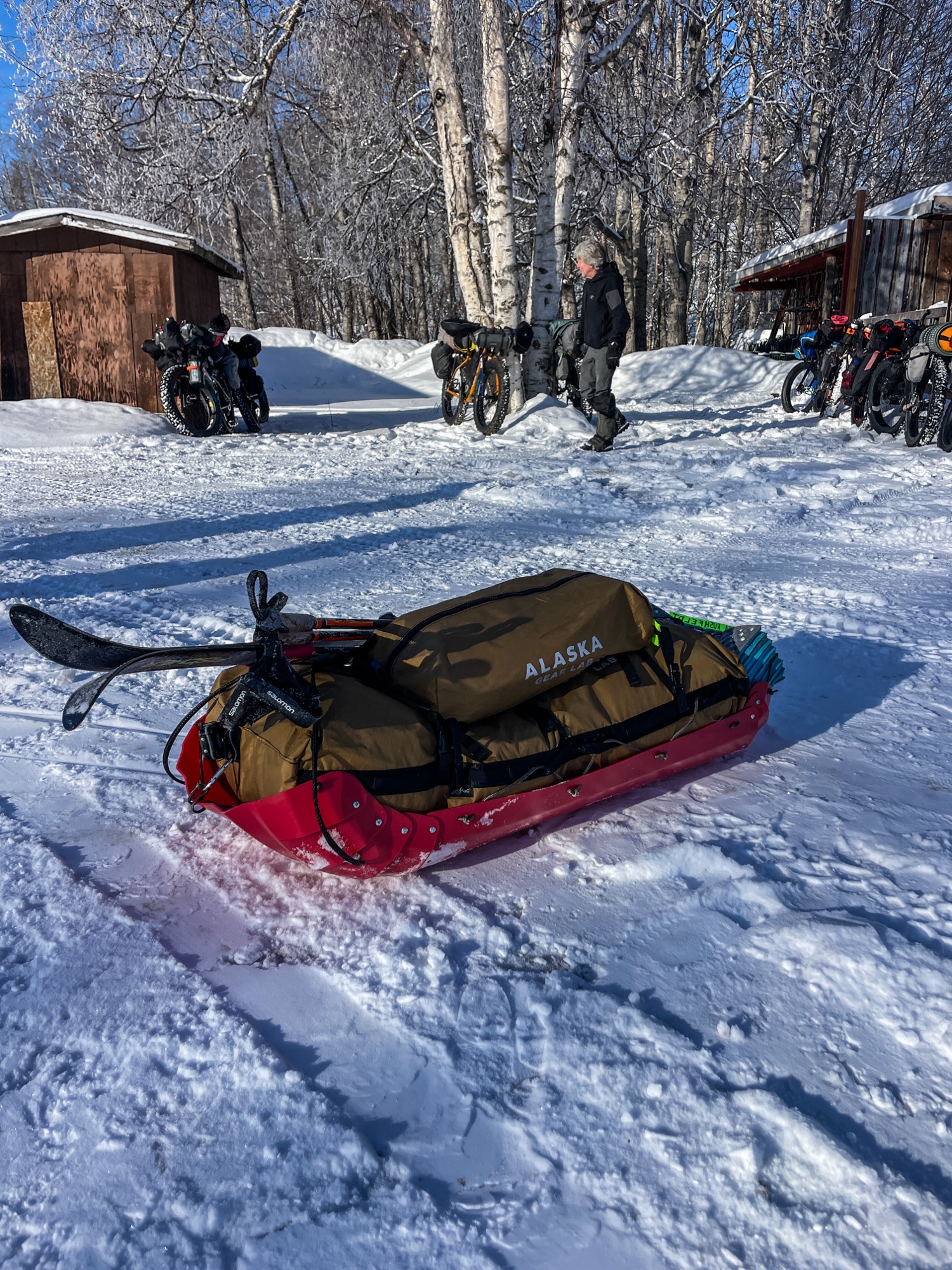
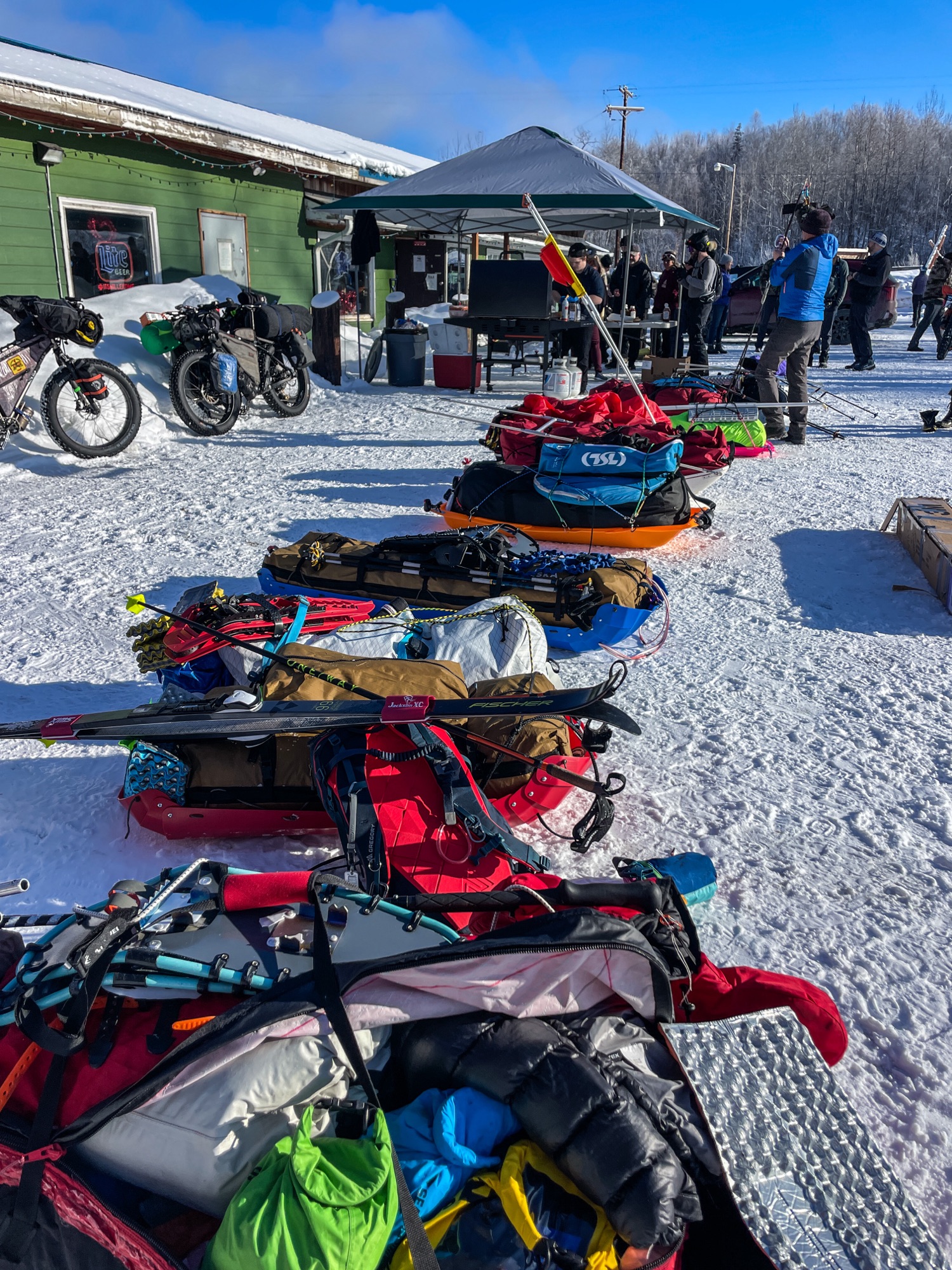
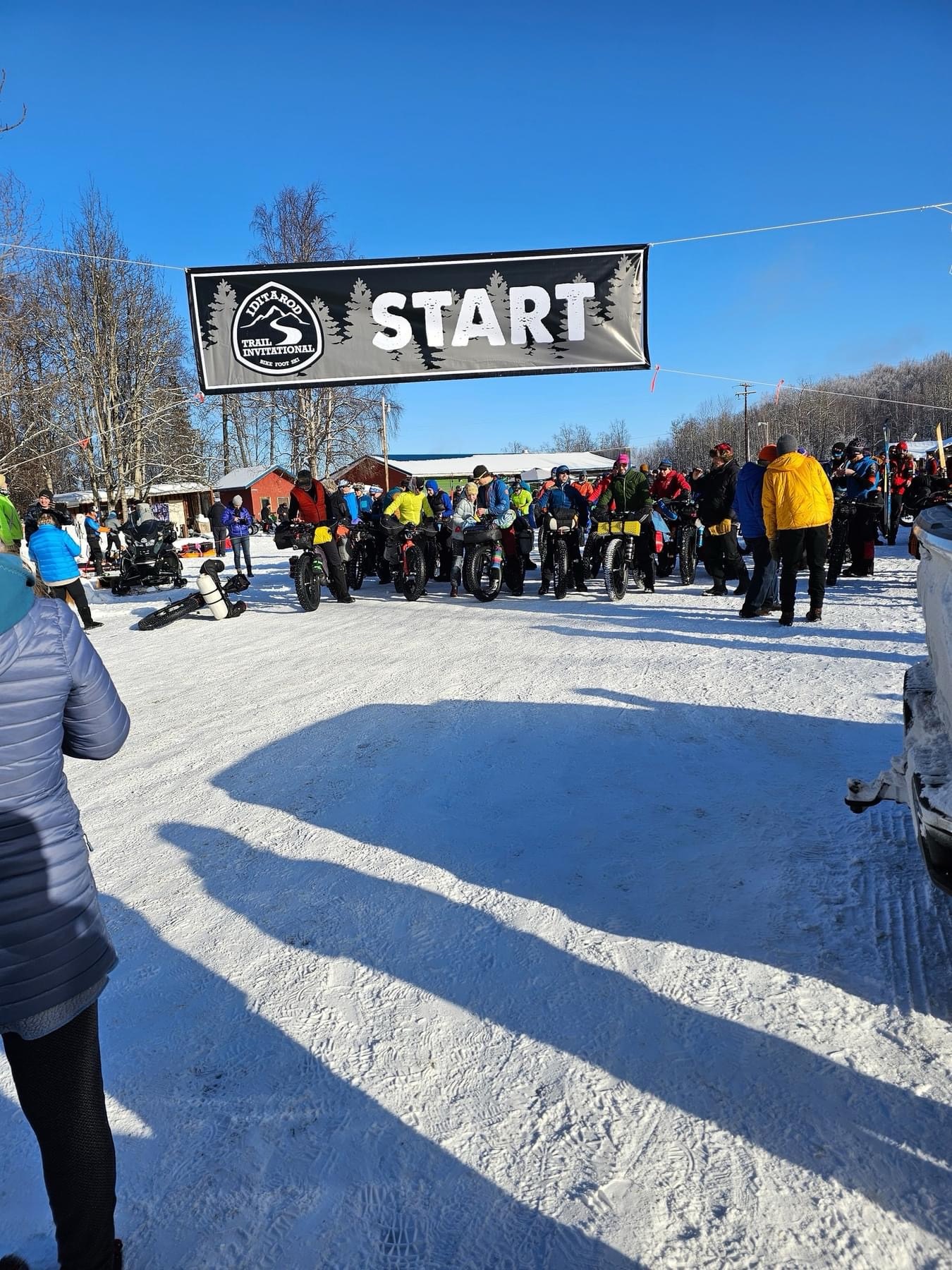
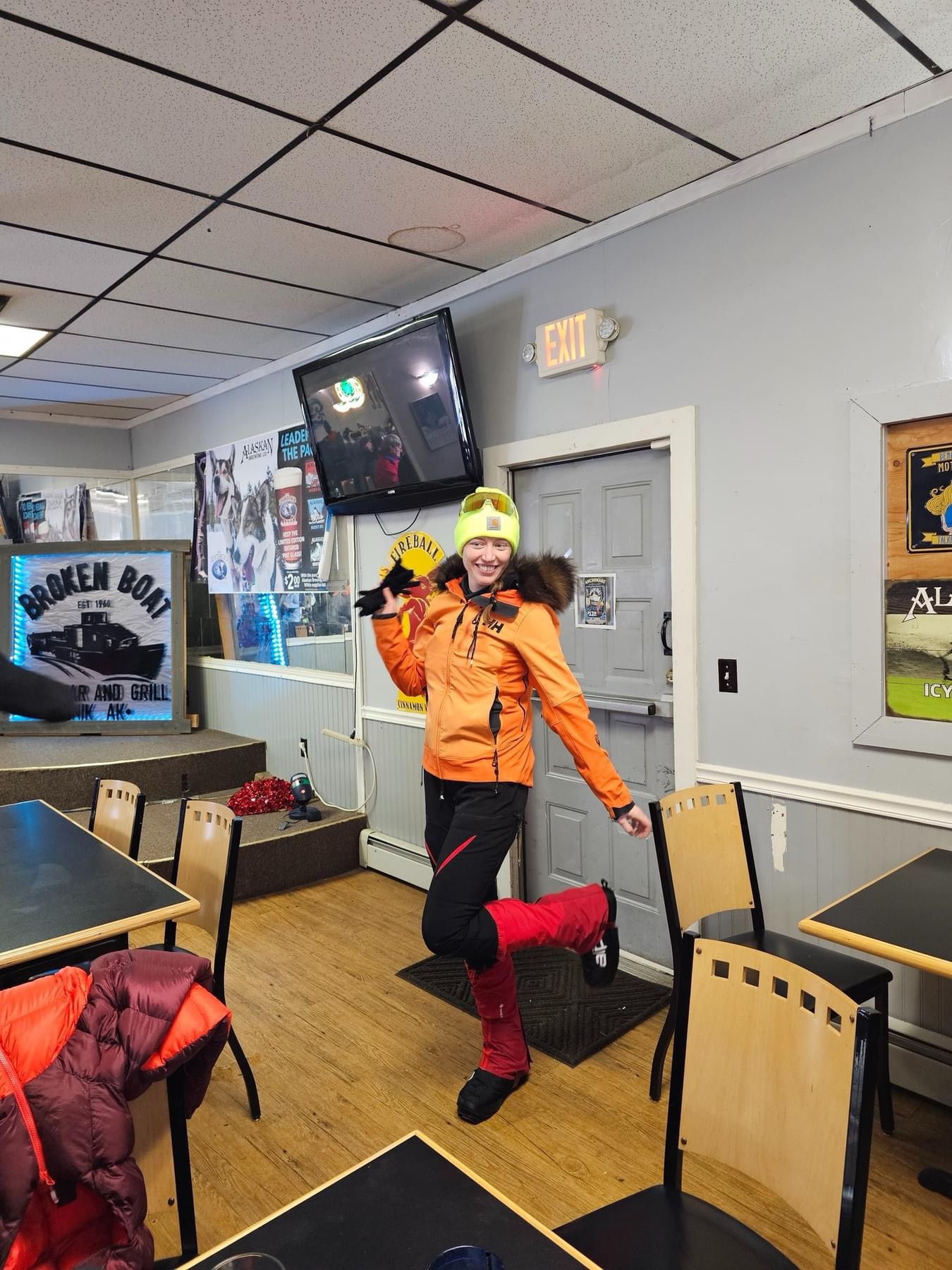
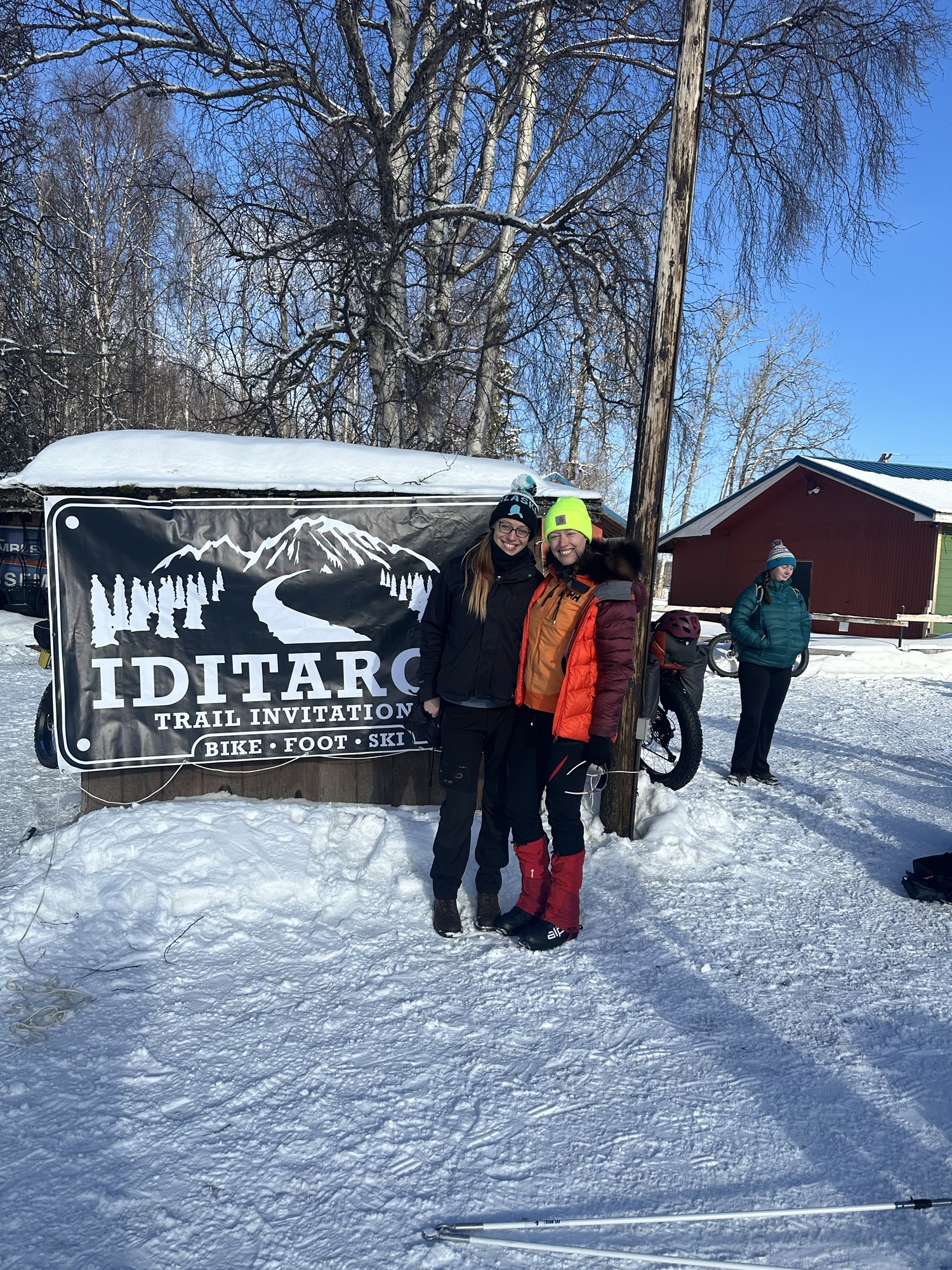
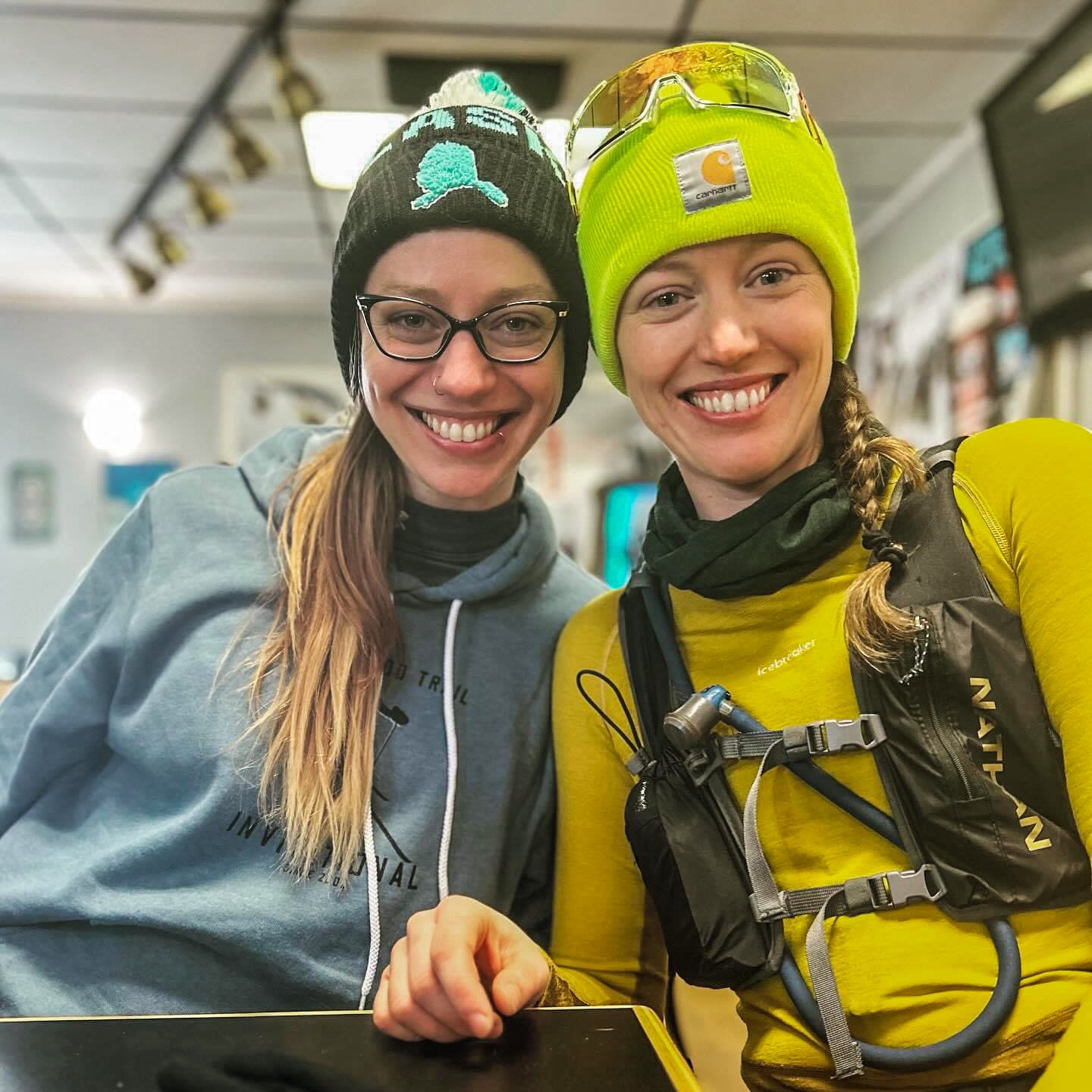
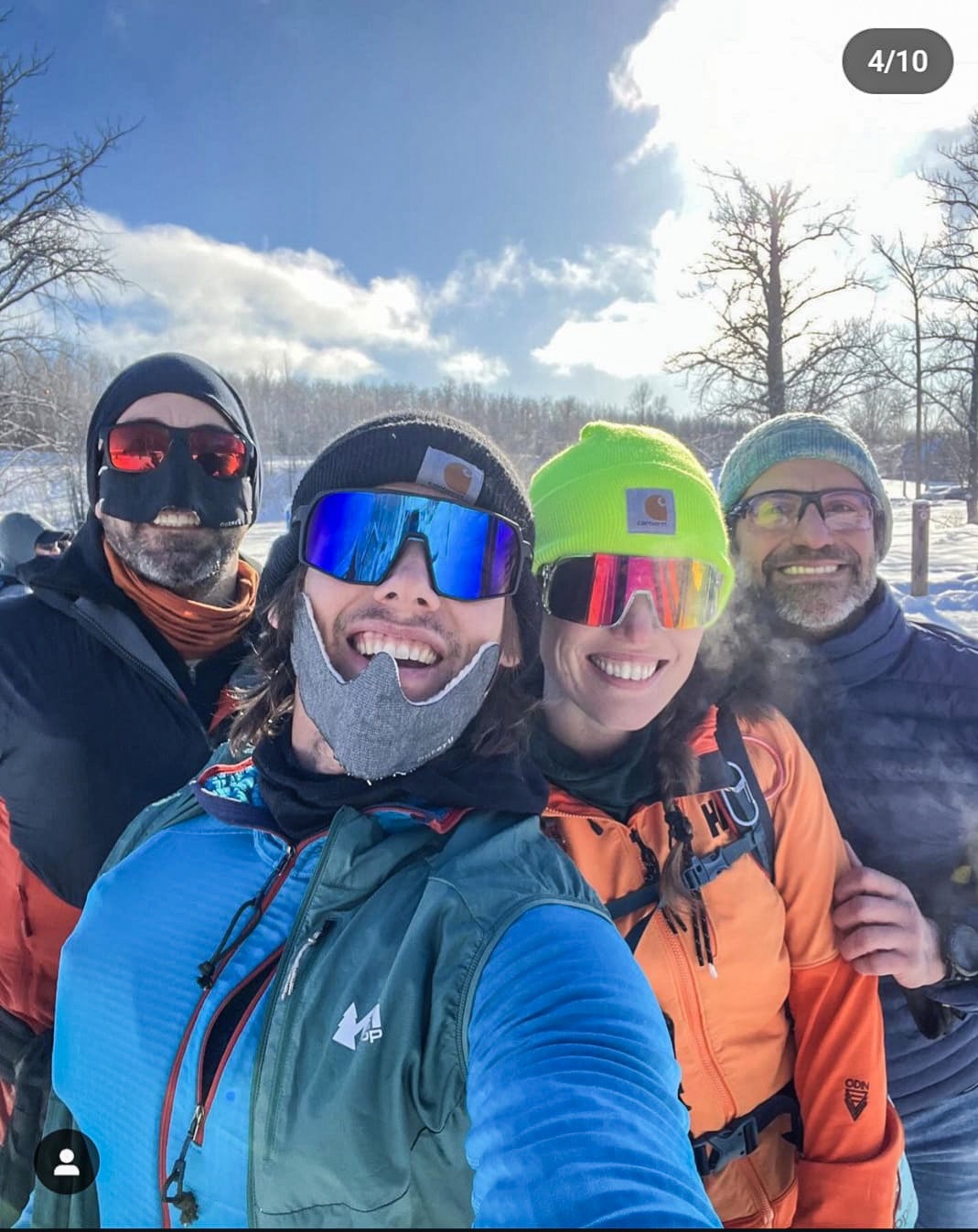
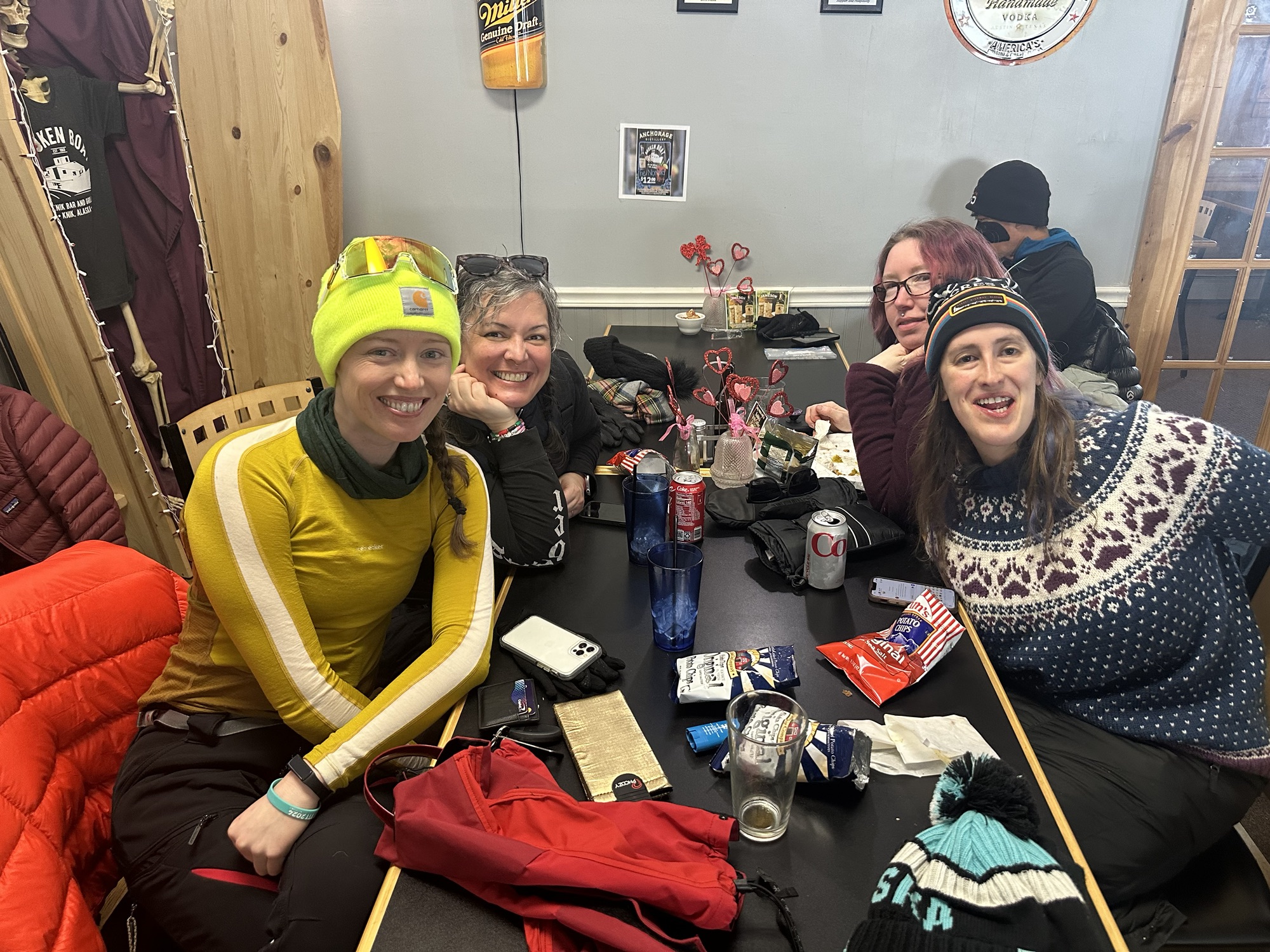
Before we knew it, a literal gun went off. I don’t think many people were expecting it, and a few near the front (racers or fans, who’s to say) literally screamed. But we were off! 100+ racers, slowly funneling into a stream who would get further filtered into a single file line onto the narrow Historic Iditarod trail. Go time.
The Trail I know
The day one trail offers multiple options to get from race start to CP-1. Unlike many races, the ITI doesn’t mandate a set route; you have to get to each checkpoint, in the correct order, under your own power without outside assistance. That’s it. My Camp experience and three weeks of training locally allowed me to get familiar with all my trail options and have a plan A, B, and C for my route, as conditions dictated. Thankfully, the trail had frozen back up and I was able to take my preferred plan A route, up the Iditarod Trail to the Aurora Dog Mushers trail, to the road network connecting to Susitna Brewery and across Big Lake.
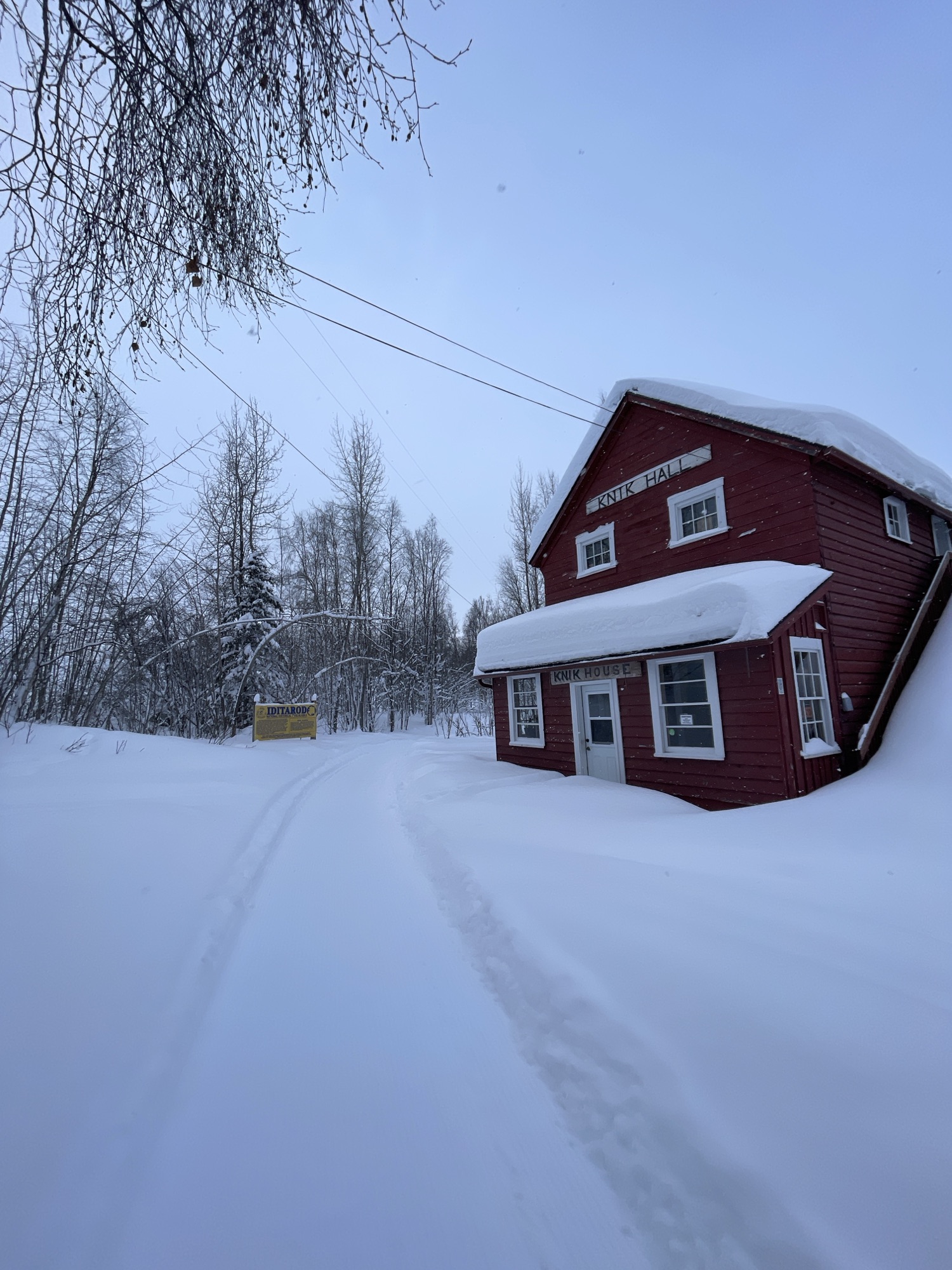
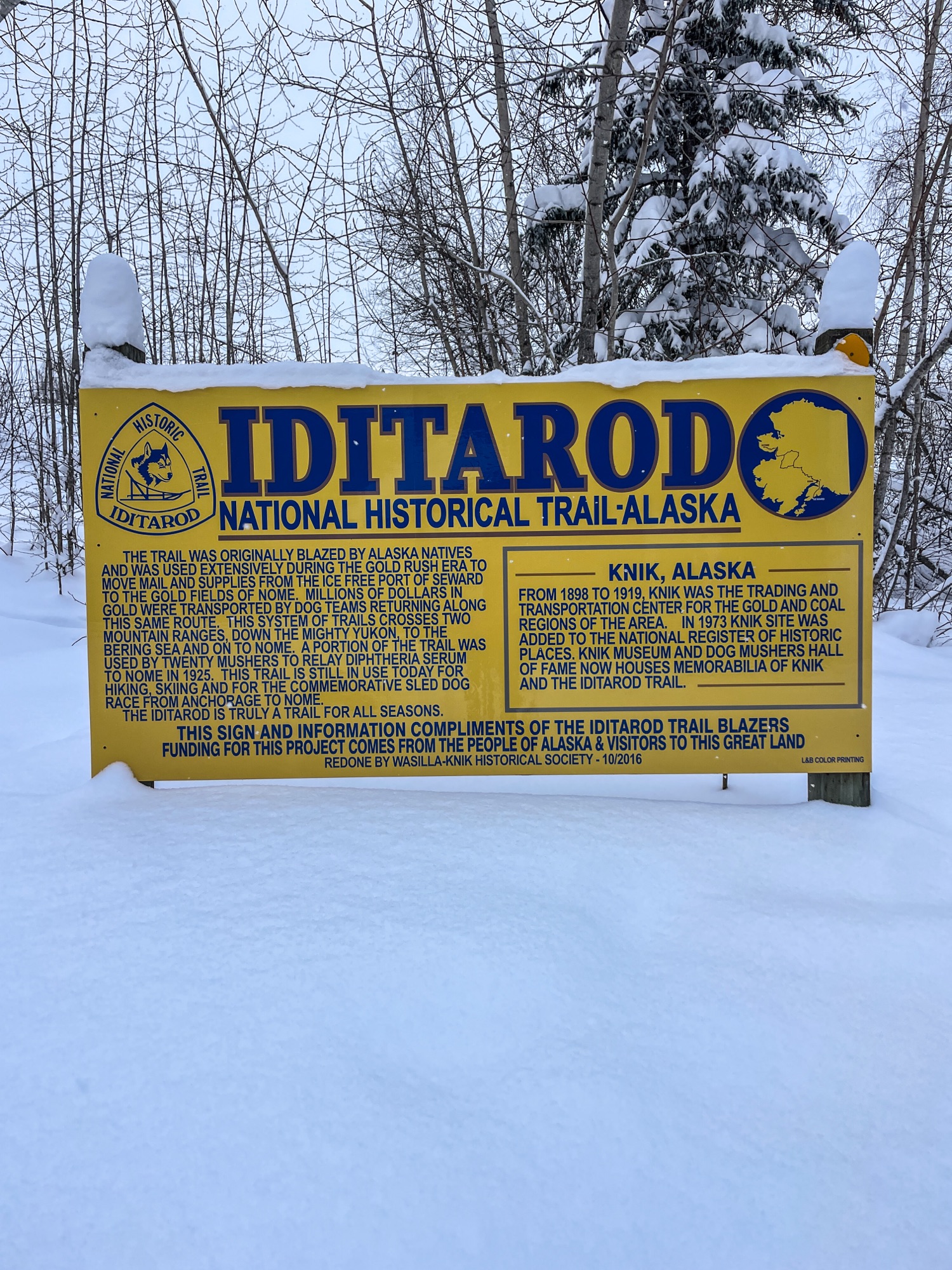
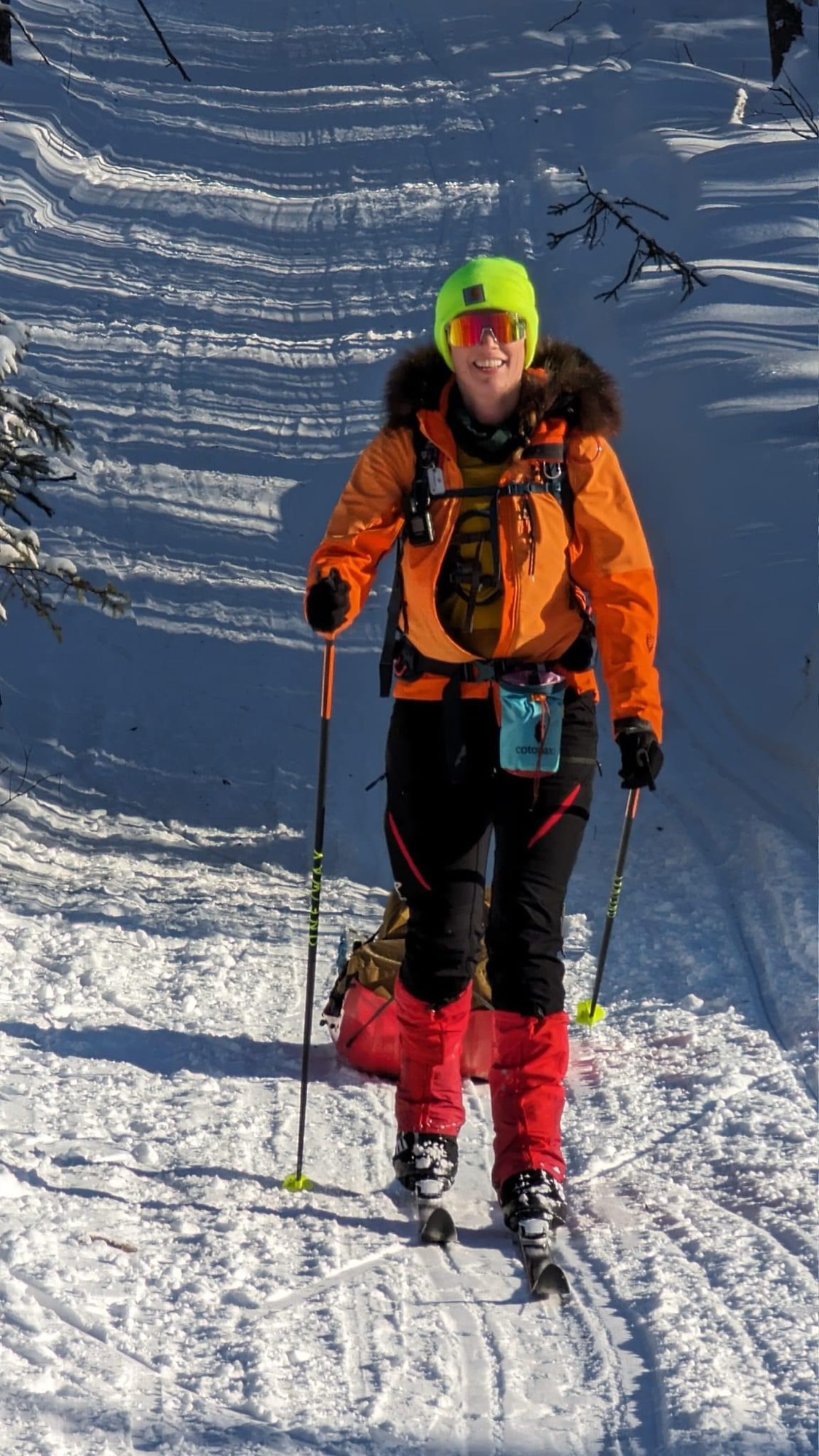
My friends surprised me by meeting me at the Brewery with a quick celebratory toast, then driving past to cheer on the ice road across Big Lake. It made me laugh with them hooting and honking, leaning out of the car window. Their excitement was a bit infectious as I new the 5+ mile lake got a little monotonous (come back to me on this re: the Yentna river!!). I finished crossing Big Lake without incident right as the light was lowering. Switching from sunglasses to headlamp and continuing on, I was glad to be familiar with the route. Id forgotten a couple sections close to CP-1 got pretty hilly, and exerted myself a fair bit too much climbing up some hills on ski that would have been better walked up. Rookie mistakes.
Hot Tang: A cautionary tale
I arrived at CP-1 thinking I would quick check in and refill my water, and get back on the trail. Once there though, I realized I was actually a bit of a mess. I’d sweat in my coat the last few miles doing those climbs (sweating is a cardinal sin in winter ultras!), and needed to dry my coat. I also realized I hadn’t been hydrating properly and was a little bit nauseous. “And only 25 miles in!”, I began to berate myself. Again, rational brain came back: “It’s ok, you’re fine. You can recover right now from this and you’re at the spot to do it.” So a planned 20 minute break became an hour break, with a coat in the warming hut to dry out and 3 cups of hot tang and a sandwich to get my nutrition and hydration back on track.
Feeling good, I skied out of Butterfly and across the edge of the lake. The minute I got into the trees, I promptly threw up off the side of the trail. Note to self: too much Tang. Stick to what you know works for you. Once I’d offed the Tang, I felt a whole second wind, which was good because it was 11:30 at night and my race plan called for me to at LEAST get up the big hill below Cow Lake.
My camp buddy Jason, who’d been at Butterfly the same time as I was, caught up to me and passed me on the hill. We quickly discussed our bivy plans for the night and then parted ways when I found a good spot for me and he wanted a bit more mileage. I felt alert but I know myself–I’m a morning person. Pushing past 12:30 am on the first day was not going to set me up for success. So I stomped the snow out of my bivy site, got out my sleeping bag, pad, and bivy sack, and crashed out.
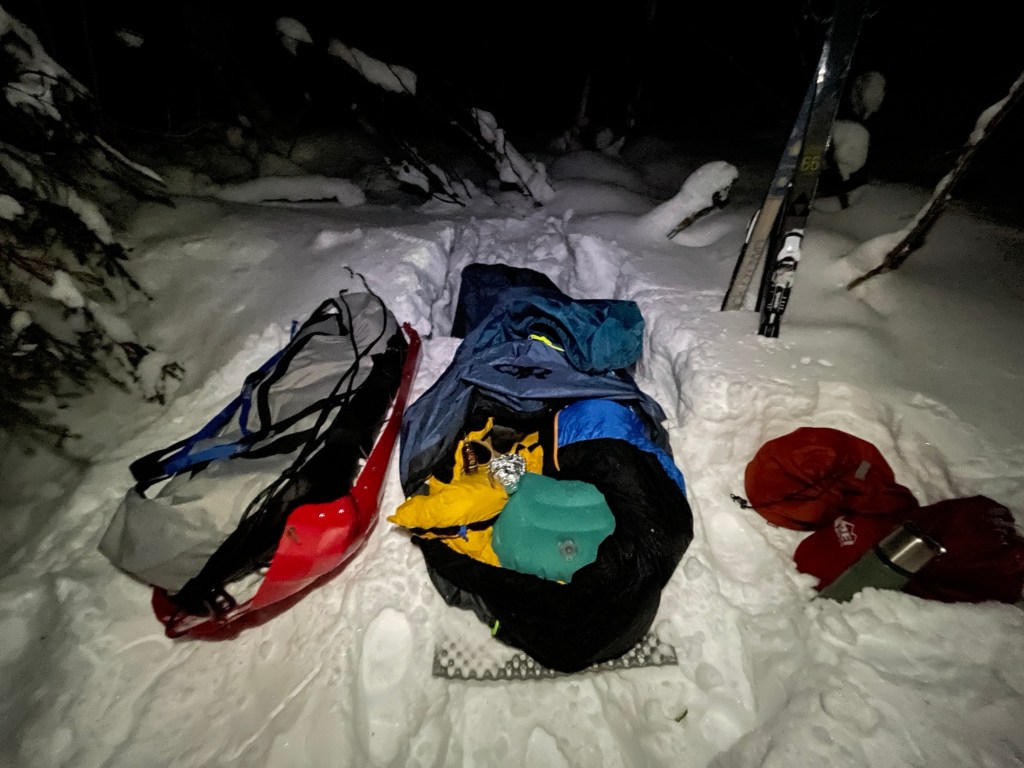
Looking at the tracker replay, its funny to see how many people passed by me that first night. Like, more than 15. I didn’t hear a peep, I slept like a baby. Possibly a bit too long–my racers’ weakness is that I am both slow and like a lot of sleep. I’ll never be pushing toward the front of the pack with that attitude–but thankfully I don’t care one bit about the fact that the race is a race. I am here for the adventure and to see the trail. And yes, that attitude had me a bit nervous about the time cutoffs coming in future days.
Take us to the River
I woke up and checked my sled thermometer: -25f. Cool cool, cool. I woudn’t say I exactly took my time getting up and moving, but I didnt set any records. Right as I was getting close to packed up, My camp friend Vinny walked up. He’d stayed at CP-1 overnight and not really had great rest there. My assessment was he could use a travel buddy for the morning, so he went ahead slowly so I could catch up. We traveled through the cold swamp together and onto the trail down toward the Susinta and Yentna rivers. Race day two would see us getting onto the Yentna and seeing how far we could travel north. The Alpenglow on Denali as we moved through the swamp toward the river was stunning. The Skeleton marker was at our intersection to head down toward the river–a bit of a tradition, and alternatingly hilarious or dark, depending on your mood I suppose.
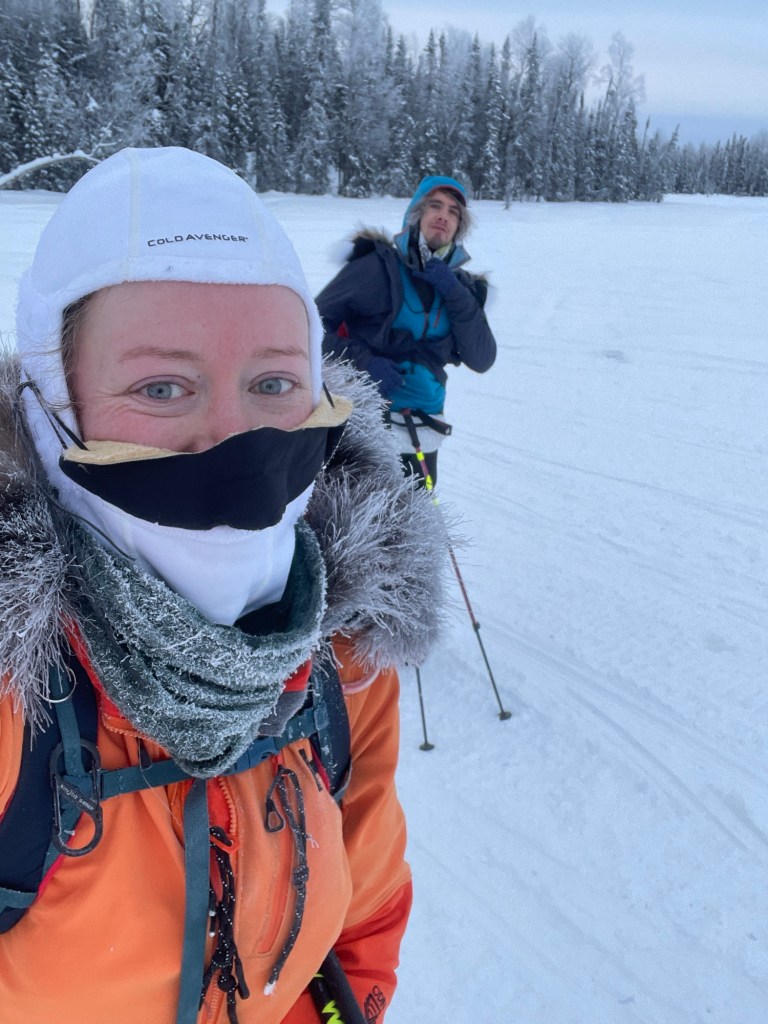
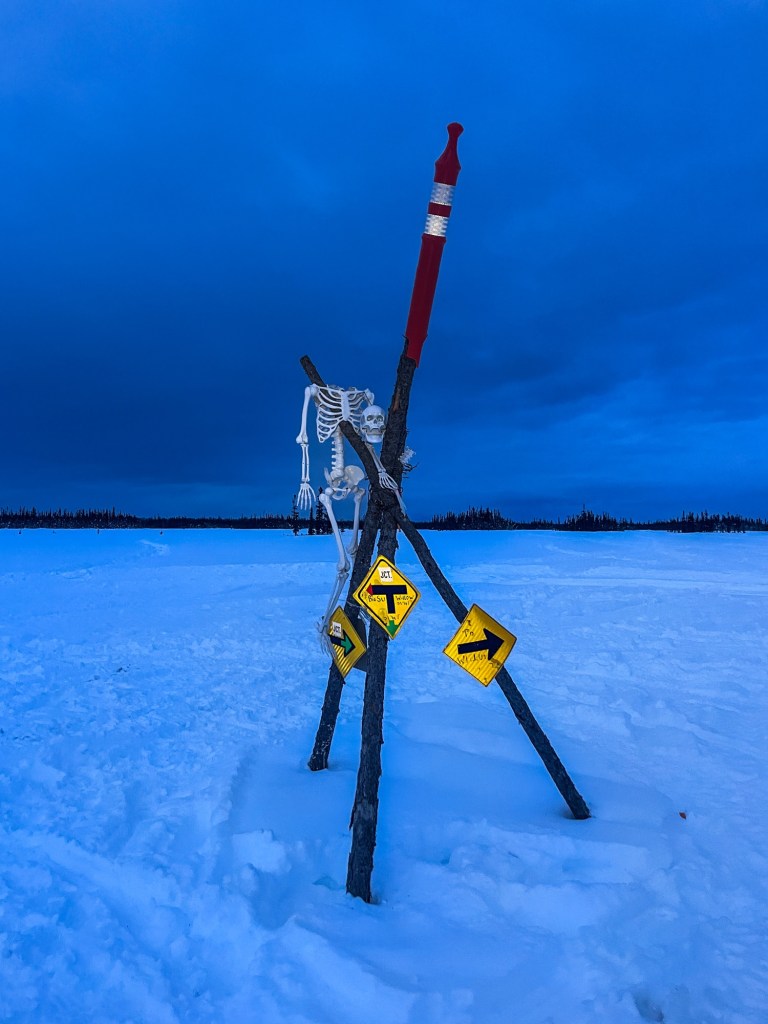

I got to the river a few minutes before Vinny but I knew we were moving fairly well together. For a lot of the race, you could feel completely alone in the middle of wide open backcountry, then stop for 5 minutes and have 2 other racers catch up with you. About the minute I finished navigating across the Susitna river flowage and onto the Yentna and saw the first mile marker (14), fresh flakes started to fall. Great. On skis it affects me less than the other race modalities, but snow still means slow. Until its groomed and the groomed trail has a chance to ‘set’ (the snow naturally hardens when packed), it reduces your speed and increases your effort.
At some point, Race Director Kyle buzzed past me on his snowmachine, heading from CP-1 up to the next waypoint. He took this picture of Vinny and I, posted on the race instagram page:
Yentna Station: a Port in a Storm
It was a long, sloggy day moving up the Yentna. My pace was nowhere near where I’d hoped it would be, and I started to regret letting myself sleep so long. I’d hoped to be into Yentna station by 3 or 3:30, but it quickly was becoming clear I’d be nowhere near that fast. Could I stay at Yentna and still make the race time cutoffs? I obsessively did math in my head, repeatedly because I couldnt really focus well enough to determine a difinitive answer, and my estimate of when I’d get in to Yentna Station kept slipping back. Finally as I was loosing light, I turned the last oxbow bend of the river and saw the trail in to the Station.
Yentna Station is not an official checkpoint for ITI, but it IS an official checkpoint for Iditarod. It’s well siutated directly on the river for convenient access from the course, and offers hot meals and shared bunkrooms for a nap or an overnight. Everyone who was working the roadhouse was a delight–exicted about our race, friendly, and immensely accommodating. I snagged a grilled cheese and tomato soup and a coveted bunk. Not everyone was so lucky…Vinny got a cot and I think Jason had to sleep on a pad on the living room floor. A lot of racers had been slowed down by the conditions and decided to stay over at Yentna. It’s very difficult to bivy out on the river overnight–there’s no cover unless you climb up the steep banks, and the river can get very cold overnight.
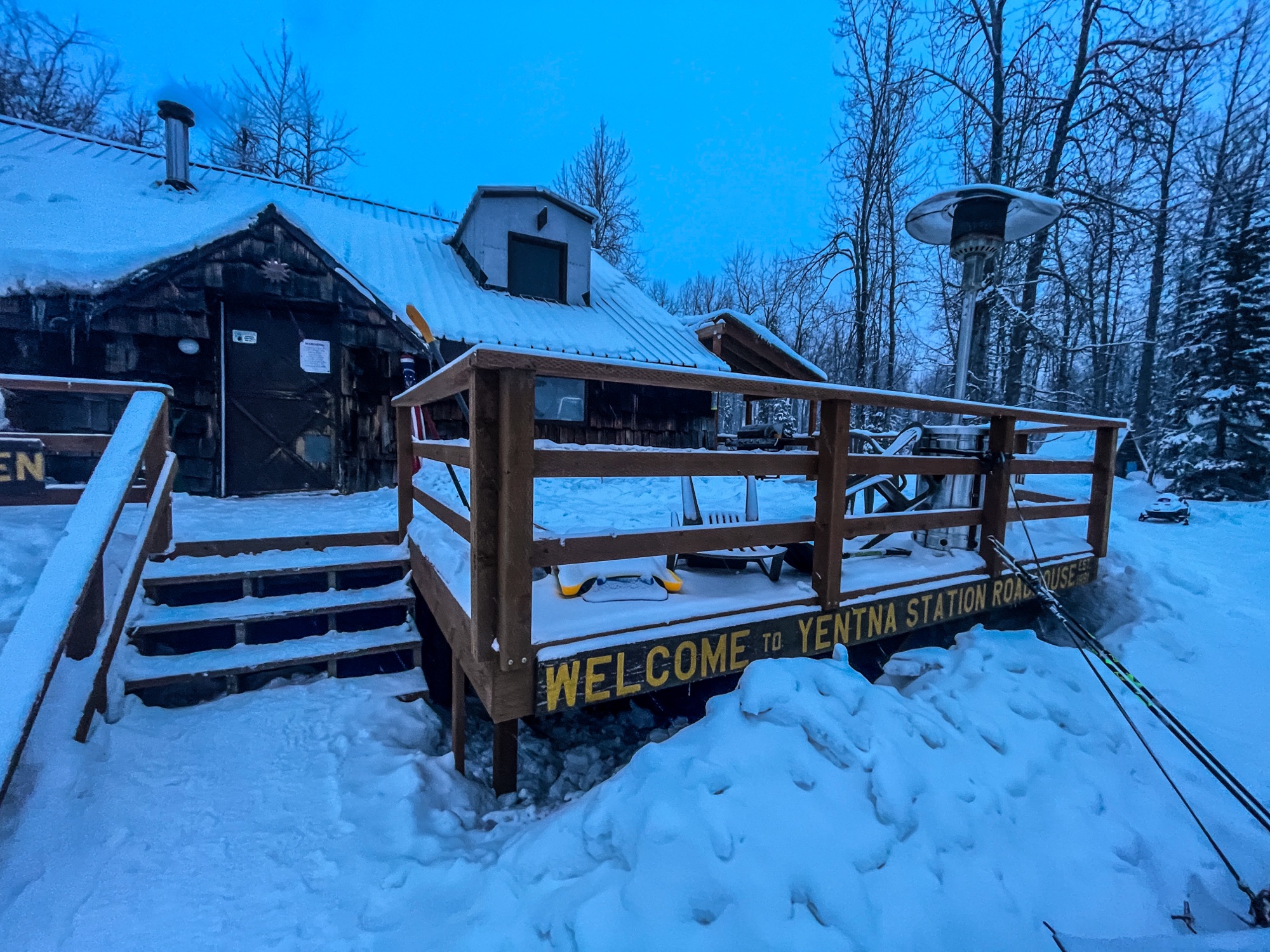
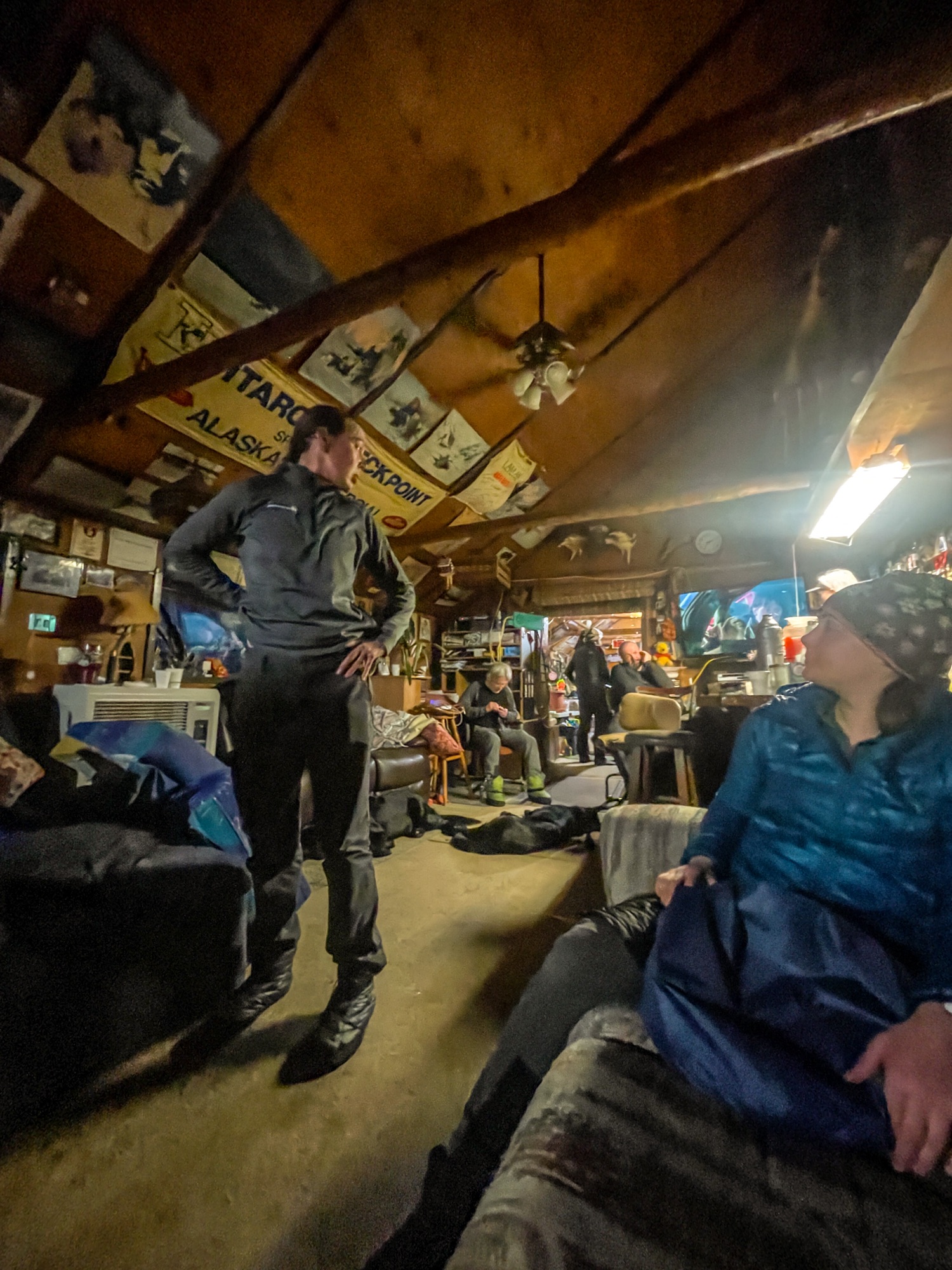
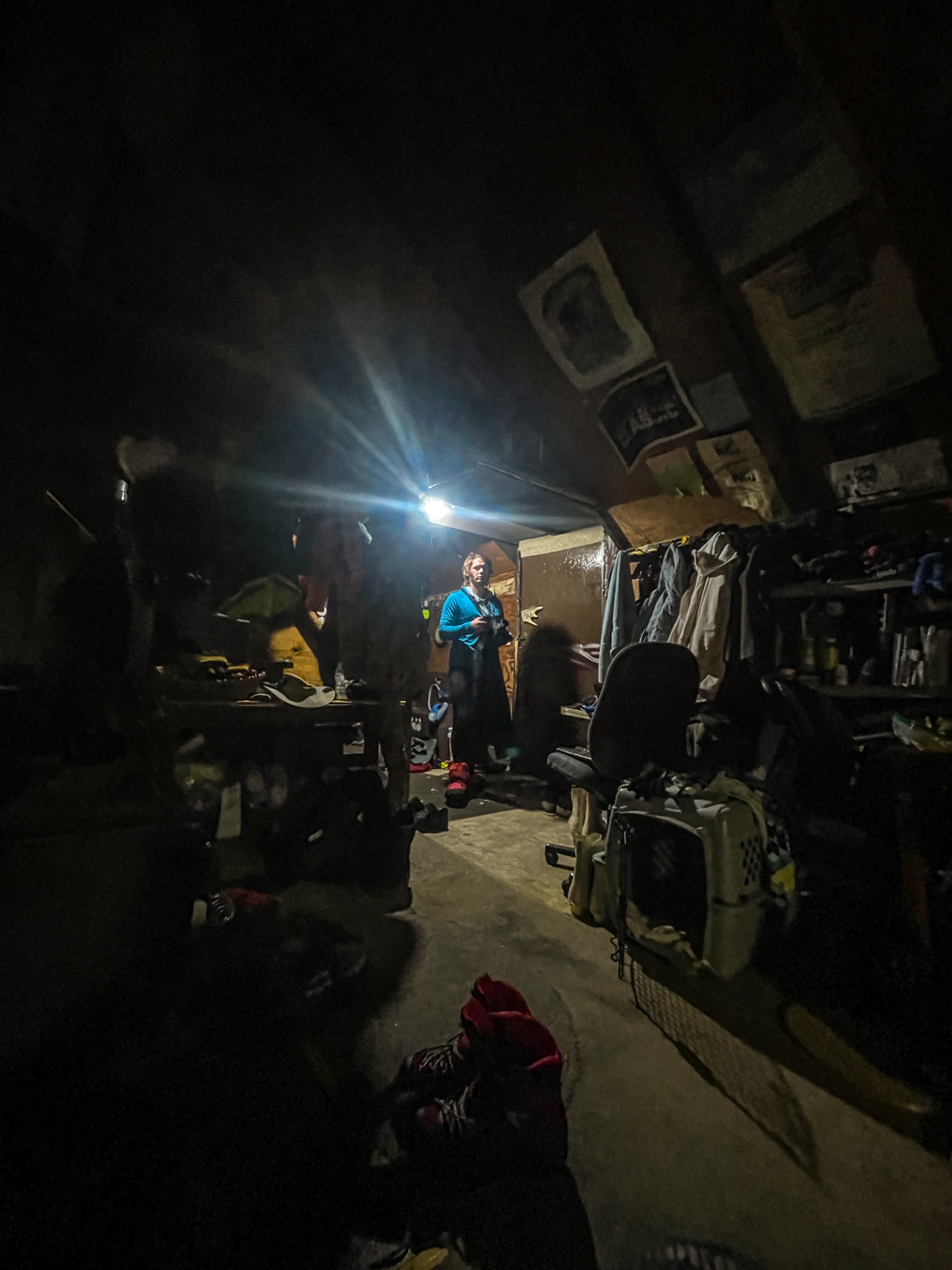
The crew at Yentna got up at 4am to make some of us a hot breakfast and see us off–good people. My eggs and sausage breakfast, with coffee, went down really easy after all the exertion of the previous day. Still, I’d slept well, I was feeling fresh, and I knew today was going to be one of those great days on skis–fuckin’ FLAT. That’s right, I was moving up the Yentna all day!
I remain convinced that Yentna station saved my race. It takes a couple of days to really get ‘in the rhythm’ out there, from the temperature swings to the relentless mileage, the nutrition and hydration to dealing with changing terrain…the first days feel rough no matter what. Having the time at Yentna (and yes, I took a big old chunk of time at Yentna) allowed me to fully regroup after two days and hit day three feeling fresh. If I hadn’t done so, I’m not sure how I would have made it through the later days of the race. Counterintuitively, If I’d been further along at this point, I might not have made it as far as I did. Thank you, Yentna Station!
The one Easy Day of the ITI
I was the first to ski away from Yentna Station on the start of Day 3 (race clock 1.75). I knew Jason was just behind me because we’d walked out to our sleds together, and Vinny I assumed would not be far behind. In my first couple of miles I turned around to look back down the river to see two speck headlamps in the dark. Were they a quarter mile back, or five? It was impossible to say. All I knew was that for now, I was skiing alone.


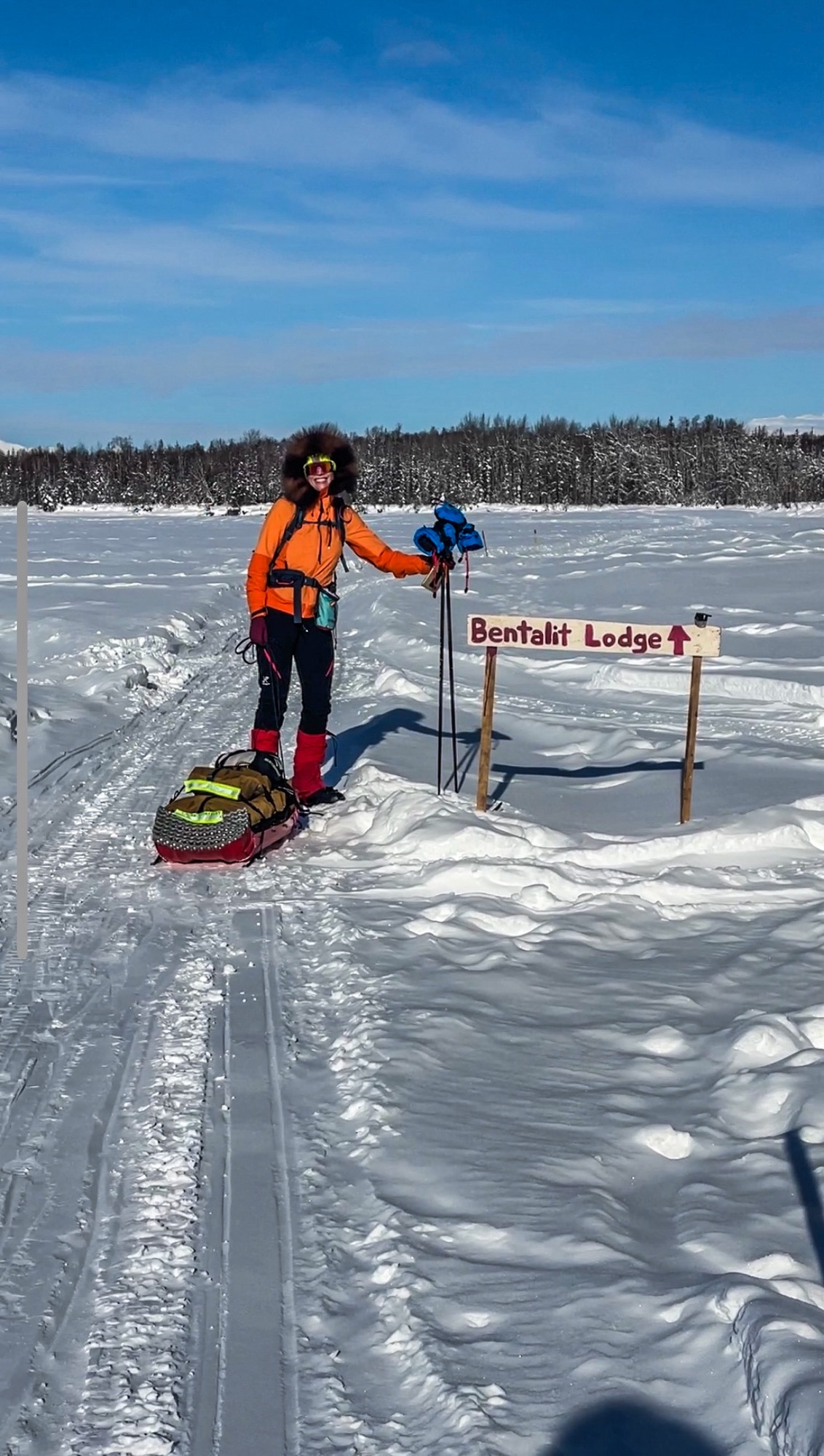
Some pics from morning on the way north toward CP-2, Bentalit Lodge. The weather was absolutely perfect, but the trail was still a little slow. Faster than the day before, but it hadn’t been groomed by the snowmachine groomers so could still be fairly choppy and with I was getting very little glide on my skis. I started to call my ski stroke “the McGrath Shuffle”, shuffling forward at a couple of miles an hour, but if I kept it steady would eventually get me there! I was much better about nutrition and hydration now, realizing how critical it was to keep a steady stream of calories and water to keep my energy level consistent. I set my watch to have an alarm go off once per hour, when I had food and drink whether I felt like it or not. Cannot reccomend this strategy highly enough.
After a morning of skiing up the river, I saw a sign for Bentalit! I was actually stunned, I thought I’d had several more miles to get there. As I stood staring at the sign and checking my GPs, A well timed cyclist came up behind me and offered to snap a picture. He was actually the first person I’d seen since Josh Brown (one of the headlamps I’d seen, a 1000mile skier and one of my ITI Camp instructors) had passed me back on the river hours prior. One of very few I have from the race taken by another human–a hazard of solo travel is a lot of selfies. A quick protein bowl lunch, entire sleeve of chocolate chip cookies, and full foot cleaning later, I was back on the road. Infuriatingly (shakes fist at the moon!), I’d started my period the day before the race started, so I also made full use of the indoor plumbing to get things all sorted in that department.
Bentalit lodge, 11/10, food and indoor plumbing, no notes.
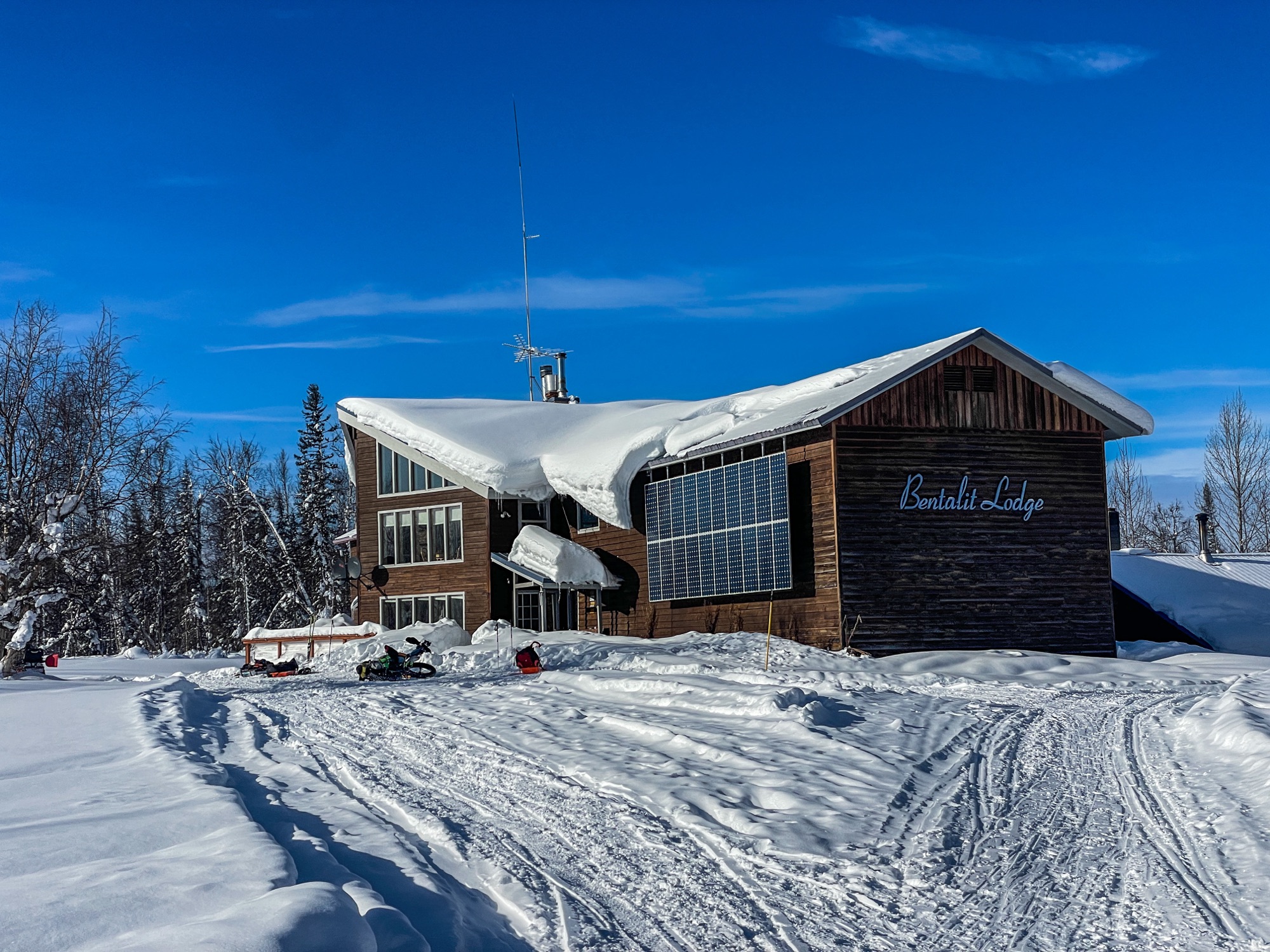
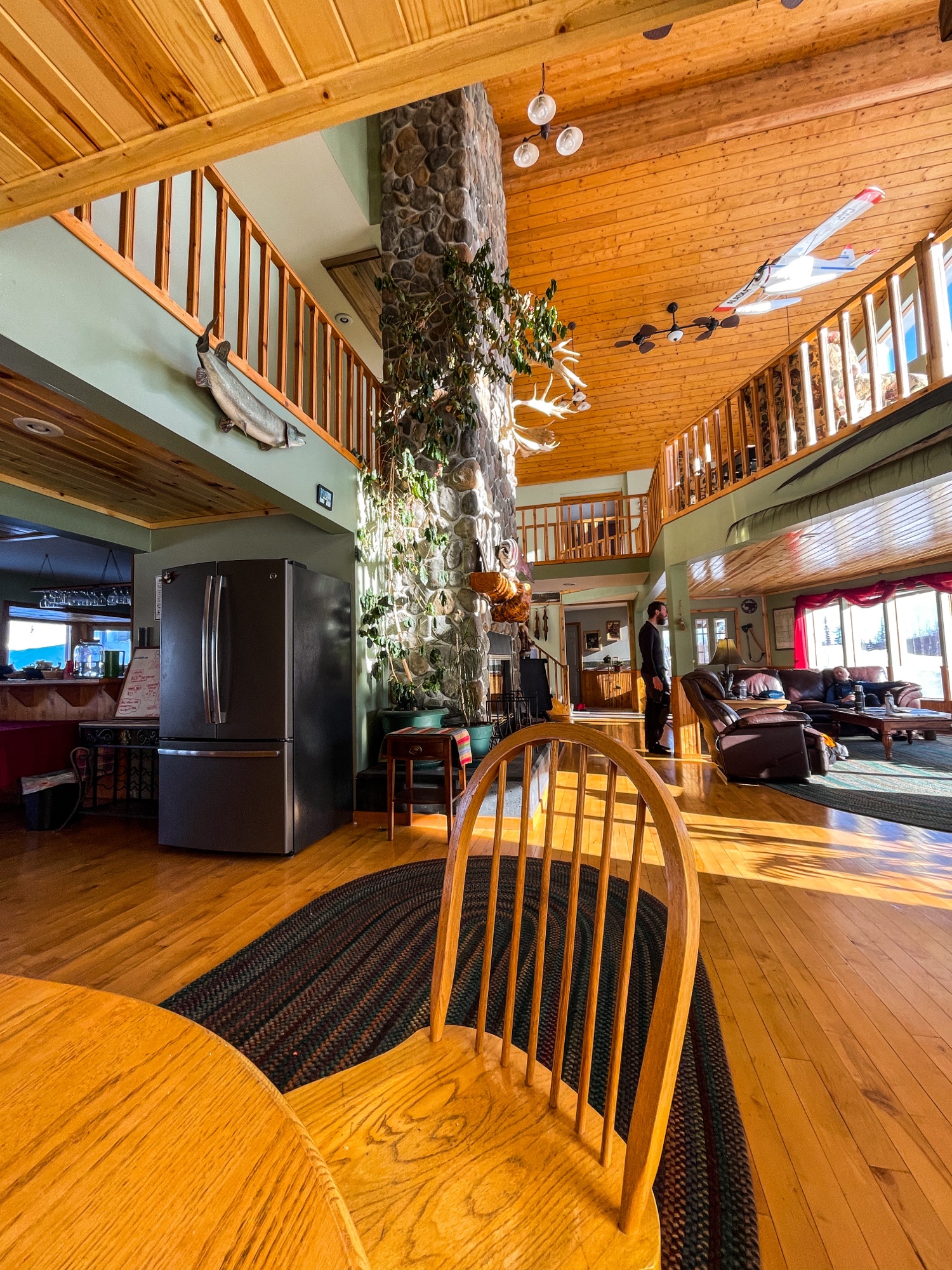
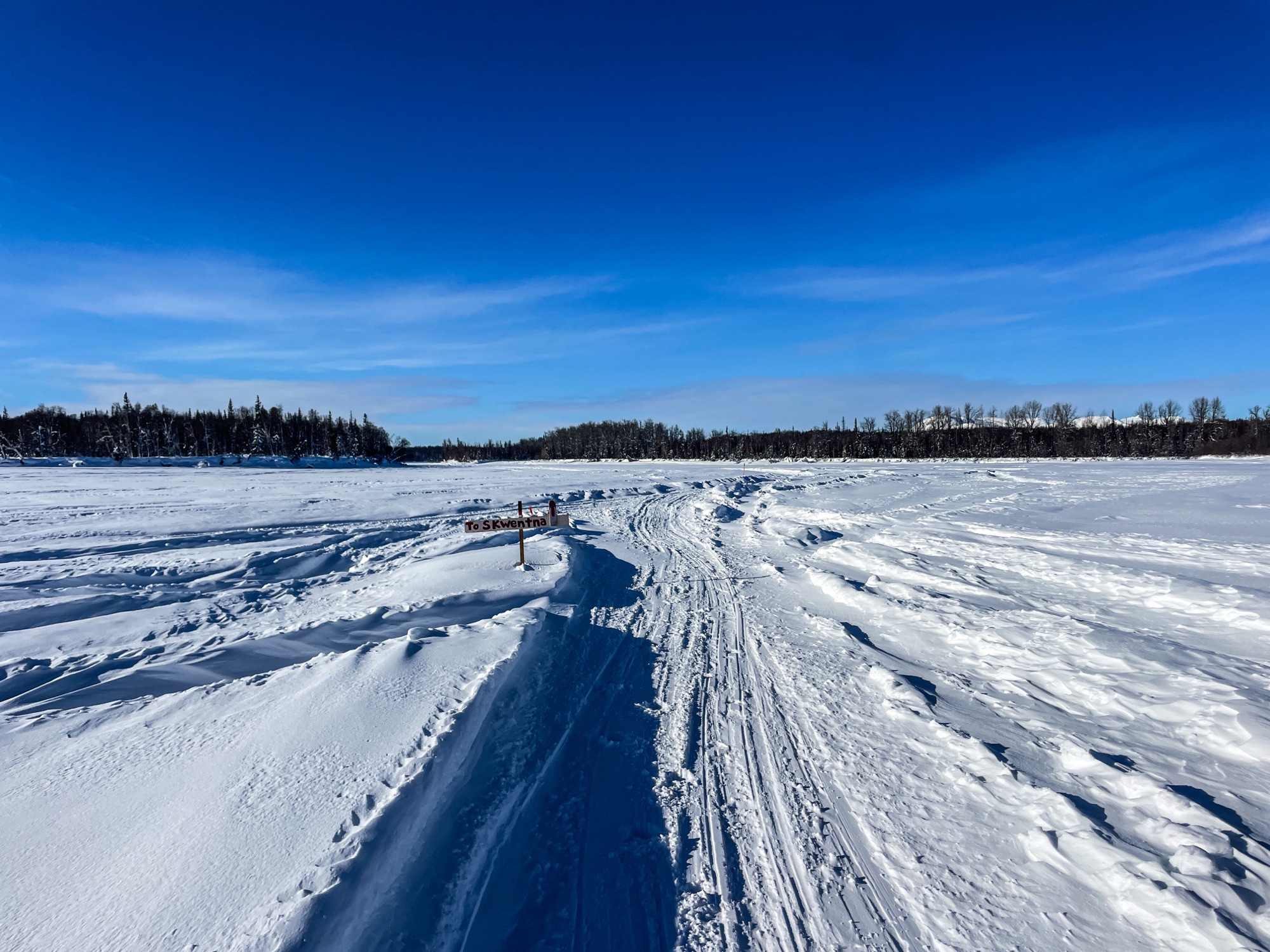

After an hour I got back on the trail to head to Skwentna. Bentalit was perched up on a hill above the river so there was a little excitement skiing down to the trail. Nothing makes you feel more like a serious participant in a winter ultramarathon than falling in and out of every checkpoint…but they do always tend to involve hills and berms and other hazards. A nice afternoon of easy (alebiet not as fast as I’d like) skiing up to the next waypoint–Skwentna Road House. This is another spot that’s a dogl race checkpoint but not an official ITI checkpoint, with food and bunks for sale.
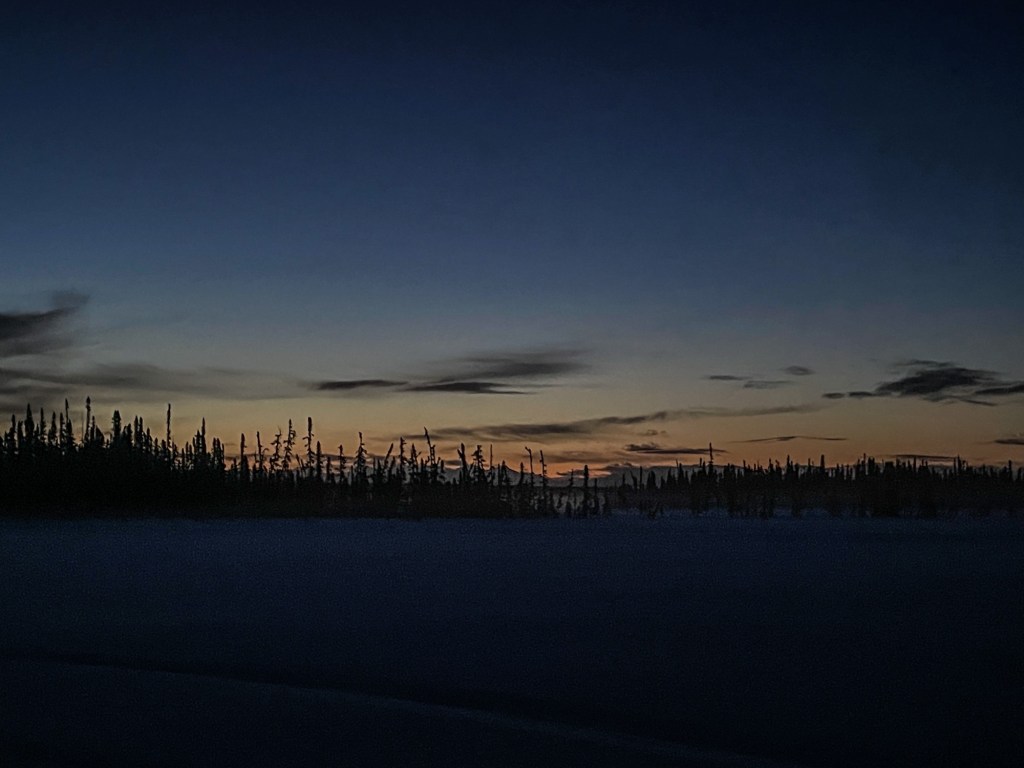
As luck would have it, I was a mile from Skwentna when the trail groomer went past me. Great. This meant I’d skied every mile but one up the Yentna on an ungroomed trail…but hey! One easy mile. I somehow managed to fall in that last mile (futzing with my GPS rather than paying attention to ruts in the trail), which caused me to pause and capture the sunset picture below. I took a quiet moment to appreciate that I’d skied nearly 40 miles on this day, and barely even felt it. I could tell I was hitting my stride–found my trail legs, so to speak. Before this, I’d only skied 30 miles in a day one single time, the little Su 50K, and I’d had no idea how my body would fare trying to do that and more, with a 50 pound sled, day after day. I sat there for a minute just being impressed: my body’s resilience amazes me.
Note the mitts in the pic, they’ll come up later.

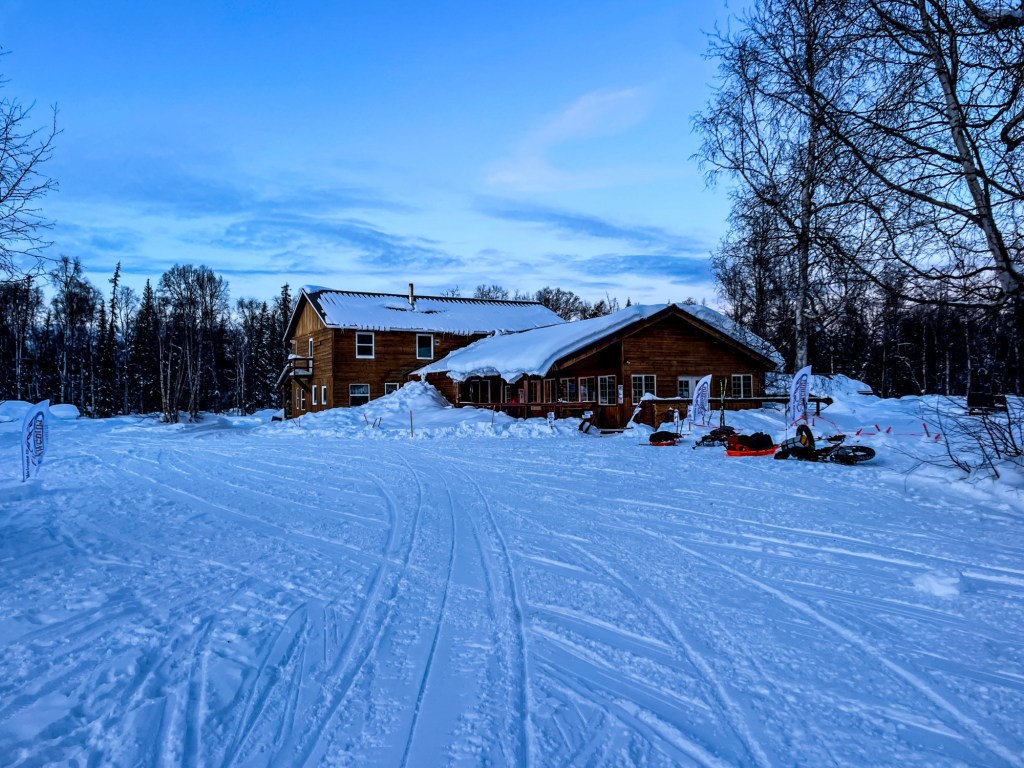
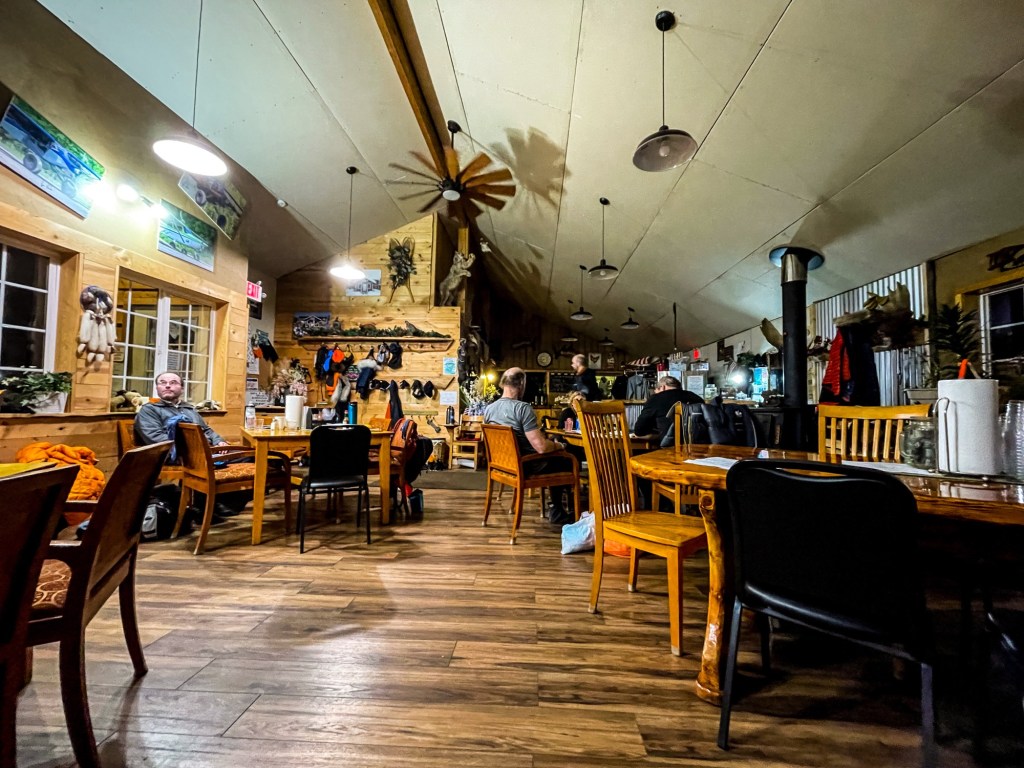
Skwentna was an odd place–a BnB in what felt like the middle of nowhere! It serves a lot of the snowmachine traffic in the area, and also as an Iditarod checkpoint. I got the world’s largest slice of reindeer sausage lasagna, ate until I physically could not take one more nibble. A few others having dinner opted to continue on. Josh departed and came back 10 minutes later, reporting that the winds were starting to pick up and to adjust his layers in a warm space. Head out after dark, in a wind storm? No thanks. I got ready to tuck myself into bed early for another 4am wake-up call.
Finding my Groove
The next morning came quick. I packed up, having dried out my sleeping bag and bivy from night one (I hadn’t even bothered to use the bag in Yentna, just crashed out on the bunk). I skipped waiting around for a hot breakfast and grabbed a cinnamon bun from the coffee bar, scarfed it in 3 bites, and headed out. I was carrying my secret weapon in my sled–Cottage cheese pancakes. A family tradition, these little cakes made up of oatmeal, cottage cheese, and egg blended and fried in oil were the perfect second breakfast. Just tuck a ziplock of them in an inner pocket, let thaw for two hours, and blamo–second breakfast. A lot of strategy goes into getting enough calories to replace what is burned in 12+ hour travel days, when most foods freeze on trail. I had a mix of calories that could be eaten ‘frozen’ (nuts, jerky, etc), calories that needed thawing (GUs, bars, peanut butter), and calories that needed cooking (freeze dried meals, oatmeal, mashed potatoes). Similarly, my water was stored in a runners vest beneath all my layers, to keep it from freezing. The bite valve sometimes was curled up with the rest of the straw, and other times in really cold weather. would be tucked down into my sports bra to keep it from freezing.
Speaking of really cold weather–it was +7F when I left Skwentna Roadhouse, and the trail was actually in great shape. “Huh, maybe I can actually make up some time today!”, thought a naïve racer, as she flow down an access road toward a town maintenance shed. I turned a corner and broke out into a huge swamp. Unobstructed views for miles (or, there would be, once the sun rose and I could see where I was). For now, all I saw was my skis skid to a hault in a mashed up paste of wind-blown snow. Glide was not to be had Thankfully, my skis stayed on top of the piled drifts which made walking across it MUCH easier. I felt sorry for the walkers and bikers I knew were behind me. Later, I saw race director Kyle as he passed me (we were on similar schedules, he’d stayed in Bentalit the night before) and he said they were really strugging in the drifts. It turns out that the cyclists couldn’t really get through it at all–all five who had stayed at Skwentna with me the night before ended up going back and scratching from the race.
About halfway through the swamp, I went to unzip my coat to get a drink of water. I tugged on the zipper and my hand flew away with no resistence and a pop! “Oop, I think I pulled the pulltab off my zipper.” I thought. “What do I have that I can make a new pulltab with?” I thought of my thermometer which I’d attached to my sledbag with thin gauge wire, and wrapped a bit extra around the face of it as backup. “Perfect, I’ll solve that once I’m out of this cold swamp. Actually…how cold IS this swamp?”
I shuffled back along the side of my sled to grab a peek at the thermometer. Negative twenty two?! It was just seven degrees a few miles ago! A cool thing about climate in Alaska is how the microclimates work. The rivers and swamps serve as cold sinks in the winter; the coldest temperatures settle in them and they can be ten to twenty degrees colder than the banks just a few dozen yards away. Behold, a two-part video where I geek out about this in real-time. Oh, and also…it wasn’t just the pull tab. I’d popped the entire zipper off and my coat was only remaining shut by the gentle hold of my backpack chest strap and vibes.
The “we” I reference in this video is me and Pokey (the sled). I talk to her like she’s one of my dogs, and tell her what a good job she’s doing.
I AM INVINCIBLE
Immediately after the swamp was the first sustained climb of the race–the Shell Hills. I was ready for the worst, which always helps makes things feel easy. For whatever reason, I was feeling the Shell Hills. The trail improved and was much less blown in, the snow was the perfect consistency for my fishscales to grab–I basically motored right up them, and didn’t have to take my skis off a single time until a couple of short steep bumps right up near the top. As I was climbing was when Race Director Kyle passed me, and I recall thinking “Good he’s passing me for once when I actually look like I’m doing WELL!” **foreshadowing for a future dayyyyyyy** The sunrise through the woods was amazing, and I was noticing cool details on the trail.
As I got close to Shell Lake, my halfway spot for the day with heated cabins for racers, I was passed by a local on a snowmachine who warned me of a “highly agitated moose”. The moose had been spotted by at least a couple of racers overnight, he told me, and they’d ‘pushed it down the trail’ a bit somehow. He said I had good luck not coming through overnight and having to deal with it. It turns out one of those racers had had a close encounter with said monster–he’d had to dive off the trail into a snowbank as it charged him. Worth noting that this was about 15 miles from Skwentna, right where an Iditarod Dog race musher had to kill an aggressive moose that became entangled with his team. Same Moose? Prolly.
After an hour stop-off at the Shell Lake Cabins to have a hot lunch (Mountain House Pad Thai!), change headlamp batteries, and rest a bit, I continued on toward CP-3 Finger Lake. After a brief climb through some trees, the trail moved into new terrain I thought of as “stairmaster ridge”. It was a long linear expanse, with trees on either side, of continuously sloping upward terrain. Not quite a hill, but nowhere near flat. I could feel myself literally climbing up into the foothills of the Alaska Range. It was quite exposed and breezy, so I ended up adding my hardshell coat over my main coat, to make use of the hardshell’s zipper. This would become my new system for basically the duration of the race.
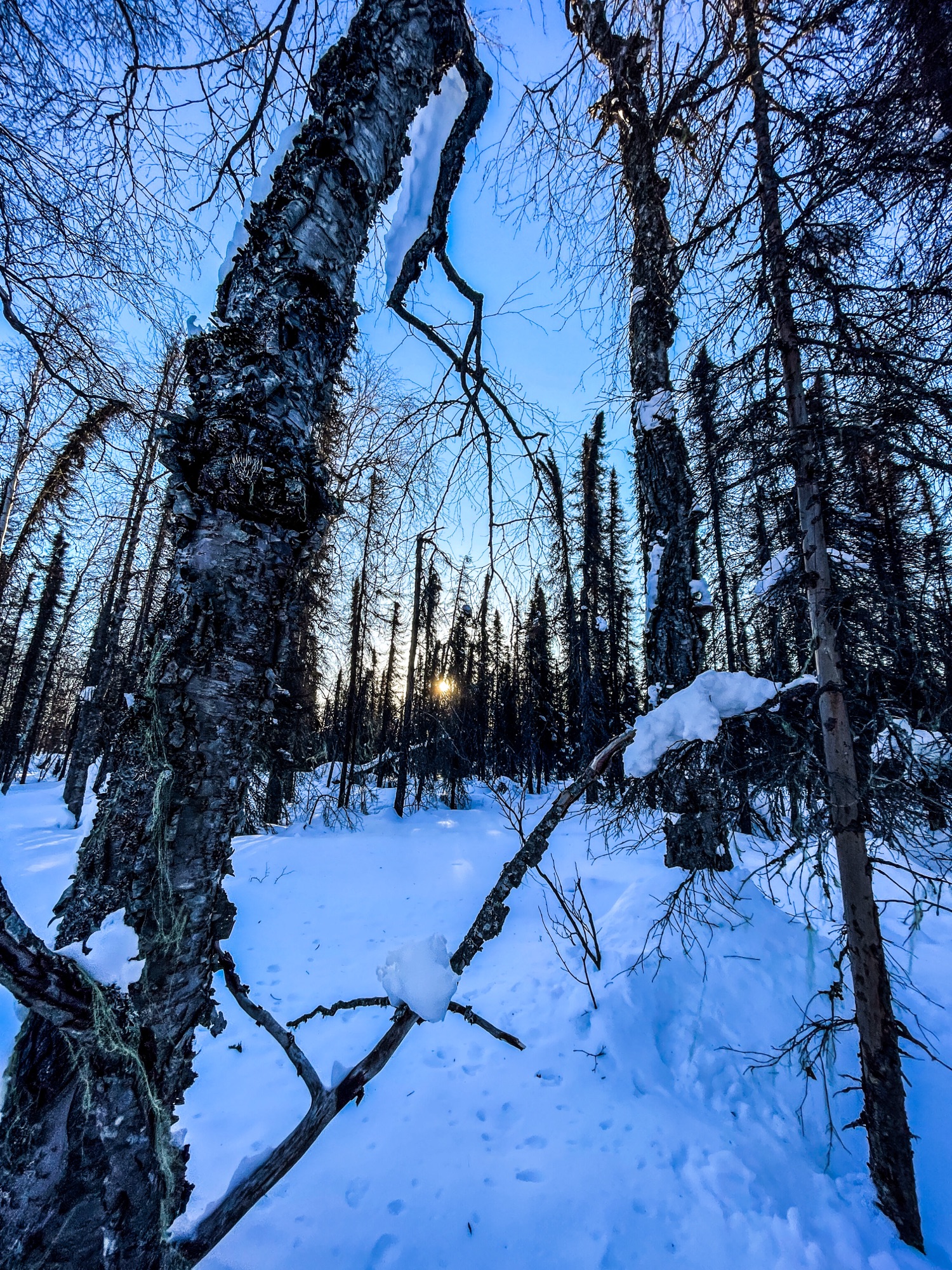
Stairmaster Ridge was stunning. More than once I’d break through a short section of trees or climb a slightly steeper portion of hill to get a view of the mountains that would bring me to tears. The Bottom right image below was a particularly arresting moment. Followed by the awe of the scale and beauty of the mountains was always the same nagging doubt: “I’m going to ski OVER those? Really!? CAN I ski over those?”. Rational brain was quick to step in and tell me that A) I wasn’t going to ski over the TOPS of those, the trail would take the easiest route available, and B) that wasn’t today’s problem. All I had to worry about today was sking to Finger Lake. And I was only about 10 miles away and everything was going great.
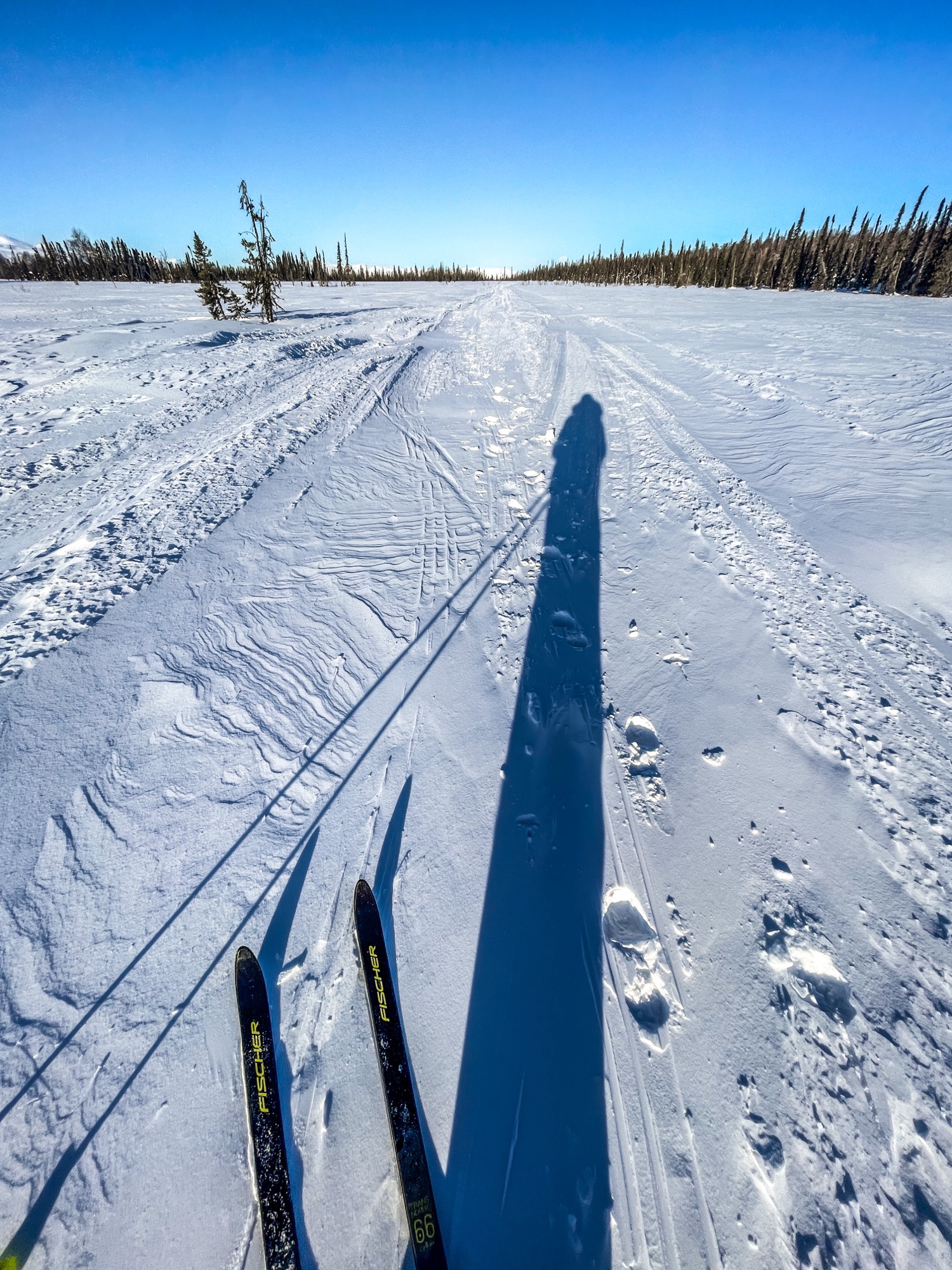
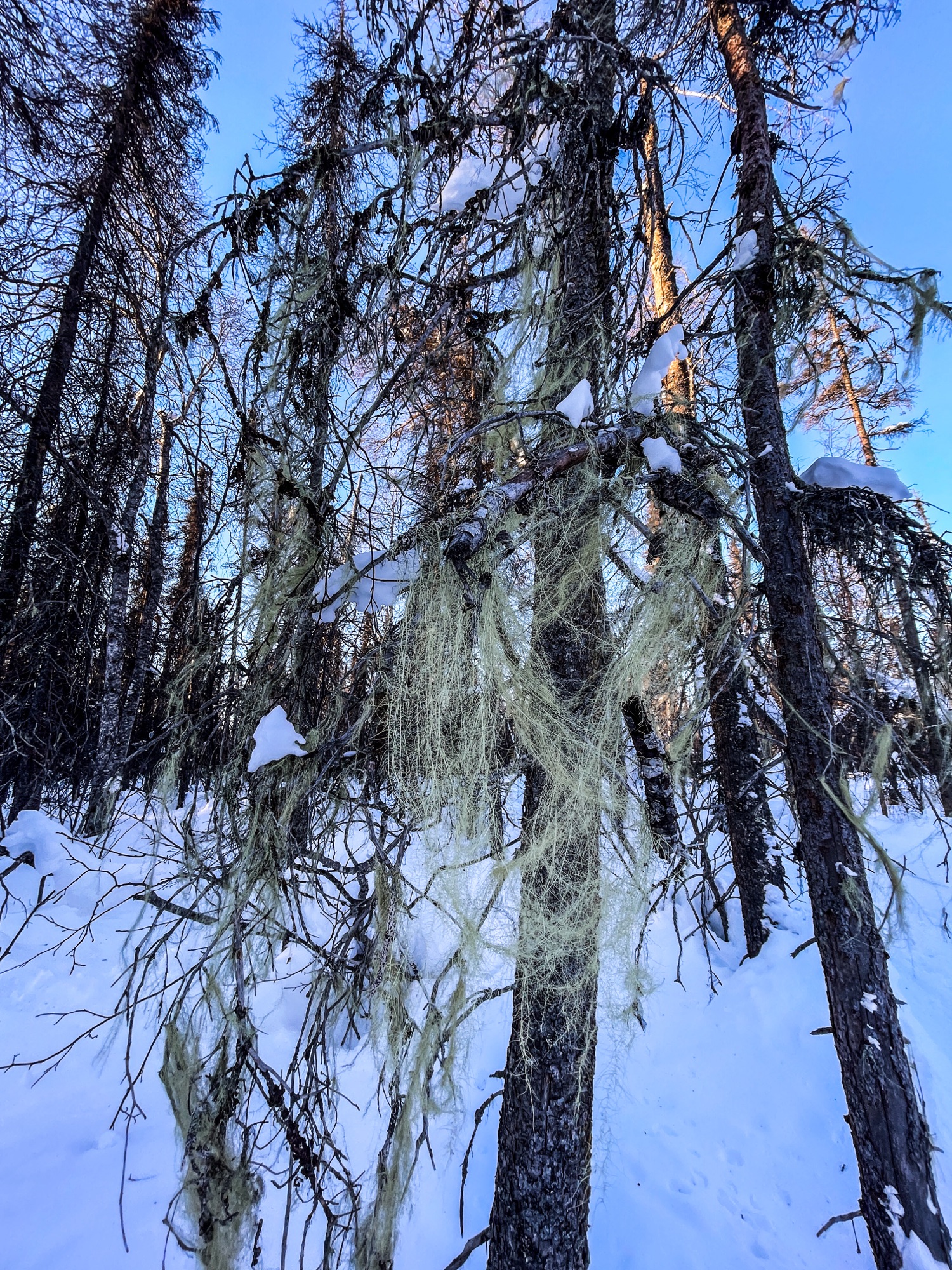
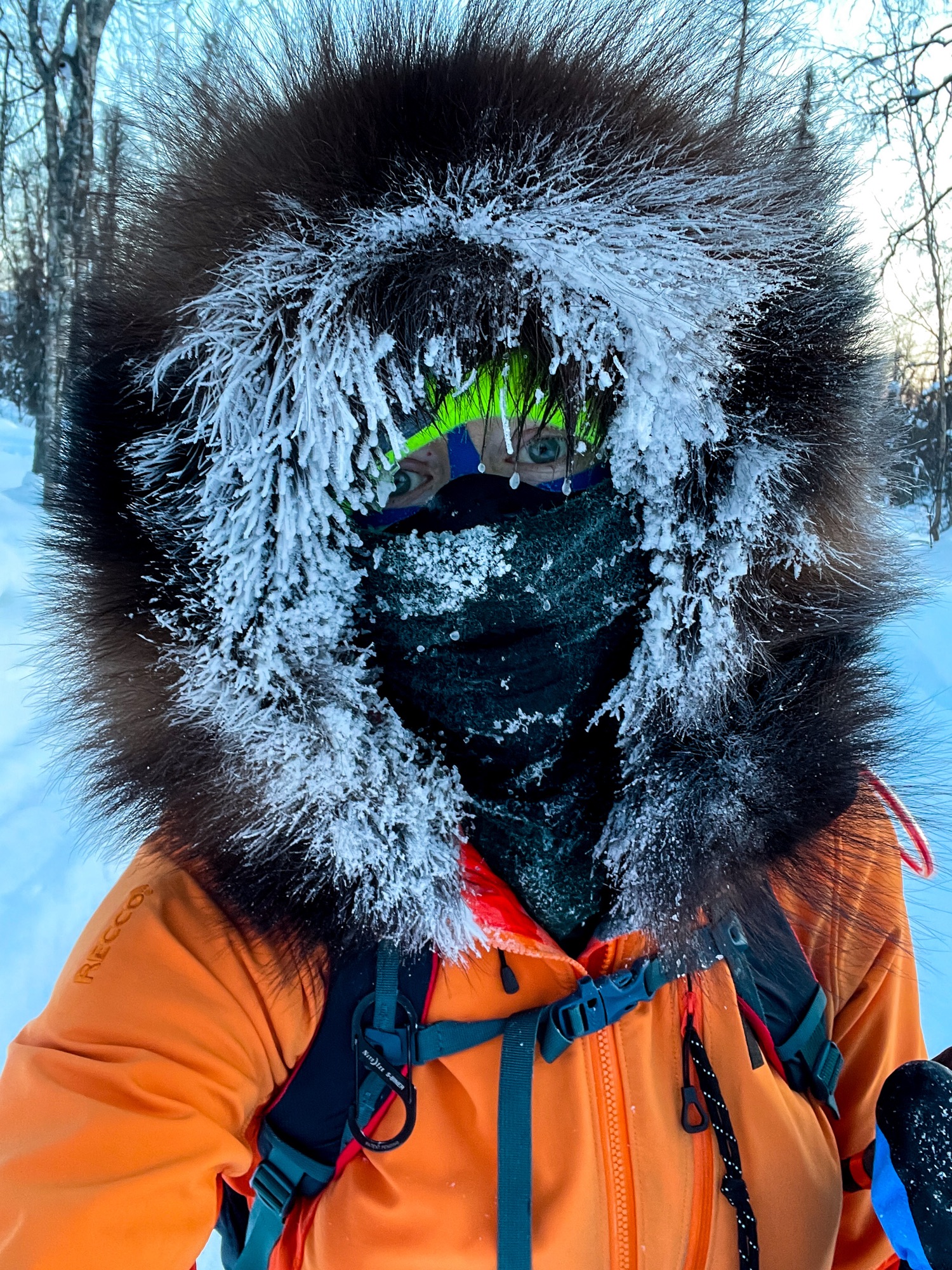
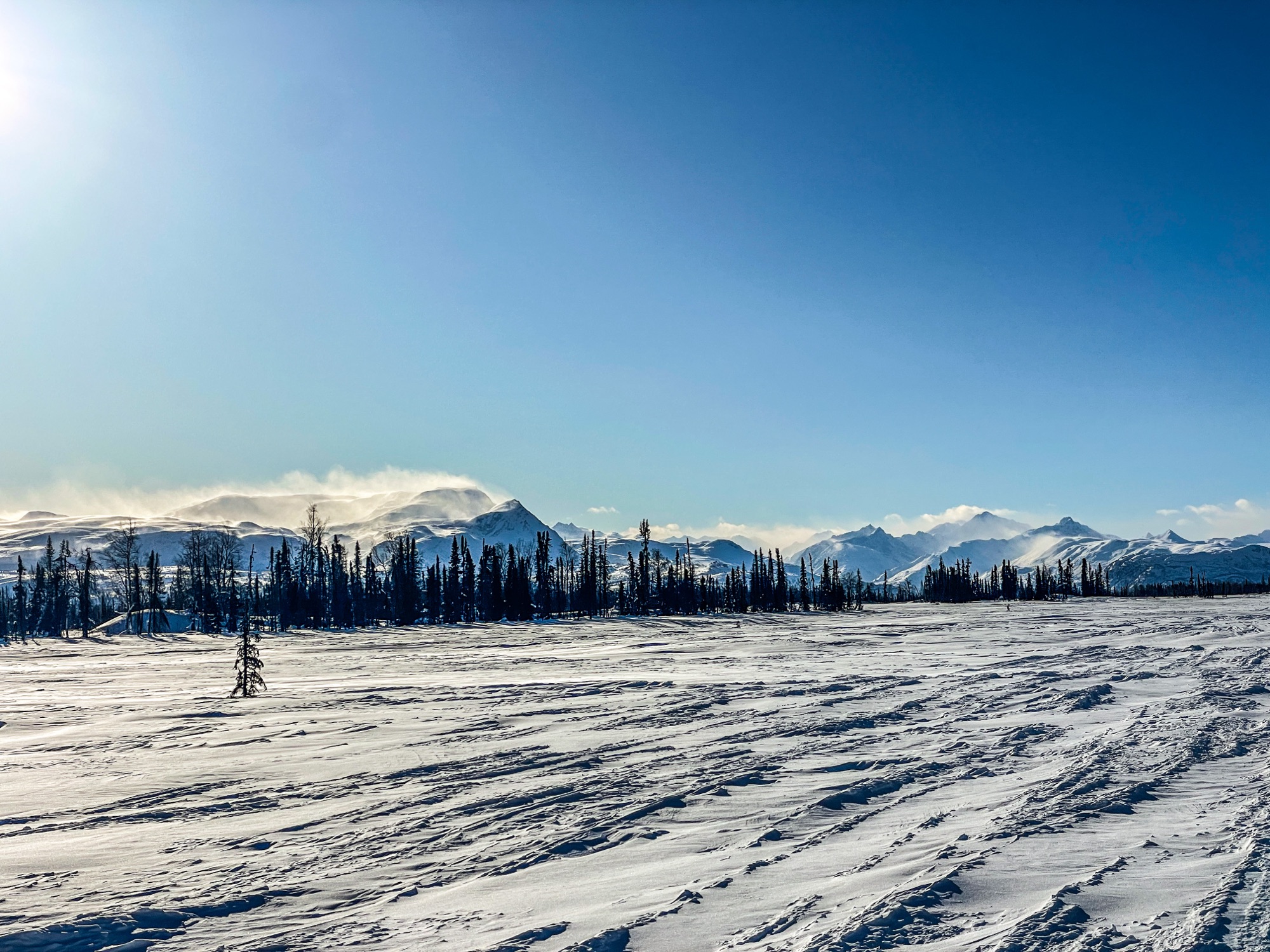
On the Surface of Hoth
The trail was intersected with a large-machine cat-track. While not that uncommon, they’re still kind of annoying–they typically are for extraction industry operations that are going on in the winter, like logging. In this case, it was the road to a mine. The annoying parts of this are three-fold: its not as pretty to ski on a cat track as a backcountry trail (this one is petty, ok); the trail was very soft and rutted out since the machinery passes over it frequently and it doesn’t have time to set; and it obliterates the trails of all the racers in front of you. I couldn’t see a single trace of a sled, a bike tire, Kyle’s snowmachine track….at one point, the cat track separated from the Iditarod trail and I wasn’t even sure I was still on the right trail. But I hadn’t seen any tracks taking the turn off the track, and it seemed to still be directing toward where I needed to be…so I went with it
The cat track felt like it was going on forever. The sun was setting, I snapped the pic below and hunkered down for the last four or five miles….
…and the wind cometh.

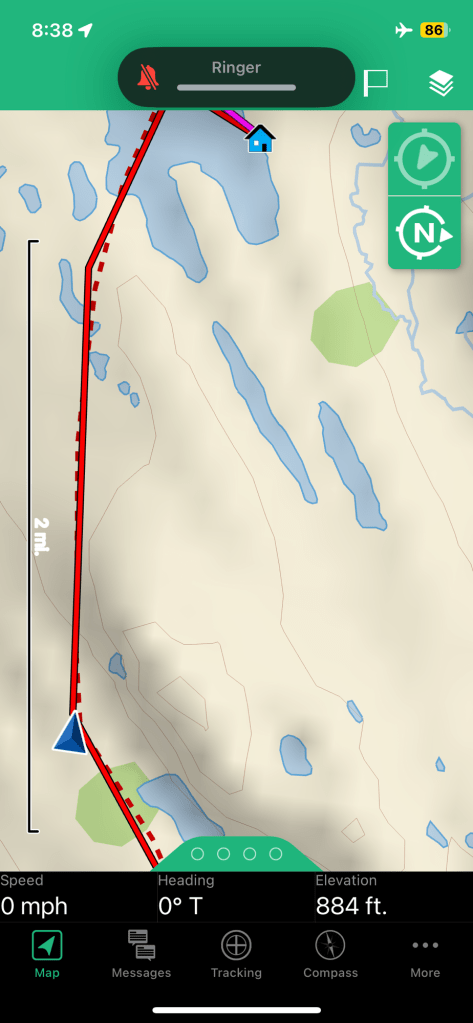
My God, it felt like a biblical plague. From a fairly quiet day, some minor blustery wind on Stairmaster ridge, to wind so strong it nearly bowled me over. The sustained wind was enough that you had to physically lean into it to keep going, and gusts would basically stop you in your tracks. I quickly grabbed my additional gear–goggles, extra face coverings, closed up my wind pants I’d been wearing open and vented to that point. The wind nearly snatched away my mitts from my hands as I dealt with my gear. I’d just finished layering up when a convoy of the large machines came roaring up the road. I had to hustle to get up off the trail and onto the high bank, 3 or 4 feet of soft snow on the side, as cat after cat drove past. I was losing light, I could barely look forward down the trail due to the wind…but at least the high speed demon hellcats were well lit?
My pace slowed to a crawl. The screenshot above of my Garmin GPS was accidental–Id pulled it out yet again to see how far I had left because “surely I should be at the checkpoint by now!?“ By the time I was approaching the lake, I felt like I was on the surface of Hoth. I could barely see in the swirling ground storm in the black. A snowmachine came roaring onto the trail from the left, and a guy got off and started putting up a large “X” on the cat track. I skied up to him and he told me he was a volunteer from the CP, marking the trail here because racers were missing the turn. The turn? “Yeah, the turn to go across the lake to the checkpoint. It’s right there, I just marked it again because some of the markers had blown away. If you go now you should still be able to follow them in.” Thank the stars for timing; I hadn’t seen the turn and had been about to add unnecessary extra miles in a demon windstorm. I floundered across the lake, my sled being blown around to my side and trying to drag me off trail, until I could see the softly glowing tent off to the left on the shore.
I skied up and the wind was a bit blocked by the woods on the shoreline–sweet relief. Parking my sled next to the half dozen already there, I noted two things: I better grab what I’d need inside now, no way I’d want to come back out for anything! and…oh man, its gonna get crowded in this wall-tent tonight. The Finger Lake checkpoint is just a large wall-tent with a wood stove. Athletes sleep in their own sleep kits in a sardine-style line on the floor, on half the tent. There’s a first-in-first-out policy when all the sleeping slots are full. Well, at least I wasn’t the first one in. Maybe I could get a few hours sleep before the four foot athletes behind me (Vinny and Jason + two female runners Id been crossing paths with since day one) got in and bumped me out of the tent.
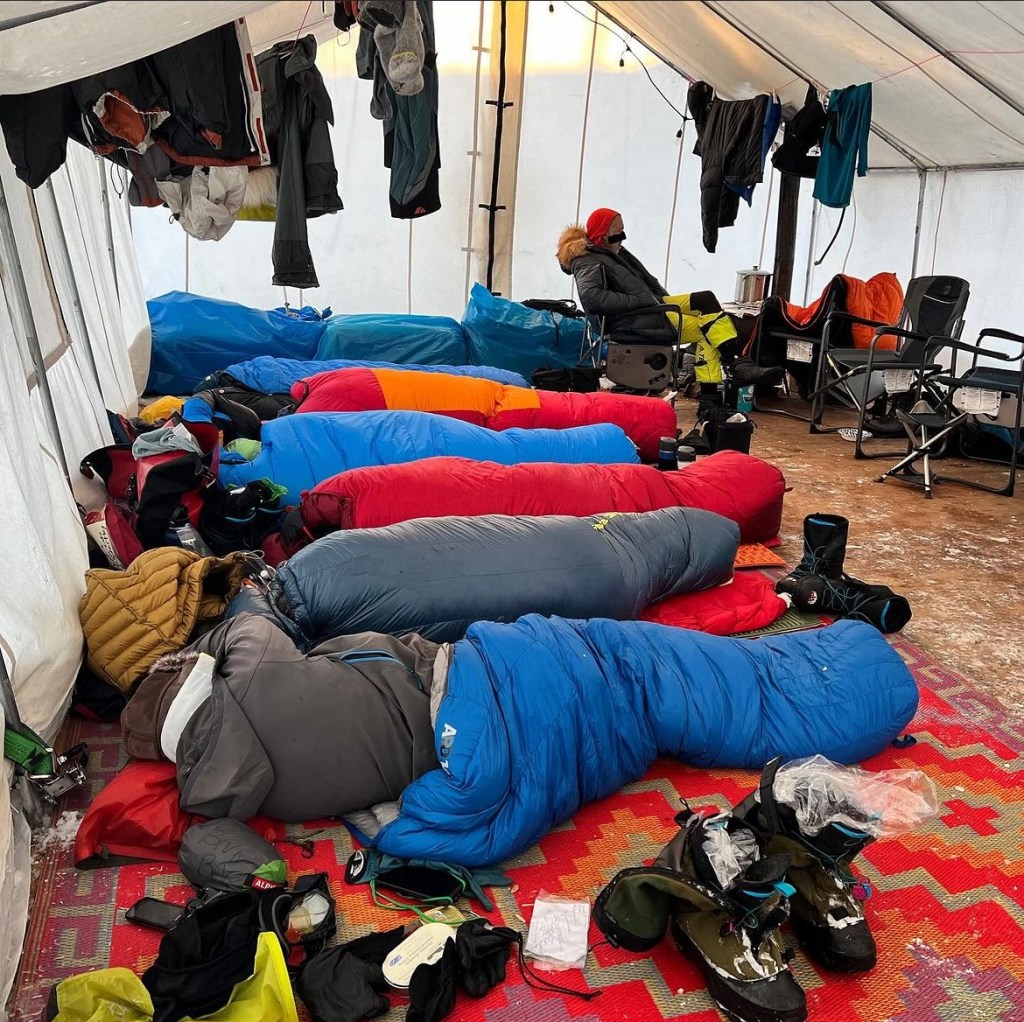
I got my butt in the door (barely above freezing inside, if even, and no wind–heaven!) and got about the business of getting to sleep after a quick hot ham and cheese burrito. I wanted to maximize my rest before my friends arrived. It turns out, I needn’t have worried about that. I never saw them again.
2 responses to “Iditarod Trail Invitational (ITI) Part 2 | Race Start to Finger Lake”
-
Ominous ending! I love this: ?The “we” I reference in this video is me and Pokey (the sled). I talk to her like she’s one of my dogs, and tell her what a good job she’s doing.” This is s;uch a good writeup of your journey. Just the right amount of photos and videos (sweet surprise those videos).
-

[…] and here. […]
LikeLike


 The TypeTwoFun Club
Leave a comment